Native advertising existed long before the internet, in newspapers, magazines, and sponsored radio and TV segments. Banner ads arrived later, in the 1990s, ushering in the clickable, hyperlinked web we know today.
Since then, digital advertising has taken many shapes and become one of the most reliable ways to grow a business online. Brands raise visibility and drive sales, affiliate marketers profit as the link between offer and audience, and publishers monetize their ad space.
All that choice creates a familiar problem: with so many formats available, which one is right for you? This guide focuses on two of the most popular, native and banner advertising, and helps you make the right call, plus shows how both compare to other formats.
TL;DR
- Native ads blend into the page content; banner ads are designed to stand out as clear promotions.
- Native tends to win on trust, engagement, and mobile; banner wins on direct attention, branding, and desktop.
- Native usually carries higher bids due to higher engagement; banner pricing is more flexible.
- Use native for storytelling and longer, trust-led funnels; use banner for awareness, retargeting, and direct conversions.
- Native and banner are part of a wider mix that also includes push, in-page push, popunder, and interstitial ads.
What are native ads?
Native ads are discreet. They align with the organic content of the page, which makes them feel more relevant to visitors and tends to drive higher engagement and click-through rates. That benefits everyone involved: viewers, publishers, and advertisers.
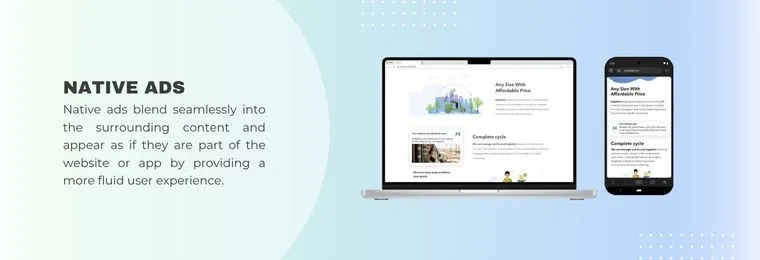
Marketers usually use native advertising to tell a story, often a brand story or the positive impact of an offer.
Because the format is narrative, the best native ads appeal to emotion and speak to the reader directly. Make it clear what the reader stands to gain if they click.
What About Banner Advertising?
Compared with native, banners are flashier and more direct. As the name suggests, they are rectangular and come in many sizes. That versatility, combined with flexible placement options, makes them effective at pulling attention.
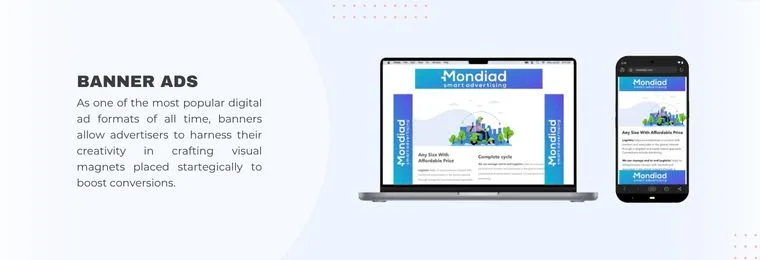
Because a banner clearly signals that it is an ad, design matters. Use bright color contrast and clear, high-quality imagery with a sharp message.
Size and placement matter just as much as the visual itself, since how you display the elements affects results.
Finally, never skip the call to action. Tell readers exactly what to do from the start, whether that is “try now”, “book a meeting”, or “download a sample”.
| Native ads | Banner ads | |
|---|---|---|
| Format | Text and images that blend in and feel discreet. | Designed to stand out, with a clear promotional look. |
| Placement | Match the style and format of the surrounding content. | Sit in high-traffic spots, usually top, bottom, or along the side. |
| Best for | Educational content, news, and storytelling. | Raising awareness and driving sales for products or services. |
| Device strength | Generally stronger on mobile. | Generally stronger on desktop. |
| Effectiveness | Higher CTR and credibility, though some users may not realize the content is sponsored. | Lower CTR, since users are used to skipping banners (banner blindness). |
| Pricing | Can carry higher bids due to higher engagement potential. | More flexible pricing. |
On Mondiad, both native and banner run on CPM or CPC, and TargetCPA bidding is available across the network.
The right choice depends on your campaign goals, your audience, and the context you are advertising in. Both formats have strengths, and they suit different outcomes.
For brand awareness
Native ads tend to deliver a better user experience and build a positive association with your brand. They are especially good for storytelling and conveying brand values and personality.
Banner ads can also raise awareness, and their design and placement make them more noticeable. They are strong at grabbing attention and making a brand memorable, but they can be weaker on engagement and on carrying a deeper message.
For conversions
Native ads are usually associated with awareness, but they can drive conversions when designed around a specific action such as clicks or sign-ups. Conversion rates may be lower than formats built specifically for direct response.
Banner ads are often the preferred choice for conversion-focused campaigns. They are direct and attention-grabbing, which suits actions like clicks, downloads, or purchases, and they usually include a clear call-to-action button that prompts an immediate step.
There is no rule that forces you to pick one. Test both, track your results, and let the data point you to the best mix.
Native and banner are two pieces of a larger mix. On Mondiad you can also run classic push, in-page push, popunder, and interstitial ads, each suited to a different funnel stage and traffic type. Here is the bigger picture.
| Format | How it appears | Best use cases | Intrusiveness |
|---|---|---|---|
| Native | Blends into the page like recommended or sponsored content. | Finance, health, insurance, high-ticket e-commerce, longer funnels. | Very low |
| Banner | Static or animated display ad placed within the page layout. | Branding, retargeting, supporting other formats. | Low |
| Classic push | Browser or system notification delivered after opt-in. | Direct response, retargeting, urgency-driven offers. | Low to medium |
| In-page push | Notification-style ad shown inside the webpage, no opt-in. | Broad reach, mobile traffic, colder audiences. | Low |
| Popunder | Loads your page in a separate tab behind the active window. | High-volume campaigns, sweepstakes, gambling, utilities. | Medium |
| Interstitial | Full-screen overlay in the current window, closed with a button. | App installs, sweepstakes, nutra, dating, brand awareness. | High |
Where native and banner fit:
- Native sits at the trust end of the spectrum, alongside content-led funnels, and rewards strong copy and pre-landers.
- Banner is a flexible, scalable visibility layer that works well for branding and retargeting, and supports your other formats across the funnel.
- If you need raw scale or full-screen impact, popunder and interstitial go further, while push is the fastest format to test.
Quick pick: match the format to your goal
| Your goal | Best format |
|---|---|
| Highest trust and credibility | Native |
| Long, content-led funnels | Native |
| Branding and retargeting | Banner |
| Cheapest traffic at scale | Popunder |
| Fastest testing | Push |
| Maximum same-screen visibility | Interstitial |
For a full breakdown across the whole format mix, see the Mondiad ad formats comparison guide.
FAQ
What is the main difference between native and banner ads?
Native ads blend into the surrounding content and feel discreet, while banner ads are designed to stand out as clear promotions.
Which converts better, native or banner ads?
It depends on the goal. Native earns higher trust and engagement for content-led funnels, while banner is more direct and often preferred for conversion-focused campaigns with a clear call to action.
Are native ads better on mobile or desktop?
Native ads generally perform better on mobile, while banner ads tend to be stronger on desktop.
When should I use banner ads instead of native?
Use banners when you want immediate visibility, brand recall, retargeting, or direct actions like clicks and downloads.
Which is cheaper, native or banner advertising?
Banner pricing is usually more flexible, while native can carry higher bids because of its higher engagement potential.
Can I run native and banner campaigns together?
Yes. Many advertisers combine formats, using native for trust and depth and banner for visibility and retargeting, for layered funnel coverage.
Start Your Mondiad ADventure!
Ready to put native and banner head to head on real traffic? Launch your campaign on Mondiad in under 10 minutes.