If you’ve ever launched an affiliate campaign and wondered why the same offer performs wildly differently from one country to another, you’ve already run into the Tier Traffic System… whether you knew it or not.
One GEO drains your budget in hours, another turns the same ads into steady profit, and the difference usually isn’t your strategy… It’s the tier you’re running.
In affiliate marketing, not all traffic is created equal. Some countries bring high payouts but brutal competition, while others offer cheap clicks that rarely convert into high-value actions. Understanding how these traffic “tiers” work is what separates random testing from actually building scalable, profitable ad campaigns.
It’s time to grab your snack of choice, we are deep diving into one of the secrets of affiliate marketing success.
TL;DR
- Traffic tiers in affiliate marketing group countries into Tier 1, 2, and 3 based on factors like purchasing power, traffic cost, competition, and payout potential.
- Choosing the right traffic tier depends on your budget, experience, campaign goals, offer type, and optimization strategy.
- Successful affiliates often test in lower tiers before scaling into Tier 1 markets.
What is The Tier Traffic System?
In affiliate marketing, a “tier” refers to a group of countries that are targeted, a classification based on quality, cost, purchasing power or geographic value.
Instead of treating every country the same, you divide traffic into Tier 1, Tier 2, and Tier 3, each with a different level of value and strategy.
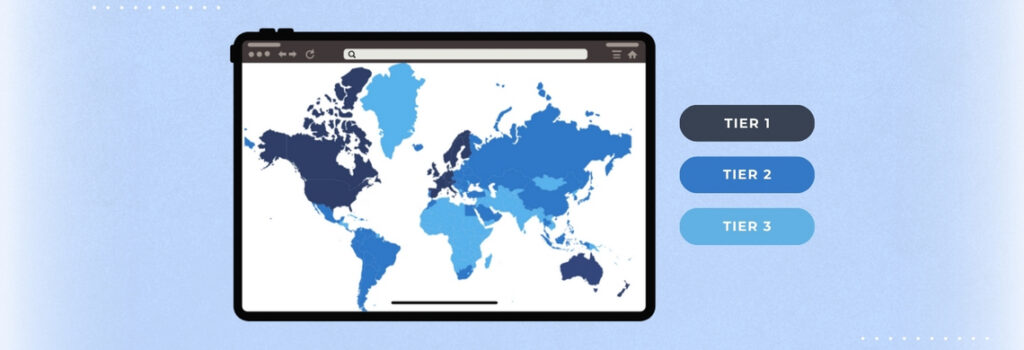
Tier сountries lists are not universal! ⚠️
These lists aren’t fixed! Some countries can shift between tiers depending on the vertical, the traffic source, or the advertiser’s goals. But this is the most commonly used structure in affiliate marketing and media buying.
Why Traffic Tiers Matter in Affiliate Marketing
Country tiers matter because they basically decide how your whole campaign behaves: from how much you spend to how much you can realistically earn.
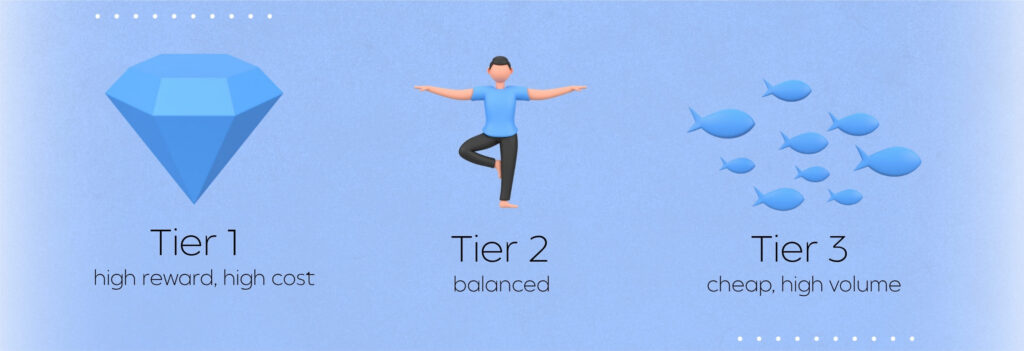
In Tier 1, you’re playing a high-risk, high-reward game where every click costs more, but conversions are worth it. In lower tiers, it’s more about volume and testing. You can afford to experiment more, but margins are tighter.
They also affect how people respond to your ads. What works in Spain might not work at all in Brazil, even if the offer is the same. Language, culture, and even how comfortable people are with online payments all come into play.
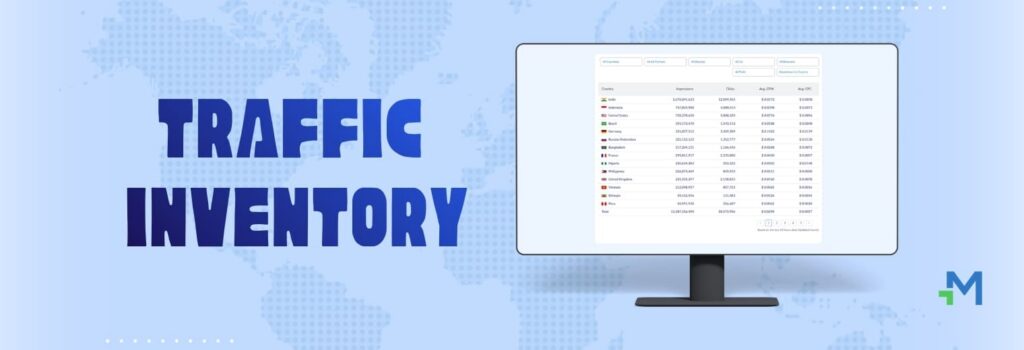
So in simple terms, country tiers matter because they influence everything: your costs, your payouts, your creatives, and even how users behave. Once you understand that, it’s much easier to pick the right GEO and not waste budget.
Traffic Tier 1
If you’re targeting a Tier 1 country, you’ll usually get higher payouts per conversion. People have more buying power and are more used to paying online, so advertisers are willing to pay more for those users.
The downside is that traffic is expensive and competition is tough, so you need a solid setup to stay profitable.
Mondiad GEO recommendations:
United States, United Kingdom, Canada, Australia, New Zealand, Germany, France, Netherlands, Sweden, Norway, Denmark, Switzerland.
| Traffic Tier 1 Pros | Traffic Tier 1 Cons |
|---|---|
| High payouts per conversion | Very expensive traffic |
| Strong buying power | High competition from experienced affiliates |
| Better offer variety | Testing can get costly fast |
| More stable and predictable performance | Smaller margin for mistakes |
| High scaling potential once profitable | Strong buying power (users are more likely to spend) |
Traffic Tier 2
If you’re targeting a Tier 2 country, you’ll usually get decent payouts per conversion. People are comfortable spending online, but not at the same level as Tier 1, so advertisers pay a bit less. The big advantage is that traffic is more affordable and competition isn’t as intense, which makes it a great spot for testing and scaling campaigns.
The downside is that it’s kind of a middle ground: payouts aren’t super high, and volumes aren’t as cheap as Tier 3, so you still need to optimise well to make strong profits.
Mondiad GEO recommendations:
Spain, Italy, Portugal, Greece, Poland, Czech Republic, Hungary, Romania, Brazil, Mexico, Argentina, Chile, South Africa.
| Traffic Tier 2 Pros | Traffic Tier 2 Cons |
|---|---|
| Balanced payouts vs. traffic cost | Payouts not as high as Tier 1 |
| More affordable testing | Requires optimization to stay profitable |
| Moderate competition | Not as much volume as Tier 3 |
| Good for both testing and scaling | Performance can vary a lot by GEO |
| Wide range of working verticals | Still requires optimization to stay profitable |
Traffic Tier 3
If you go for a Tier 3 country, traffic is super cheap, and you can get a lot of volume. But the payouts are much lower, and users are less likely to spend money, so you need a different approach, usually focusing on simple actions like installs or free sign-ups.
Mondiad GEO recommendations:
India, Indonesia, Pakistan, Bangladesh, Vietnam, Philippines, Nigeria, Egypt, Kenya.
| Traffic Tier 3 Pros | Traffic Tier 3 Cons |
|---|---|
| Very cheap traffic | Low payouts per conversion |
| Great for testing angles and creatives | Lower buying power |
| Huge volume potential | Lower conversion quality |
| Low competition | Harder to scale profitably long-term |
| Easy entry for beginners | Limited high-ticket offer opportunities |
How to Choose Traffic Tiers in Affiliate Marketing
Actually, there’s no secret recipe. It’s up to you, ultimately. Choosing your traffic tier really comes down to your budget, experience, and what you’re trying to achieve with the campaign.
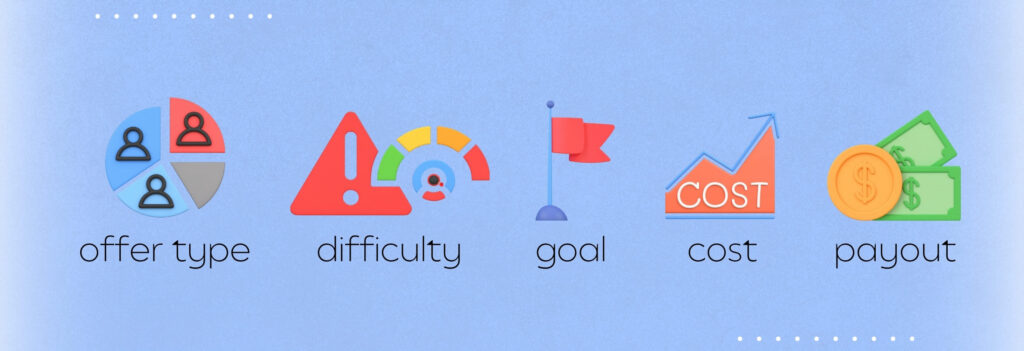
If you’re just starting out, going straight into Tier 1 markets can be rough. Traffic is expensive, and you can burn through your budget fast before you even figure out what works. That’s why a lot of beginners start with Tier 2 or even Tier 3 to test things more safely.
Tier 2 countries are usually the sweet spot. You still get decent payouts, but traffic is affordable enough to test creatives, angles, and funnels without too much risk. Once something works there, it’s much easier to scale.
Tier 3, like India or Indonesia, is great if your goal is cheap testing or going for volume. You can collect a lot of data quickly, but you have to keep in mind that what works there won’t always translate perfectly to higher tiers.
Another thing to consider is your offer type. Some offers just work better in certain tiers. For example, high-ticket or subscription offers usually perform better in Tier 1, while simple lead gen or app installs tend to do well in Tier 2 and Tier 3.
In practice, a lot of affiliates follow a simple flow:
-> start testing in cheaper tiers
-> validate what works
-> move into more expensive markets to scale profits
| Factor | Tier 1 | Tier 2 | Tier 3 |
|---|---|---|---|
| Traffic Cost | High | Medium | Low |
| Payouts | High | Medium | Low |
| Competition | High | Medium | Low |
| User Behavior | High buying power, ready to spend | Mixed behavior | Low spending, prefers free offers |
| Best For | Experienced affiliates, big budgets | Testing + scaling | Beginners, aggressive testing |
| Risk Level | High | Medium | Low |
It’s less about picking the “best” tier and more about using each tier at the right stage of your campaign.
Mondiad Campaign Targeting
1. Start with broad targeting and gradually narrow your audience based on campaign performance to reach the users most likely to convert.
With Mondiad, you can use a combination of filters such as:
- ZoneId, SubId
- Country, Region & City
- Carrier, Carrier type
- IP
- Device Type
- Operating system, Operating system version
- Browser, Browser language, Browser version
- Operating system
- Subscriptions Age
- Traffic Type
2. Use previous campaigns’ data and traffic patterns as a compass, whenever possible and relevant.
3. Give campaigns at least 2–3 days before analyzing results so you have enough data for proper optimization.
4. Split testing different formats, GEOs, or campaign setups can also help improve performance and ROI.
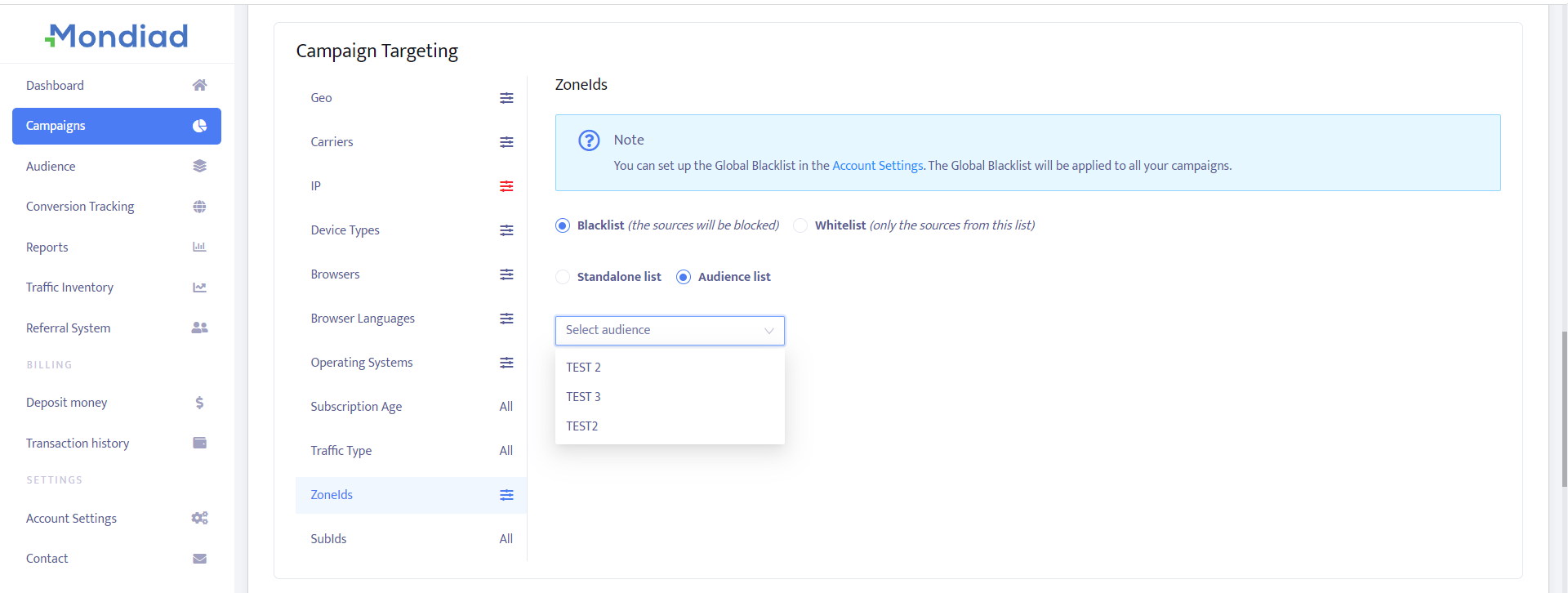
5. Don’t sleep on the Mondiad features available to optimize your campaigns, like traffic audiences, optimization rules, or whitelists/blacklists.
6. Most importantly, make sure to track conversions using tracking tokens or an external tracker so you can accurately measure and optimize your results.
Recommended next reads:
- Mondiad Case Study: How We Reduced Cost Per Lead by 50%!
- Smart Traffic Distribution For Successful Ad Campaigns
- How Affiliates Earn With Ad Networks
Traffic Tiers FAQ
Do traffic tiers affect pricing models?
Yes.
Tier 1 usually has higher CPM/CPC rates;
Tier 2 has moderate pricing;
Tier 3 has lower costs but higher scale potential.
Does Tier 3 traffic mean low quality?
Not necessarily. Tier classification reflects economic value, not strict quality. Tier 3 traffic can still perform well depending on offer relevance, vertical, funnel, etc.
Can campaigns combine multiple traffic tiers?
Yes. Many campaigns mix tiers to scale volume, maintain ROI, or test performance across GEOs. Smart segmentation often improves overall performance.
Ready to Choose the Right GEO for Your Next Campaign?
Traffic tiers are only valuable when you can target them effectively. Launch your first ad campaign with Mondiad and use advanced GEO targeting, traffic filters, and optimization tools to reach the right audience from day one – no complicated setup required.
Your ad campaign will be up and running in less than 10 minutes, and with just a $50 top-up! Choose from 8+ ad formats covering all verticals, worldwide, to fuel your success.