


What if the ad format you’re using right now is the reason your ad campaign isn’t converting?
Many advertisers pour budget into traffic without realizing that the format itself can be the difference between a losing campaign and a highly profitable one. Push ads promise engagement and quality traffic, while pop ads deliver unmatched volume at a lower cost… but only one might be right for your offer.
So before you spend another dollar, let’s settle it: which format actually converts better?
TL;DR
- Pop ads = volume & low cost: Best for fast testing, broad-appeal offers, and scaling quickly. They deliver massive traffic at a lower price but typically have lower CTRs and conversion rates.
- Push ads = quality & engagement: Higher CTRs, better targeting, and more engaged users thanks to opt-in audiences. They tend to work well for finance, dating, nutra, retargeting, and urgency-driven campaigns.
- There’s no universal winner. The best approach is to test both formats and optimize for your target CPA and ROI.
Pop Ads: The High-Volume Veteran
Pop ads are the elders of the digital advertising world. Both popups and popunders are forms of pop traffic, but they differ in how they appear and how users experience them.
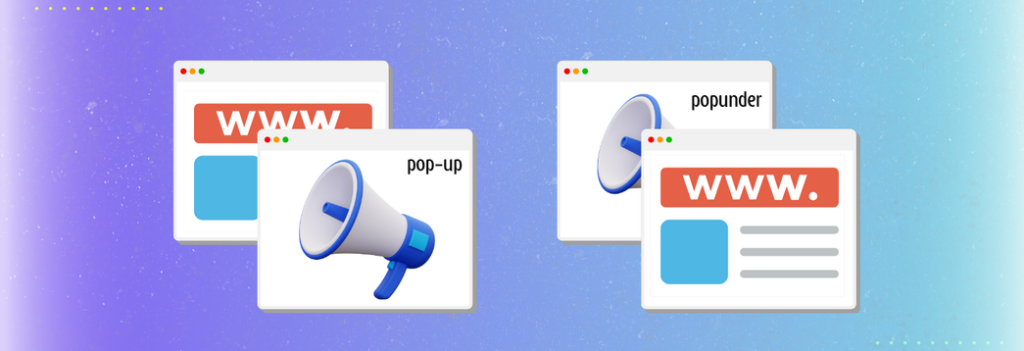
Popups open on top of the current browser window, immediately interrupting the user’s activity. They are highly visible but often more intrusive, which can lead to stronger attention but also higher annoyance and lower user acceptance.
Popunders open behind the active browser window, so the user only sees them after closing or minimizing their current tab. This makes them less disruptive while still capturing attention when the user finishes their session.
Why Pop Ads Win:
- Massive Volume:
You can reach millions of users instantly. - Full-Page Real Estate:
You aren’t limited to a tiny icon; you have the entire landing page to make your pitch. - Low Cost:
Pop traffic is notoriously cheap, making it a playground for testing new offers.
💡 Popups prioritize immediate visibility, while popunders prioritize volume and a less intrusive user experience. In modern advertising, popunders are generally more commonly used, especially in performance and affiliate campaigns.
Push Ads: The “Native” Disruptor
Push ads have grown in popularity because they’re user-permission-based, more compliant with modern browser policies, and feel less intrusive. They work especially well on mobile and are effective for driving quick engagement and conversions.
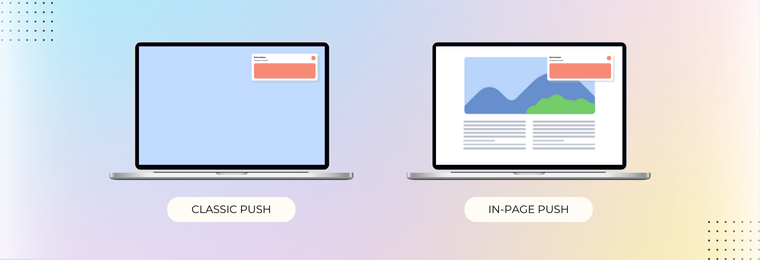
Classic push ads are delivered as system notifications directly to a user’s device (desktop or mobile). Users must opt in to receive them.
In-page push ads are displayed within a webpage itself, mimicking the look of classic push notifications but without requiring a subscription.
Why Push Ads Win:
- High Engagement:
They bypass “banner blindness.” It feels like a notification from a friend or a favorite app. - Premium Quality:
Since users opted in, you’re dealing with real humans, not bots. - No “On-Site” Required:
The user doesn’t even need to be browsing a website to see your ad; it pops up right on their OS.
💡 Classic push is best for reaching opted-in users with high intent and re-engagement potential, while in-page push offers broader reach and easier access to traffic without requiring subscriptions.
See Mondiad push traffic in action:
Push vs Pops: How to Choose Ad Formats
Choosing the right ad format isn’t about following trends; it’s about making informed decisions based on data, user behavior, and campaign objectives.

Start with Your Campaign Goals
Whether you’re aiming for, your ad campaign objective should guide every decision that follows.
Different ad formats are built to achieve different outcomes. Some are designed to drive immediate actions, while others are better suited for visibility or building trust over time.
By aligning your format choice with your end goal, you ensure your campaigns are structured for the results you actually want, not just traffic or clicks, but meaningful performance.
Understand Your Audience Behavior
Some users are highly responsive to direct and attention-grabbing formats, while others prefer a more subtle, content-driven approach.
Consider Device and Placement
Ad formats don’t perform the same across devices and environments. Mobile dominates, making push and native ads ideal due to their seamless, user-friendly experience, while desktop still offers strong potential for popunders and banners thanks to larger screens and different user behavior.
Evaluate Pricing Models and Cost Efficiency
Each ad format typically aligns with specific pricing models, such as CPM (cost per thousand impressions), CPC (cost per click), or CPA (cost per action).
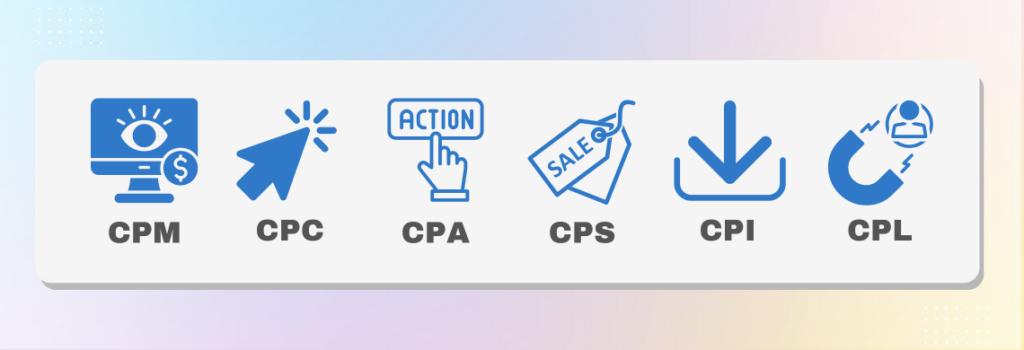
Understanding how you’re being charged and how that relates to your campaign goals is essential. High volume at a low price isn’t enough… what matters is hitting your target CPA and ROI. The goal is to balance cost, volume, and performance.
Look at Optimization Opportunities
Some ad formats give you more flexibility to test and optimize than others. The more elements you can test, the easier it becomes to identify winning combinations and scale your campaigns effectively.
Test and Scale
There is no universal “best” ad format. What works for one campaign(or one vertical) might not work for another. That’s why testing is a critical part of any advertising strategy.
Push vs Pop Advertising FAQ
While both push and pop formats can generate traffic and conversions, they behave very differently in terms of user intent, engagement, and ROI.
Which format is better for newbies, push or pop?
Push ads are easier to start with because they’re more intuitive and forgiving. You can quickly test different creatives (titles, icons, messages), understand performance metrics, and optimize without needing highly advanced setups.
They also tend to have clearer user intent since people opt in to receive them.
Which performs better for affiliate marketing, push or pop ads?
To put it simply, “better” depends on your offer type, GEOs, and campaign goal, but both formats tend to perform differently in practice.
As a rule of thumb:
– Use push ads if you want higher-quality users;
– Use pop ads if you need volume fast.
Which format is better for volume, push or pop ads?
If you’re looking for cheap traffic and fast scaling, pop ads can outperform. Even with lower conversion rates, the sheer volume can generate significant profits, especially for high-payout offers.
Which format is better for quality, push or pop ads?
If your goal is higher CTR and better user engagement, push ads usually win. Since users have opted in, they’re more likely to interact with your ads, leading to stronger conversion rates in many verticals.
Which Converts Better?
The honest answer? You decide.
| push ads | pop ads | |
|---|---|---|
| cost | medium | low |
| volume | moderate | high |
| targeting | advanced | moderate |
| use cases | Quality leads, Retargeting | Mass volume, Fast testing |
| CTR | higher | lower |
| best niches | finance, nutra, dating | sweepstakes, gambling |

Go with Pop Ads if: You have a “broad appeal” offer (like sweepstakes) and a landing page that is visually stunning and loads in under a second. It’s a numbers game; if 1% of a million people convert, you’re golden.
Go with Push Ads if: You want higher-quality leads and have the skills to write killer headlines. Push is better for building “urgency” (e.g., “Your package is waiting!” or “Limited time discount!”).
Start Your Mondiad ADventure!
At Mondiad, you can run both push and pop campaigns with advanced targeting, real-time optimization, and high-converting traffic sources. Start testing today and find your winning combination 🚀
- Access global ad inventory;
- Test both push and pop formats(and many more);
- Launch ad campaigns in less than 10 minutes. It’s that easy.
