


Picking the wrong ad network for a sweepstakes campaign usually shows up fast, approvals stall, the GEOs you need aren’t covered, or cost per lead never gets low enough to scale.
This guide breaks down the best ad networks for sweepstakes traffic in 2026, comparing ad formats, minimum deposits, and approval speed side by side, so you can pick a network that fits your test budget before you spend a dollar on it.
TL;DR
- The best ad networks for sweepstakes traffic combine large volumes of push, native, and popunder inventory with fast creative approval, granular GEO/carrier/device targeting, and fraud-screened publishers.
- Mondiad, PropellerAds, RichAds, Adsterra, and Zeropark are consistently named top picks for the vertical in 2026.
- Mondiad stands out for sweepstakes affiliates specifically because of its low $50 minimum deposit, sub-hour manual approvals, and native support for high-volume mainstream GEOs.
What Is Sweepstakes Traffic?
Sweepstakes traffic is paid traffic sent to prize-draw, giveaway, and “win a prize” offers, usually run on a CPA or CPL model. Users are asked to enter an email, phone number, or complete a short survey for a chance to win a gadget, gift card, or cash prize.
Sweepstakes (SOI/DOI) offer: A cost-per-action offer where the advertiser pays for a completed lead form (single opt-in) or a confirmed email/phone opt-in (double opt-in), rather than a sale.
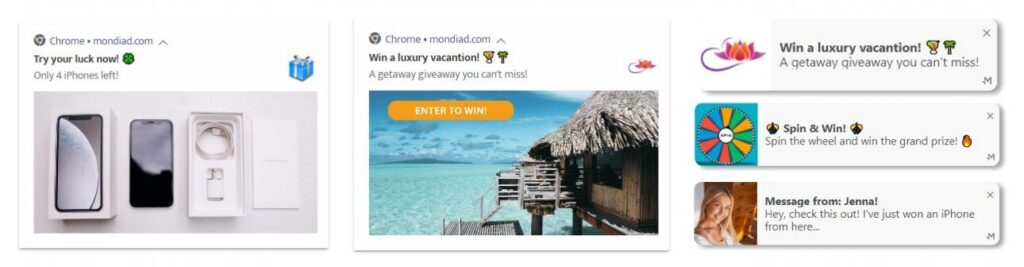
The vertical is popular with performance marketers because payouts are relatively high for a low-friction conversion, and it converts well on mobile, impulse-driven ad formats like push notifications and native widgets.
Google Sweepstake Casino Ads Blocked?
Google’s changing policies around sweepstakes casinos have made this niche more challenging for advertisers. Campaigns involving virtual currencies or prizes with real-world monetary value may face stricter gambling-related requirements, certifications, and targeting restrictions.
This is why many performance marketers look beyond Google and diversify their traffic sources. Alternative ad networks can provide access to push, native, pop, and banner traffic, depending on the network’s policies and the specific sweepstakes offer.
Read the full “Google Sweepstake Casino Ads Blocked? We Got You!” article.
What Makes an Ad Network Good for Sweepstakes Campaigns?
A good sweepstakes network gives you volume, precise targeting, and fast approvals, because sweepstakes offers are time-sensitive and often geo- or carrier-restricted.
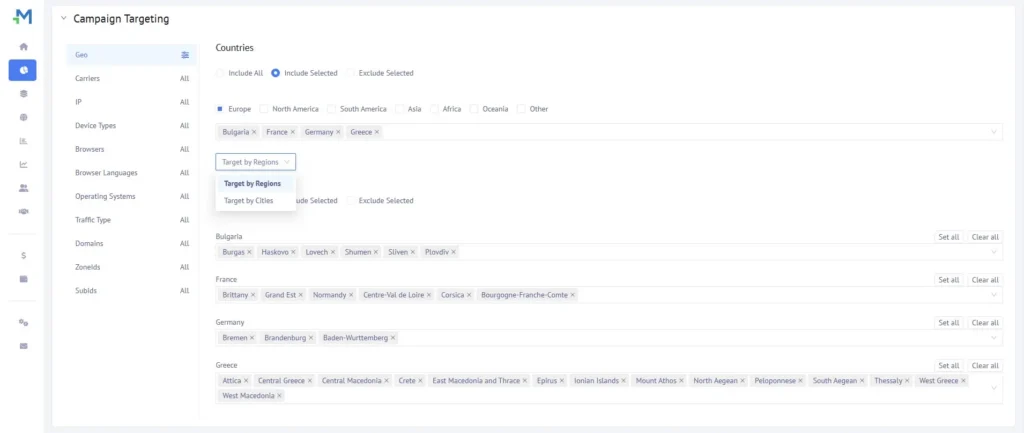
Beyond raw traffic, five factors separate a strong network from a mediocre one:
- Traffic quality and fraud filtering. Bot and proxy traffic quietly kills sweepstakes ROI since conversions rely on real form fills.
- Granular targeting. GEO, carrier, device, OS, and connection-type targeting let you isolate the mobile carriers that convert best on mainstream offers.
- Fast, human creative review. Sweepstakes creatives (flashing banners, “you won” native angles) get flagged often, so same-day approval matters.
- Flexible bidding. CPC, CPM, and Target CPA options let you scale winning sweepstakes campaigns without manual bid babysitting.
- Low minimum deposit. Sweepstakes is a testing-heavy vertical, so a $50–$100 entry point beats networks that demand $500+ upfront.
Which Ad Formats Work Best for Sweepstakes Offers?
Affiliates commonly test push and native for sweepstakes because both formats support high-volume, mobile-first acquisition. Actual CPL and CVR vary substantially by offer type, GEO, device, creative and traffic source. Here’s what each format is actually built for:
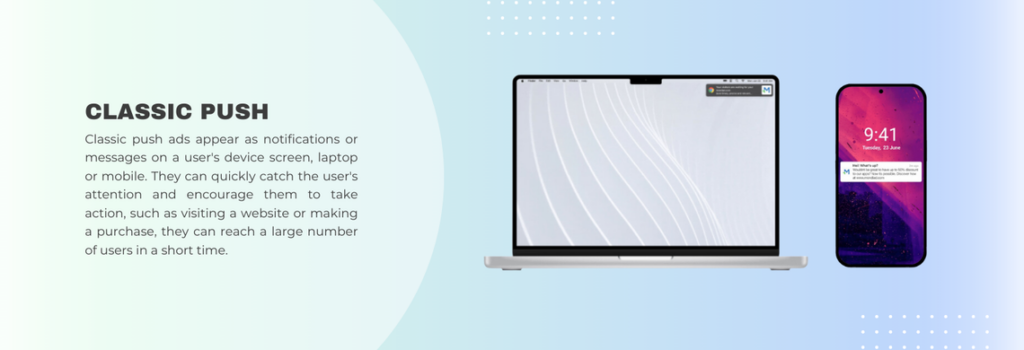
Push notification ads: Browser or app notifications sent to users who previously opted in, shown outside the browser window. High CTR, good for urgency-driven “you’re a winner” angles.
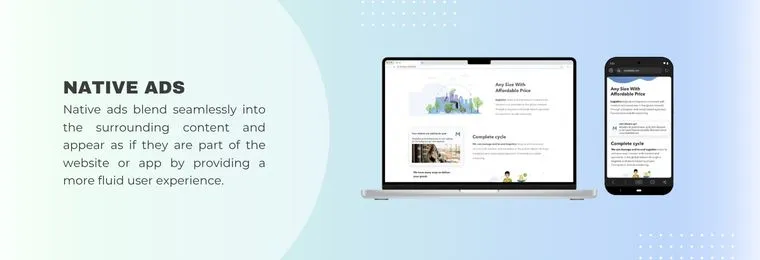
Native ads: Ad units styled to match the content around them (recommendation widgets, feed ads). Lower CTR than push but stronger trust signals, which suits sweepstakes landers with a review or comparison angle.
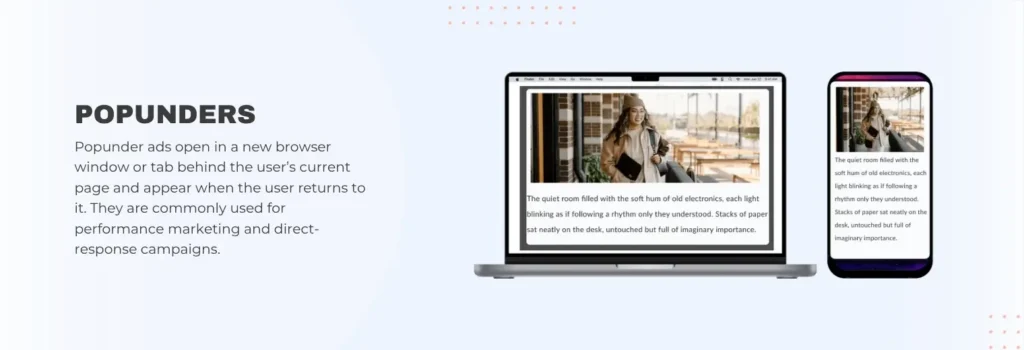
Popunder / pop traffic: A full page opened behind or in front of the active browser tab. Cheap CPM, huge volume, and a good fit for aggressive sweepstakes pre-landers.
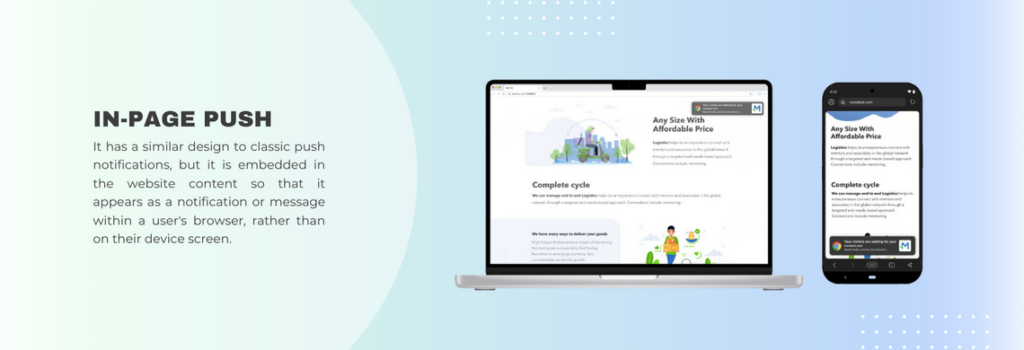
In-page push: A push-style ad unit embedded directly on a page rather than sent as a system notification, no opt-in required from the end user, which widens your reachable audience versus classic push.
Most affiliates running sweepstakes at scale combine push and native in the same account to test which angle each GEO responds to, then shift budget toward whichever format produces the lower cost per lead.
What Are the Best Ad Networks for Sweepstakes Traffic in 2026?
Affiliates most commonly recommend Mondiad, PopCash, PropellerAds, RichAds, Adsterra, and Zeropark for sweepstakes traffic in 2026. Each covers push and native inventory at scale, but they differ on minimum deposit, approval speed, and how self-serve the platform is. Here’s how they compare:
| Network | Best known for | Ad formats | Min. deposit | Approval speed |
|---|---|---|---|---|
| Mondiad | Self-serve platform with dedicated sweepstakes/mainstream GEO coverage | Push, in-page push, native, banners, popunder | $50 | Manual review, usually under 1 hour(during working hours) |
| PopCash | Self-serve, popunder exclusive ad network with 10+ industry activity | Popunder | $5 | Manual review, usually under 1 hour(during working hours) |
| PropellerAds | Large global push and pop volume | Push, native, interstitial, popunder | $100 | Same-day, automated + manual |
| RichAds | Optimization tooling for advanced media buyers | Push, in-page push, native, popunder, calendar push | $150 | Same-day |
| Adsterra | High-volume popunder and social bar formats | Popunder, native, push, social bar, interstitial | $100 | Same-day |
| Zeropark | Pop and domain redirect traffic with self-serve bidding | Popunder, push, domain redirect | $200 | 1–2 business days |
Sweepstakes offers (gift card giveaways, “win a phone” flows, prize draws) rely on fast, high-volume traffic and quick testing. Most sweepstakes offers pay on a CPA, SOI/DOI or pin-submit basis, so you need access to the right formats, solid GEO coverage and enough control to optimize by source. Here is why each network fits.
Mondiad
Mondiad gives sweepstakes advertisers a mix of push, popunder, in-page and other performance formats, covering both mobile and desktop. That suits sweepstakes campaigns, which often need several creative angles tested at once. Its self-serve platform lets you launch small test budgets, cut weak sources and scale what converts, without a large minimum commitment.
Mondiad Recommendation: Sweepstakes / India / Classic Push
For sweepstakes campaigns, Mondiad recommends testing Classic Push as a starting format, in India. Push can generate high-volume, mobile-focused traffic and works particularly well with simple, attention-grabbing creatives that encourage users to click through to the offer.
The key is to test different creative angles, landing pages, and targeting segments rather than assuming one setup will work across every offer.
PopCash
PopCash is a popunder-focused network, which makes it a straightforward fit for sweepstakes. Popunders send users straight to a full-page landing page, so a prize or giveaway offer gets the user’s full attention with no banner or small ad slot competing for it. Its self-serve platform makes it easy to launch low-budget tests, compare placements and scale the sources that convert, which suits offers that need fast iteration.
PropellerAds
PropellerAds is one of the largest self-serve networks, with very large daily impression volume and strong coverage across push, popunder, in-page and interstitial formats. Volume matters for sweepstakes because offers can burn out on a single GEO or creative. A big pool of traffic gives you room to rotate angles and expand into new regions, and its optimization tools help automate part of the testing. Traffic costs may be higher due to competition.
RichAds
RichAds is a favorite among affiliates running mobile-heavy sweepstakes funnels. It offers push, in-page, popunder, native and other formats, along with broad GEO coverage, including tier-1 countries where sweepstakes payouts are usually highest. Its focus on traffic quality, including bot filtering and source verification, helps keep lead quality high. Many sweepstakes advertisers care about this because their offers are often capped or audited.
Adsterra
Adsterra has a long track record (founded in 2013) and works well for sweepstakes because of its scale and flexible formats, including popunder, social bar and direct link. Its mix of automated and manual traffic checks suits advertisers who want a lower fraud risk when scaling a prize offer. It is also a good option for broad GEO testing before you commit to a region.
Zeropark
Zeropark specializes in high-intent traffic through formats like domain redirect, pop ads and injection traffic. It is well suited to CPA-driven sweepstakes campaigns where you want users who are already in a browsing or shopping mindset. Its tools for tracking and optimizing by source help you identify profitable placements quickly, which is key when sweepstakes offers have short lifespans.
What’s New In Sweepstakes Advertising in 2026?
Sweepstakes advertising in 2026 is becoming more data-driven, with success measured less by initial conversions and more by what happens after the click. The points below draw on Mondiad’s campaign data and guidance, supplemented by broader industry research where noted.
1. First-party and consented data matter more. Privacy regulation and signal loss (per IAB’s State of Data 2026) are fragmenting attribution across the industry. Based on many successful compaign and a tight collaboration with top performing ad trackers in the industry, we highly recommend passing campaign parameters and postbacks to connect traffic, conversions, costs, and revenue, not just optimizing from clicks.
2. Traffic-quality controls are more sophisticated. Conversion volume alone no longer signals traffic quality.
Mondiad’s 2026 guide, How to Build a Winning Whitelist from Push and Pop Traffic – A Tracker’s Guide, shows how to do this by using zone-level data, landing-page testing, conversion tracking and postbacks.
The guide emphasizes moving beyond overall campaign averages to identify the specific traffic sources that perform, and then building a whitelist around those proven combinations.
3. Creative review requires more attention. Creative approval is increasingly built into campaign planning industry-wide. Based on out traffic data, we stress on accounting for creative and landing-page issues in reviews, favoring accurate claims over aggressive urgency messaging.
4. Mobile strategy needs separate evaluation. Rather than assuming sweepstakes traffic is mobile-first, advertisers should evaluate mobile and desktop performance separately.
5. AI speeds creative production, raising the bar for testing. IAB research found 83% of ad executives report AI deployed in creative production, alongside a gap between advertiser enthusiasm and consumer sentiment. The takeaway isn’t “make more creatives,” but that cheaper, faster production makes systematic testing (and disabling underperformers) more essential.
6. Source-level optimization is increasingly important. Judge networks not just on volume, but on how much control advertisers retain once campaigns launch.
Check out Mondiad’s Case Study: How We Reduced CPL by 50% which specifically covers a Sweepstakes campaign using Classic Push, with optimization based on campaign performance.
7. SOI, DOI, and higher-friction offers need different benchmarks. Based on our data, we distinguish low-friction SOI from higher-friction flows like CC/PIN Submit – faster conversions don’t always mean better economics, and fewer conversions don’t always mean weaker performance.
8. Downstream lead quality beats raw conversion volume. Rather than stopping at clicks → conversions, our QA guidance recommends tracking the full funnel: clicks → leads → confirmed leads → qualified users → revenue. This makes CPL, confirmation rate, and ROI more useful than conversion count alone.
Bottom line: The real 2026 shift isn’t a new format or targeting option, it’s optimization depth. A solid traffic test should answer: Where did the traffic come from? What converted? What happened after? Can winning segments be isolated and scaled?
How To Choose the Right Network for Your Sweepstakes Campaigns?
Match the network to your testing budget and target GEOs first, then optimize for format variety. A $50 test budget on a network with a $200 minimum deposit doesn’t work, so filter by entry cost before comparing features.
- Confirm GEO coverage. Check that the network has strong volume in your target countries, not just global totals.
- Test with a small budget first. Run a $50–$100 test across two to three formats before scaling spend on any single source.
- Check payout and payment methods. Confirm the network supports your preferred processor (PayPal, crypto, wire) and a withdrawal minimum you’re comfortable with.
- Ask about compliance review. Sweepstakes creatives with prize imagery or countdown timers get rejected on stricter networks, confirm their creative policy upfront.
If you’re new to CPA offers generally, our CPA marketing for beginners guide covers offer selection and tracking setup in more depth.
Frequently Asked Questions
What is the best ad network for sweepstakes traffic?
There’s no single “best” network for every case, but Mondiad, PropellerAds, RichAds, Zeropark, and Adsterra are the most consistently recommended for sweepstakes in 2026, thanks to their push and native inventory volume and sweepstakes-friendly creative review.
Which ad format converts best for sweepstakes offers?
Push notifications and native ads typically convert best for sweepstakes, since both formats support urgency-driven “you’re a winner” messaging without needing a full landing page click-through first.
How much budget do I need to test a sweepstakes ad network?
A $50–$100 test budget is usually enough to run a first pass across two or three ad formats on a single network before deciding whether to scale.
Is push or pop traffic better for sweepstakes campaigns?
Push traffic generally produces a higher-quality, more engaged lead for sweepstakes offers, while pop/popunder traffic delivers lower cost per click and higher volume, many affiliates run both and compare cost per lead directly.
What minimum deposit is typical for sweepstakes ad networks?
Minimum deposits for sweepstakes-friendly networks typically range from $50 to $200, with Mondiad’s $50 minimum on the lower end of that range.
Why Do Affiliates Run Sweepstakes Campaigns on Mondiad?
Affiliates choose Mondiad for sweepstakes traffic because of its low entry cost, fast manual approvals, and mainstream GEO depth. Founded by the team behind the long-running popunder network PopCash, Mondiad runs a self-serve dashboard covering push, in-page push, native, banner, and popunder formats, with targeting by GEO, carrier, device, OS, browser, and connection type.
For sweepstakes specifically, the combination that matters most is a $50 minimum deposit (versus $100-$200 on several competitors) paired with manual review that typically finishes in under an hour. This helps when you iterate on “you won” creative angles that stricter automated filters sometimes flag by mistake.
