


Black Friday ad mistakes belong to Halloween, not to your ad account. Most of the horror stories we see in Q4 aren’t caused by bad luck. They come from a handful of avoidable mistakes, and every one of them has a simple fix.
Halloween is just one month away from Black Friday which is just enough time to clean up your campaigns before costs climb.
This guide walks through 13 common campaign mistakes, what they look like in real life, and how to fix each one without needing a technical background.
TL;DR
- Q4 costs usually start rising in October and peak around Black Friday (November 27) and Cyber Monday (November 30).
- The most common Black Friday ad mistakes: skipping tests, recycled creatives, slow landing pages, no daily caps, overposting, ignoring local rules, no reserve budget, and more.
- Every one of them is fixable this week, while auctions are still reasonable.
- Regional dates like Diwali (November 8) and Singles’ Day (November 11) arrive before Black Friday, so plan for them too.
What makes Black Friday ad mistakes so scary in Q4?
A scary campaign is one that spends money faster than it learns anything. It usually looks fine for a few days. Then the numbers slip and nobody can explain why.
Q4 makes this worse. More advertisers compete for the same audience, so prices rise while the room for mistakes shrinks. A small error that cost you $20 in early October can cost $200 in Black Friday week.
Luckily, there’s enough time to clean up your campaigns before costs climb. And honestly, the monsters in your ad account aren’t random. They’re the same we run into every year.
What is Q4 seasonality in programmatic advertising?
Q4 seasonality is the predictable rise in ad demand, auction competition, and bid prices between October and December, driven by holiday shopping. In programmatic buying, ad space is sold through automated auctions, so when more advertisers bid for the same audience, prices go up.
Here’s the short version of the mechanics:
- Programmatic advertising: automated, auction-based buying and selling of ad impressions in real time.
- CPM (cost per mille): what you pay per 1,000 impressions.
- Auction pressure: the competition between bidders for the same impression, which pushes clearing prices up.
The catch is that supply doesn’t grow at the same speed as demand. More advertisers compete for the same audience in Q4, while the number of impressions available doesn’t grow at the same pace. That gap pushes prices up.
How much do CPMs rise before Black Friday?
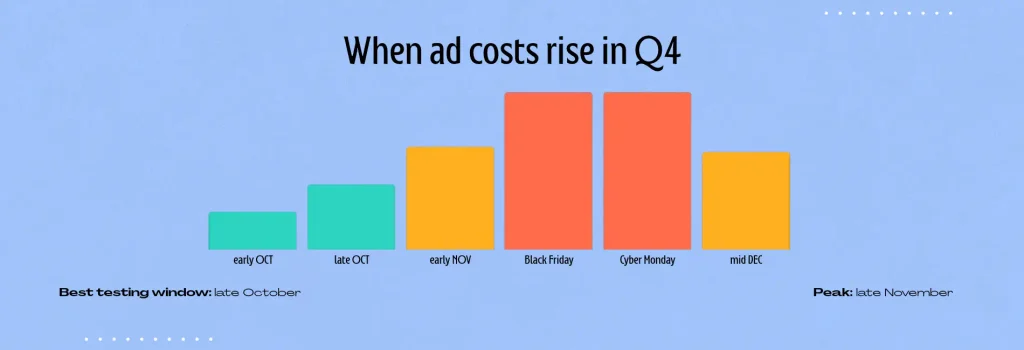
CPMs typically rise in stages rather than all at once, with the sharpest jump in the final two weeks of November.
| Period | Competition level | What usually happens to costs |
|---|---|---|
| Early October | Low to moderate | Near baseline, best window for testing |
| Late October | Moderate | Early movers push prices up slightly |
| Early November | High | Noticeable climb as retail budgets switch on |
| Black Friday week | Very high | Peak CPMs, volatile auctions |
| Cyber Monday | Very high | Peak continues, ROI drops for late entrants |
| Mid-December | High, then falling | Costs ease after shipping deadlines |
Exact numbers depend on GEO, format, and vertical, so treat the table above as a planning frame, not a promise.
When should affiliates launch Black Friday campaigns?
Launch your tests in the first half of November and your scaled campaigns by early November. That gives you enough time to collect data while auctions are still cheap, then scale winners before the November rush.
A simple timeline that works for most people:
- First week of November: test creatives, offers, and 1-3 GEOs on small budgets.
- Second week of November: kill losers, keep the 20% that actually convert.
- Mid-November: increase budgets on winners and prepare backups.
- Black Friday to Cyber Monday: run what you’ve proven. Don’t experiment here.
- Early December: reassess, because costs often soften and some offers keep converting.
Waiting until Black Friday week to “see what happens” is how people burn a month of budget in four days.
For a full campaign walkthrough, see our dedicated guide: Master the Art of Black Friday Advertising!
Which Halloween ad mistakes should you fix first?
Start with the mistake that can burn the most budget the fastest: launching without a test. After that, work down the list. None of these fixes needs a technical background.
1. The Zombie Campaign: launching without a test
Launching an untested campaign in Black Friday week is the fastest way to lose budget. You push it live, hope for the best, and the money is gone before you can react.
The fix is simple. Run a small test now with 2 or 3 creatives and 2 or 3 GEOs on a limited budget. Keep the roughly 20% that actually convert. You can’t optimize in 48 hours, so don’t plan to.
2. The Ghost Creative: reusing last year’s ads
Old creatives get ignored. Your banner might look great, but it also looks exactly like the one your audience scrolled past twelve months ago. Holiday feeds are crowded, and people have trained themselves to skip the familiar.
Refresh the image, the headline, or the offer angle. Even a small change, like a new color or a countdown with a real deadline, can bring attention back. Only add a timer if the offer genuinely ends when it hits zero (see mistake #6).
3. The Haunted Landing Page: slow on mobile
A slow landing page wastes the click you already paid for. People tap your ad, stare at a blank screen, and leave.
Open your landing page on your phone, on mobile data, right now. If it takes more than a few seconds, cut the heavy images and extra scripts. Google’s own guidance on Core Web Vitals treats a largest contentful paint of under 2.5 seconds as a good target. A fast page is the cheapest conversion boost you’ll find.
4. The Vampire Budget: no daily caps
A daily cap is a spending limit per campaign per day, and running without one is risky. One bad auction day can quietly drain a week of profit while you’re asleep.
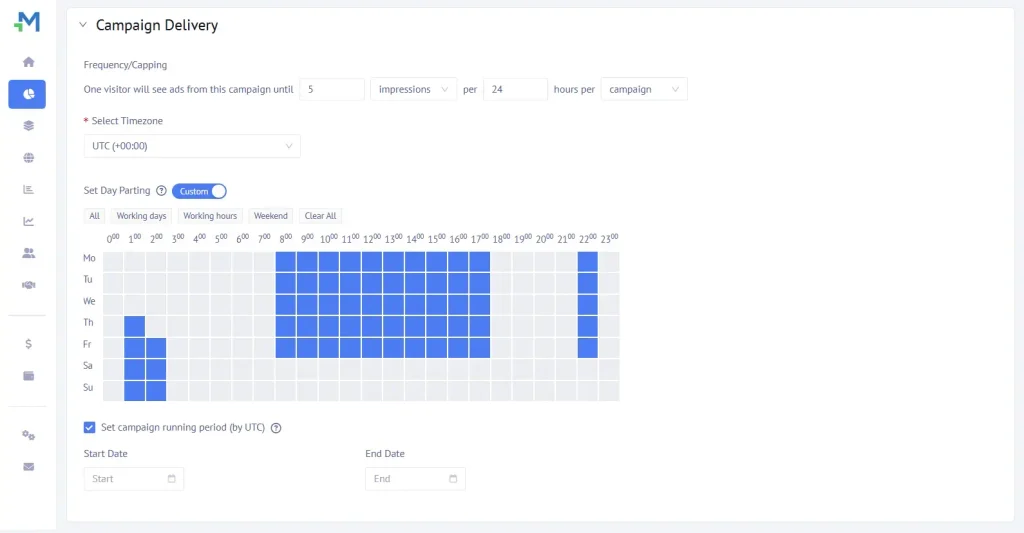
Set a daily cap on every campaign. It takes a minute, and it’s the best safety net you have.
5. The Overposting Poltergeist: pushing too often
Too many messages train subscribers to ignore you or opt out. Flash sale, reminder, last chance, another reminder. We’ve all received that sequence, and we all know how it ends.
Space out your messages and give each one a clear reason to exist. A countdown offer works better when it’s rare and the deadline is real. If the timer resets, or the same deal returns the next day, it stops being urgency and becomes a compliance risk.
6. The Cursed Compliance Check: ignoring local rules
An ad that’s fine in one country can get rejected, or cause real trouble, in another. This is especially true for gaming, sweepstakes, and finance.
Check the local rules before you spend, and keep a separate version of your ad for each GEO. In the US, the FTC’s advertising and marketing guidance is a useful baseline. If you work in a regulated niche, our guides on popunder ads for iGaming and sweepstakes advertising cover what to watch for.
Countdown timers and “ends tonight” claims need a real deadline. In the UK, falsely claiming an offer is available for a limited time is a banned practice under the DMCC Act. The CMA’s guidance says a timer can be misleading if the price doesn’t change when it reaches zero. In the EU, false “very limited time” claims are blacklisted under the Unfair Commercial Practices Directive. Before adding a timer or “last chance” line to a Black Friday creative:
- Confirm the offer really ends at the time shown.
- Don’t reset or extend the timer, or relaunch the same deal days later.
- Tie stock claims (“only 3 left”) to real inventory.
- Check the advertiser’s terms for each UK and EU GEO.
7. The Empty Candy Bowl: no reserve budget
Spending everything early leaves you stuck when a better opportunity shows up. A Cyber Monday window or a sudden price spike arrives, and you have nothing left to use.
Keep roughly 20% in reserve. A few sections below shows a simple way to split your budget.
8. The Phantom Conversion: incorrect or missing conversion tracking
Without reliable conversion data, you can’t optimize with confidence. The classic version: a campaign launches without an S2S postback, or with a broken [clickid] macro. It’s missing, truncated by the tracker, or passed literally as “[clickid]”.
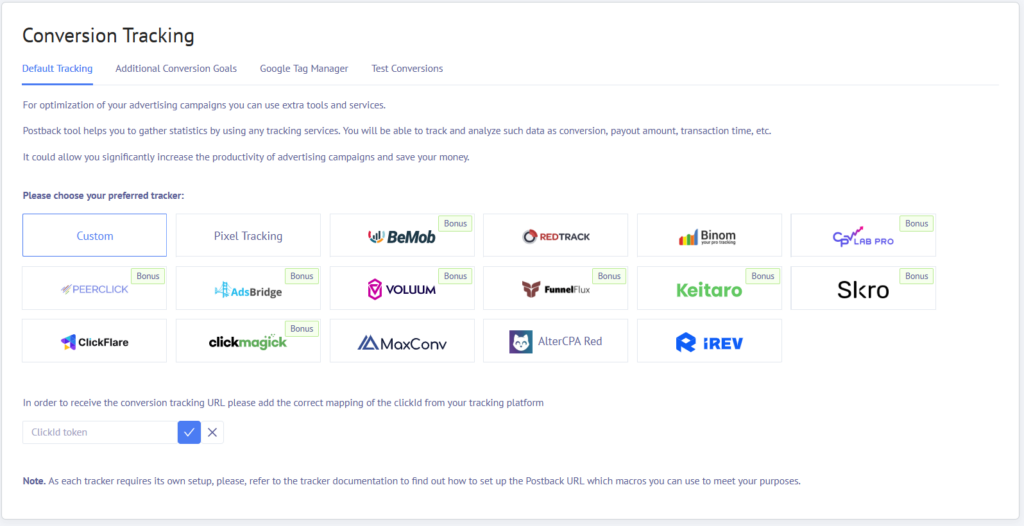
Set up an S2S postback tracking before launch instead of relying on a cookie-dependent pixel. Mondiad’s Conversion Tracking includes presets for Voluum, Binom, Keitaro, RedTrack, and others. Then run Test Conversions and send the payout in the postback, so ROI is calculated for you.
9. The Bottomless Cauldron: targeting too broadly with a high initial budget
Running every GEO and source at a high bid from day one can exhaust your budget before any useful data builds up. It feels ambitious. In practice it’s just an expensive way to learn nothing.

Start with 1-3 GEOs and a test budget (from $10/day). Use Optimization Rules to automatically block subs that spend without converting, and set zone budget limits (from $2/day). Then scale what works.
10. The Impatient Reaper: optimizing on too little data
Judging a campaign too early is as risky as not optimizing at all. Blocking a sub after three clicks, or writing off a Target CPA campaign after a few hours, is premature. Conversions are attributed to the click date and may arrive up to 30 days later.
Review several days of data before you cut anything. Target CPA needs roughly 10 conversions per segment to learn, and CPA normally moves around the target (in practice, about ±10%), so a small swing isn’t a red flag.
11. The Tired Mummy: too few or fatigued creatives
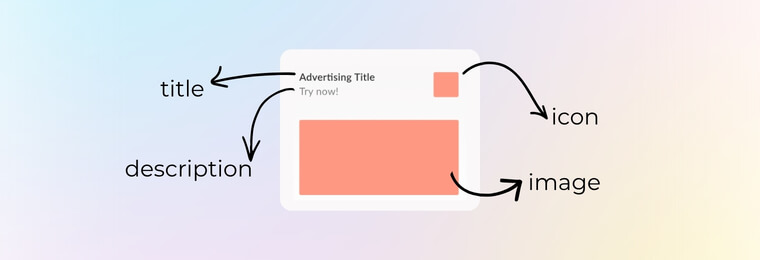
One creative running for weeks is a creative that’s already tired. CTR falls, and nobody notices until the spend adds up. Another common slip: the main message sits in the description, which some native placements don’t show at all.
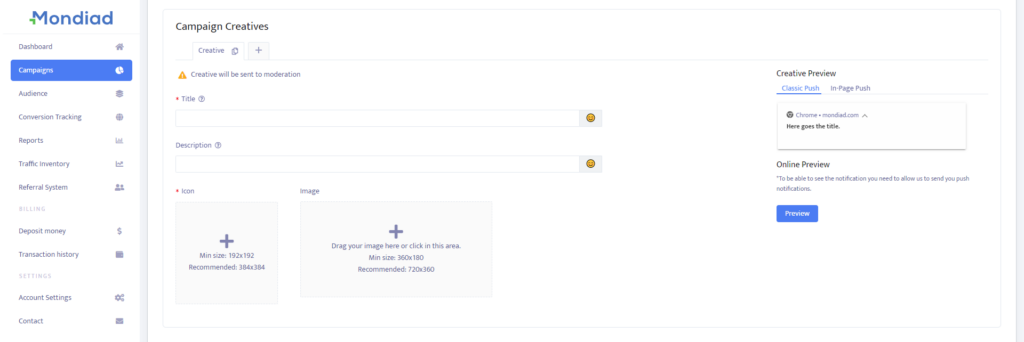
Test 3-5 creatives (the maximum is 10 per campaign) and rotate them. Put the main message in the title. Personalization macros like [city] or [country] help too, for example “Offers in [city]”.
12. The Locked Crypt: settings that unintentionally limit traffic
Some settings quietly shrink your reach without any warning. An Adult-tagged landing page excludes mainstream placements. Other usual suspects are inactive zone or sub whitelists, below-market bids, and restrictive dayparting.
Check the estimated available traffic in the traffic inventory. If delivery is low, work through this list: campaign status and balance, whitelists, landing page classification, and bid.
13. The Fresh Blood: segment push by subscription age
Fresh subscribers often convert differently from older ones. If you run push, test subscription-age segments separately, with different bids for each.
Scare vs. fix: a quick comparison
Most Black Friday ad mistakes come from worries that sound bigger than they are. Almost every one has a boring, practical fix, and none of them requires skipping the season.
| The mistake | What it looks like | The fix | Effort |
|---|---|---|---|
| Launching untested | Budget gone before you can react | Test small now, keep the winners | Medium |
| Recycled creatives | Low clicks, familiar-looking ads | Refresh the visual, headline, or angle | Low |
| Slow mobile page | Clicks without conversions | Test on your phone, trim the weight | Low to medium |
| No daily caps | One bad day drains the week | Set a cap on every campaign | Low |
| Overposting | Falling clicks, rising opt-outs | Space out messages, give each a reason | Low |
| Ignoring local rules | Rejected or risky ads | Check rules per GEO before spending | Medium |
| No reserve | Nothing left for late opportunities | Hold back about 20% | Low |
| Broken conversion tracking | Missing or literal [clickid], no usable conversion data | Set up S2S postback, run Test Conversions, send payout | Medium |
| Too broad, too fast | Budget spent before data builds up | Start with 1-2 GEOs from $10/day, use Optimization Rules and zone limits from $2/day | Low |
| Optimizing too early | Subs blocked after a few clicks, CPA judged in hours | Review several days of data, about 10 conversions per segment | Low |
| Fatigued creatives | Falling CTR, message hidden in the description | Rotate 3-5 creatives, put the message in the title | Low to medium |
| Traffic-limiting settings | Low delivery despite budget | Check status, balance, whitelists, landing page classification, bid | Low |
Why the scares feel real. Costs do climb. They start rising in October, peak around Black Friday and Cyber Monday, and can stay elevated until the last shipping cutoffs. The mistake is reacting to that with panic, either overbidding or skipping Q4 entirely.
What the fixes have in common. They all move decisions earlier and smaller. You spend a little while auctions are cheap, learn what works, and put the larger share of budget (roughly 60%) behind proven campaigns, with the rest split between testing and a reserve.
One rule for the peak. From Black Friday to Cyber Monday, run what you’ve already proven and don’t experiment. Experiments belong in October.
Let AI do the work for you!
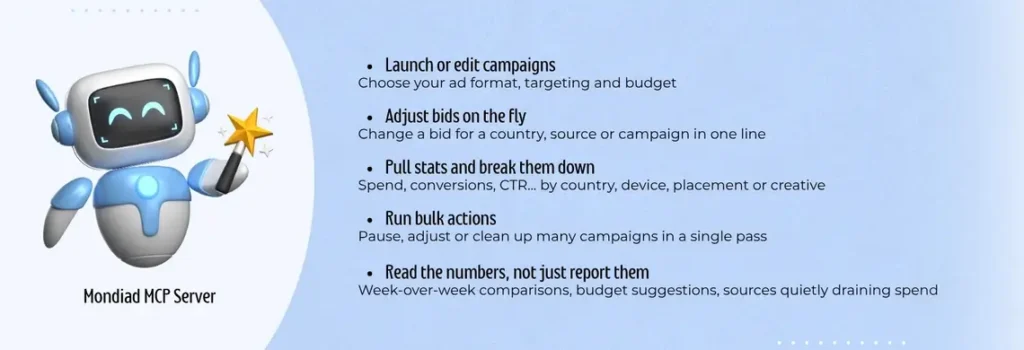
Connect your Mondiad account with your favorite AI assistant via the Mondiad MCP and let the AI simplify your work.
How much budget should you keep in reserve?
We recommend putting roughly 20% into testing, 60% into proven winners, and keep 20% in reserve. This is a starting point based on how we see advertisers on Mondiad approach Q4, not a fixed formula.
| Budget share | Where it goes | Why |
|---|---|---|
| 20% | Testing | Find winning creatives and GEOs early |
| 60% | Proven winners | Scale what already converts |
| 20% | Reserve | Cover spikes and late opportunities |
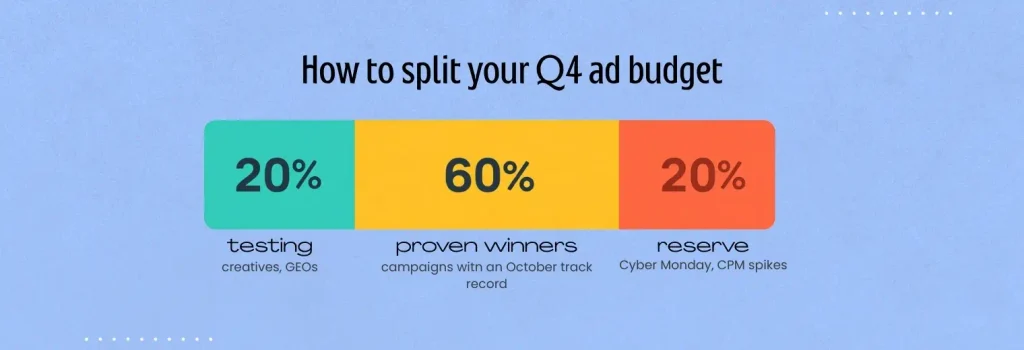
The reserve matters more than people think, because Q4 auctions can flip overnight and a winning campaign in week one may collapse in week three.
- Testing (20%): new creatives, new GEOs, new landing pages.
- Scaling (60%): campaigns with a track record from October.
- Reserve (20%): for Cyber Monday opportunities, or to cover a sudden CPM spike.
This isn’t a magic formula. If your offer has a long conversion cycle, shift more toward testing early. If you’re running a short-window promo, shift toward scaling.
How do you start testing before prices climb?
Start now, and test across 8+ ad formats, track every conversion, and let Optimization Rules cut the waste. Early tests run while auctions are still reasonable, so you’ll have data to scale before the November rush.
Which dates should you plan around before Black Friday 2026?
Q4 isn’t one peak but a chain of regional ones, and several of them hit before Black Friday. If you only plan for November 27, you’ll miss cheaper windows in some GEOs and pay peak prices in others. That’s why the next few days matter more than they seem to.
Here are the dates to put in your calendar:
| Date (2026) | Event | Where it matters | What to expect |
|---|---|---|---|
| Nov 8 | Diwali | India, plus diaspora audiences | Gifting and electronics demand starts rising 1-2 weeks earlier |
| Nov 11 | Singles’ Day (11.11) | China, Southeast Asia | Marketplace-driven; local platforms dominate attention |
| Nov 27 | Black Friday | US, Brazil, Europe, LATAM | The big one for competitive bidding |
| Nov 30 | Cyber Monday | US, UK, parts of Europe | Strong ecommerce focus |
| Dec 12 | 12.12 | Southeast Asia | A second wave that many affiliates ignore |
| Dec 25 – 26 | Christmas and Boxing Day | Europe, UK, Commonwealth | Gift offers peak earlier, clearance offers later |
Walk into November with winners ready to scale. If you wait, you’ll be “seeing what happens” at peak prices, and that’s rarely fun.
FAQ
When should I start testing for Black Friday?
Start now. Early tests run while auctions are still reasonable, which gives you data to scale winners before the November rush. Waiting until Black Friday week means testing at the highest prices of the year.
How much should I keep in reserve for Q4?
About 20% is a good starting point. It covers price spikes and last-minute chances like Cyber Monday. Adjust it for your offer: short promos can lean toward scaling, and longer conversion cycles toward testing.
What’s the most common Black Friday ad mistake?
The most common Black Friday ad mistake is skipping the test phase. Many advertisers launch untested campaigns in Black Friday week and burn through budget before learning what works. A small early test costs far less than a rushed launch.
Should I avoid Q4 because of higher costs?
No. Skipping Q4 means missing the strongest buying season of the year. Test early, cap your daily spend, keep a reserve, and you can compete without overpaying.
What is a daily cap in advertising?
A daily cap is the maximum amount a campaign can spend in one day. It stops a single bad auction day from draining your budget, so set one on every campaign.
Banish Black Friday ad mistakes from your ad account!
If you’re an affiliate and you want to test before prices climb, now is the moment. Join Mondiad to access 8+ ad formats across all verticals, with in-house optimization tools to help you spot winners faster, and start your Black Friday tests while costs are still reasonable.
Stay tuned in the upcoming weeks for more Black Friday 2026 surprises.🎁💡
