


Pop traffic remains one of the most scalable and cost-efficient acquisition channels in affiliate marketing when it is treated as a system, not a standalone traffic source. This guide breaks down exactly how to buy pop traffic, structure campaigns, optimize performance, and scale profitably using a repeatable framework.
Unlike surface-level guides, this is a Mondiad full operating system for running pop campaigns today. Here’s what Mondiad’s network data shows about profitable pop traffic in current times.
TL;DR
- Pop traffic is cheap, and scalable, making it a popular channel for affiliate marketing, lead generation, and CPA offers.
- Popunders outperform pop-ups by delivering a less intrusive user experience and more natural engagement.
- Successful campaigns rely on data-driven, granular optimization, not broad targeting.
What Is Pop Traffic?
Pop traffic refers to ad impressions that popunder or popup formats deliver when a user interacts with a website. These ads open either behind the active window (popunder) or on top of the page (popup).
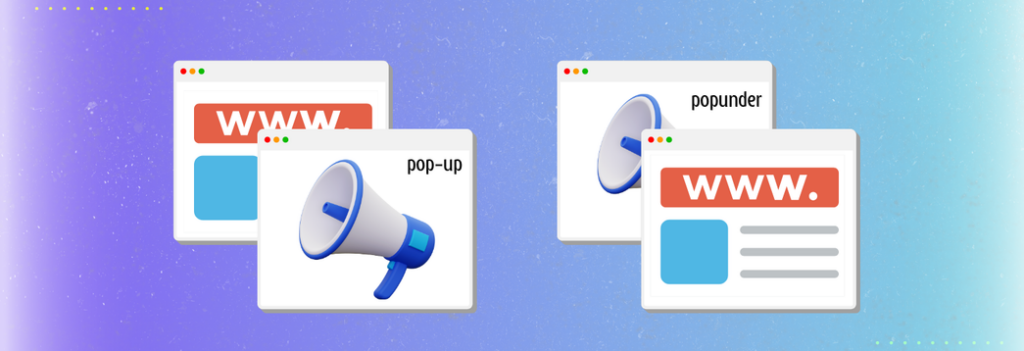
Publishers typically sell pop traffic on a CPM (cost per thousand impressions) model, which makes it a high-volume, auction-driven traffic source that affiliate marketers, lead generators, and app promoters use heavily.
What Are the Benefits of Pop Traffic?
- Low entry cost: Pop ads are among the cheapest traffic sources, allowing advertisers to test campaigns with minimal budget and quickly gather performance data.
- Massive scale: They provide access to large global traffic volumes across multiple GEOs, making it easy to scale campaigns once profitability is found.
- Strong for direct response: Pop traffic works well for aggressive, conversion-focused funnels where quick user action is expected.
- Granular targeting: Advertisers can segment by GEO, device, OS, and browser to isolate high-performing traffic groups.
- Easy scaling: Once winning placements are identified, campaigns can scale efficiently through bid increases and whitelisting.
- Great for testing offers: Low-cost impressions make pop traffic ideal for validating new offers and funnels before moving to higher-cost channels.
- Affiliate-friendly: Pop traffic integrates well with CPA/CPL models, making it a staple channel for affiliate marketers focused on ROI.
Are Popunders Better Than Pop-Ups?
1. Popunders behave differently. Instead of interrupting the moment, they open quietly behind the main browser window. The user continues browsing as usual, unaware anything has changed. Only later, after they’ve finished reading, watching, or clicking away, do they return to their desktop or switch tabs and discover the page waiting underneath.
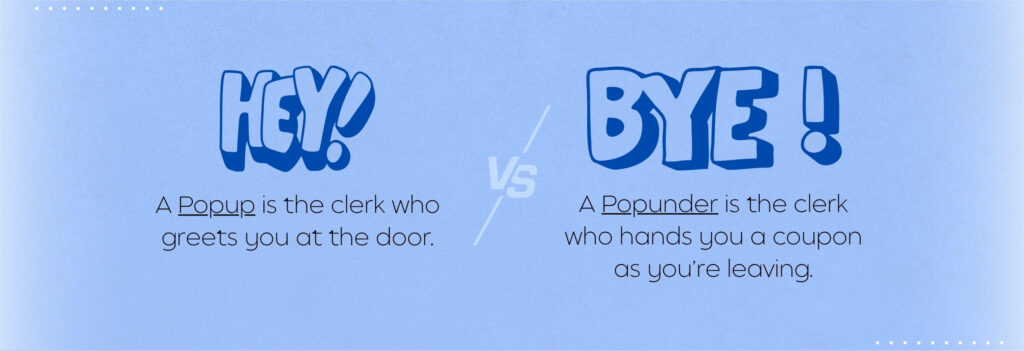
That delay changes everything. Because the attention is no longer forced, it feels more natural. Users are more likely to engage with the content on their own terms, rather than reacting defensively. This often leads to longer exposure and a higher chance that users actually see the message.
From an advertiser’s perspective, that subtle shift makes popunders more stable at scale. They avoid the immediate rejection behavior of pop-ups, blend better into browsing flow, and work more effectively with affiliate funnels where timing matters more than interruption.
In short, pop-ups fight for attention in the moment, while popunders wait for it, and that difference is why they tend to perform better in performance-driven campaigns.
How Does Pop Traffic Compare to Push and Native Ads?
Pop ad campaigns play by a very different set of rules compared to ad formats like native, banner, or push.
| Feature | Pop ads | Push ads | Native ads |
|---|---|---|---|
| Ad format | Full-page popunder/interstitial opens behind site | Notification-style alerts (desktop/mobile) | Ads blended into content/feed |
| User intent | Very low (interruptive traffic) | Medium (opt-in subscribers) | Higher (context-based interest) |
| Attention level | Instant full attention when tab is viewed | Quick glance notification | Passive, gradual engagement |
| Traffic volume | Very high, scalable globally | Medium, subscriber-based | High, but competitive |
| Targeting precision | Moderate (GEO/device/source-based) | Good (subscriber segments) | Strong (interest/context + algorithms) |
| Cost per click | Very low | Low-medium | Medium-high |
| Conversion behavior | Impulse + funnel-dependent | Fast reaction, short attention window | Higher-quality, intent-aligned |
| Best for | Sweepstakes, dating, utilities, mobile apps | Alerts, re-engagement, short funnels | E-commerce, content, lead gen |
| Optimization style | Aggressive testing (whitelist/blacklist) | Creative + audience segmentation | Creative + contextual optimization |
| Risk level | High (cold traffic, variance) | Medium | Lower–medium (more stable intent) |
The biggest difference comes down to how they’re delivered, how users experience them, and how advertisers optimise them.
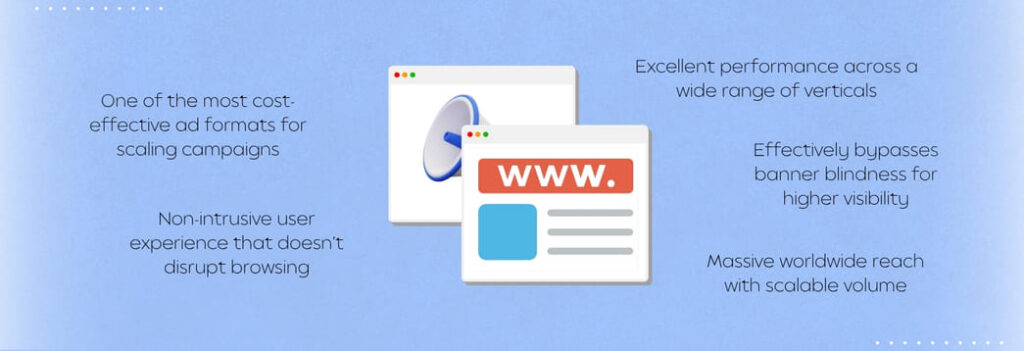
- Volume vs. precision
Pop campaigns are built for mass reach. You can generate huge volumes of traffic quickly, which is why they’re often used in performance marketing and affiliate campaigns.
Other formats (especially native or push) allow for more granular targeting and segmentation, often leading to more qualified traffic. - Cost model & pricing behavior
Pop traffic is typically CPM-based and cheaper than most other formats. You’re paying for impressions at scale. This makes pop ideal for testing offers quickly and at scale, but it also means you need strong funnel optimisation to stay profitable. - Creative requirements (or lack of them)
Pop ads are extremely simple: no banners, no headlines, no images. You’re basically sending users straight to a landing page. That shifts the entire performance burden onto: your landing page, your offer, and your targeting setup.
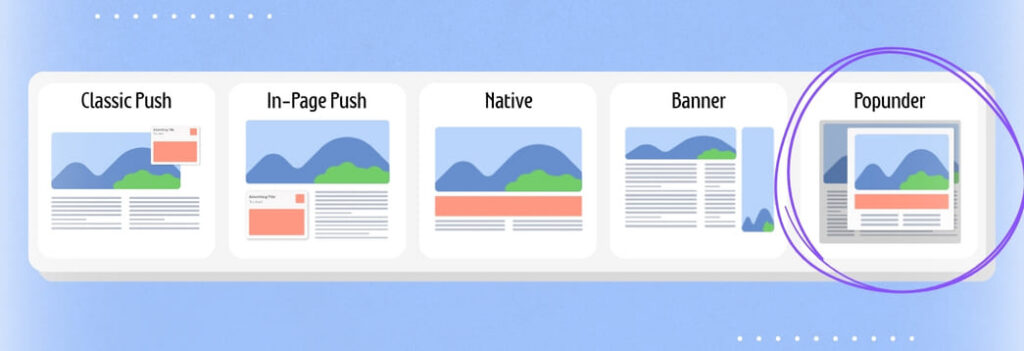
In short, pop campaigns are about scale, speed, and raw traffic, while other formats are more about precision, engagement, and user intent. If you’re running performance campaigns, pops are great for testing and volume. If you care more about brand perception or high-intent users, other formats usually win.
Which GEOs and Verticals Work Best for Pop Traffic?
Not all GEOs behave the same in pop traffic.
Tier 1 GEOs → high CPC, high competition, stable conversions
Tier 2 GEOs → balanced performance, best for scaling
Tier 3 GEOs → low cost, high volume, inconsistent ROI
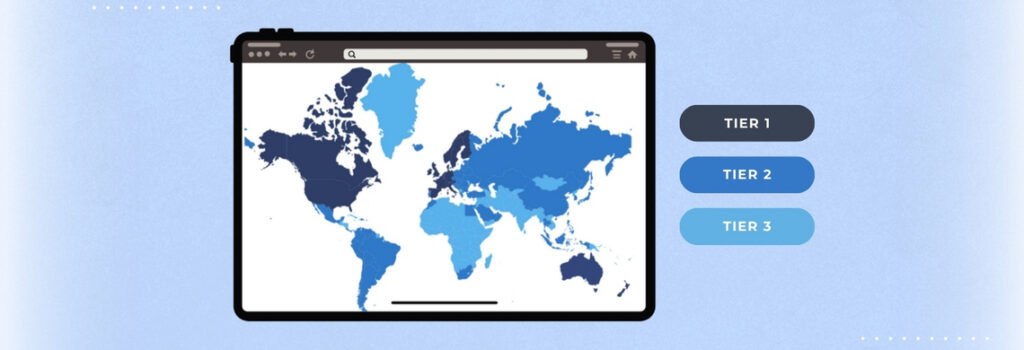
Mondiad GEO + vertical success combos for popunder traffic:
- 🇿🇦 South Africa / Sweepstakes / Finance (loans, lead gen) / Mobile apps
- 🇵🇭 Philippines / Dating / Mobile content / Apps / rewards
- 🇪🇬 Egypt / Dating / Sweepstakes / Utility apps
- 🇹🇷 Turkey / Dating / Sweepstakes / Crypto / finance prelanders
- 🇲🇽 Mexico / Dating / Sweepstakes / Finance (loans, crypto entry funnels)
Do Browsers Still Allow Popunder Ads in 2026?
Pop traffic today doesn’t operate the same way it did a few years ago. Modern browsers have become increasingly aggressive about limiting disruptive ad experiences, which directly impacts how pop campaigns are delivered and optimized.
Most major browsers now restrict or limit:
- Classic pop-ups that appear immediately over active content
- Tab-under and tab-switching behaviors designed to force visibility
- Automatic redirects triggered without user interaction
As a result, advertisers should focus on compliant popunder inventory and user-initiated traffic sources rather than relying on outdated delivery methods.
This shift has also increased the importance of working with reputable ad networks, like Mondiad, that actively monitor inventory quality and adapt to browser policy changes.
For affiliates and advertisers, the takeaway is simple: successful pop campaigns today depend less on aggressive delivery tactics and more on strong targeting, landing page relevance, and optimization discipline.
For additional guidance on user experience and browser standards, review the recommendations published by the World Wide Web Consortium and the Google Chrome Developers.
How to Buy Pop Traffic: Step-by-Step Campaign Setup
Buying pop traffic isn’t complicated, but buying profitable pop traffic is where things get real. The process is straightforward, but the edge comes from how you test and optimise.
Here’s how to approach it properly.
1. Choose a traffic source (ahem, Mondiad)
Start with a reliable ad network that offers popunder/pop traffic. Look for:
- Global reach or strong GEO coverage in your target markets
- Detailed targeting (device, OS, browser, zones, frequency caps)
- Transparent reporting and optimization tools
Since pop is volume-driven, the quality of the network matters a lot.
With ad network Mondiad, it’s simple.
You start with just a $50 minimum deposit, and suddenly have access to a huge pool of global pop traffic. (+ more formats).
– 50+ Million daily impressions –
At first, it feels like a flood of impressions from everywhere. But instead of guessing, you get granular control over your new audience and multiple optimization tools to fine-tune your campaign performance.
From there, it’s simple… cut what doesn’t work, scale what does, and turn raw traffic into a structured, performance-driven system. (P.S. We’re one click away if you need a hand.)
Let’s just take it one step at a time.
2. Define your ad campaign structure
Creating a Mondiad popunder campaign is super easy. Just log in, head to the Campaign tab in the side menu and hit the “Create campaign” button.
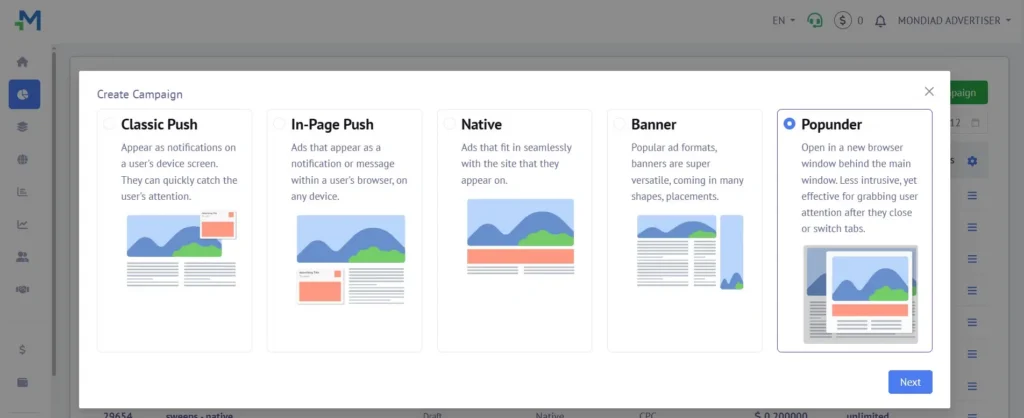
Select popunder as your ad format of choice and hit “Next” to start configuring your Mondiad ad campaign. The campaign setup is super intuitive and logically structured, so you can finish the configuration with ease.
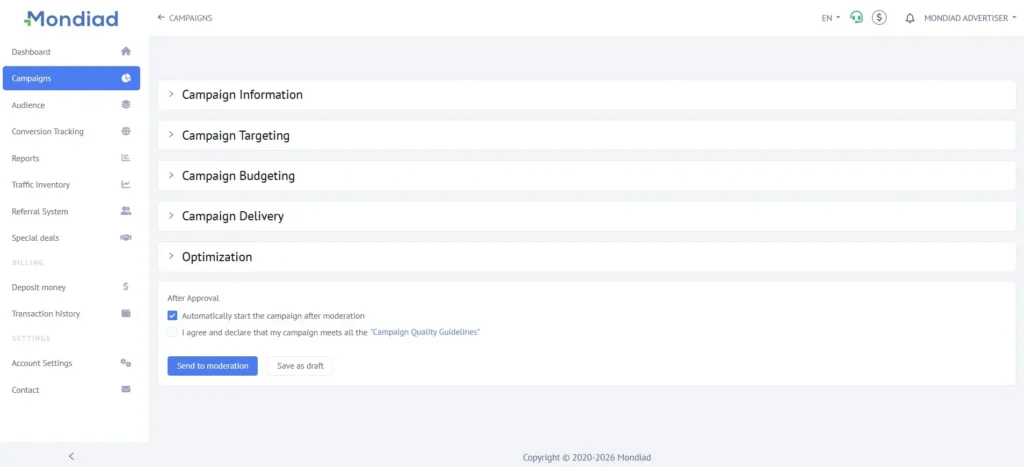
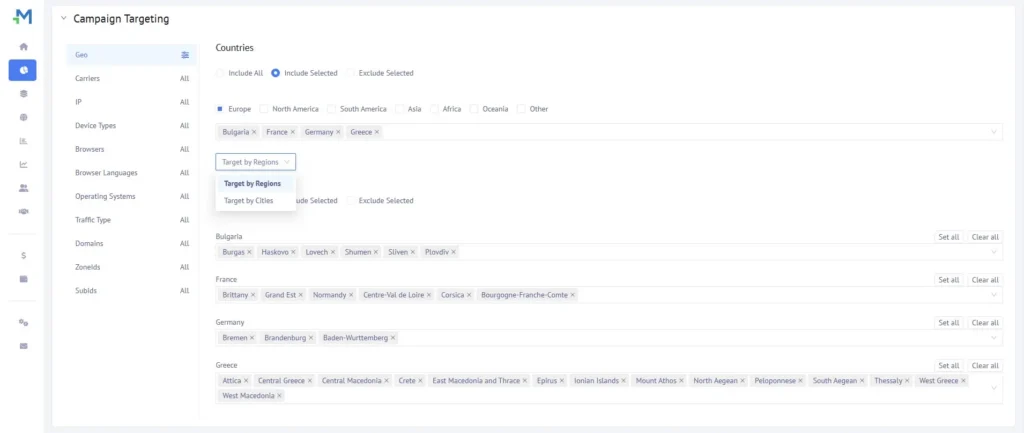
Assuming we’ve filled out the campaign basics, we should focus on our campaign targeting. Clear segmentation builds a strong pop campaign.
- GEO (country-level or city-level)
- Device (desktop/mobile)
- OS (Windows, Android, iOS)
- Browser type
- Connection type (WiFi vs mobile data where available)
Mondiad ad campaign targeting filters:
Geo, Carriers, IP, Device Types, Browsers, Browser Languages, Operating Systems, Traffic Type, Domains, ZoneIds, SubIds.
3. Create a landing flow
Pop traffic performs best with structured funnels:
Common funnel types:
- Direct link → offer (fastest but lowest control)
- Pre-lander → offer (higher conversion rate)
- Multi-step funnel → offer (advanced scaling setup)
4. Set bidding and budget
Pop traffic is CPM-driven, so bidding determines:
- Impression volume
- Placement quality
- Scaling speed
Start with conservative bids and increase based on performance clusters.
Mondiad recommendations:
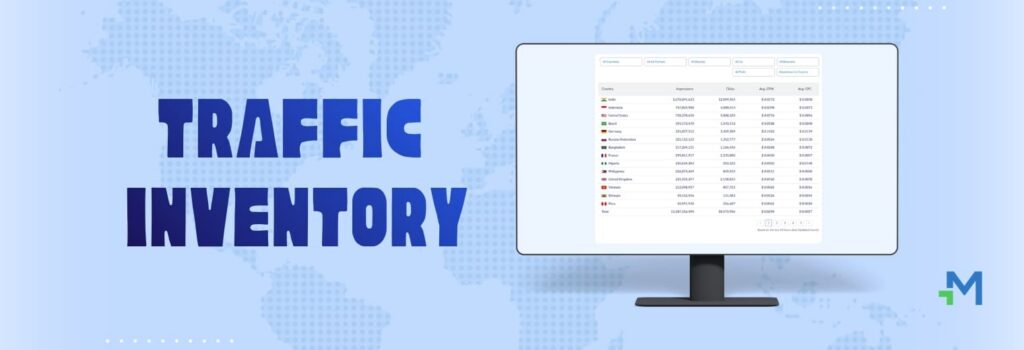
1. Check the current Mondiad pop traffic inventory before launching your campaign. Traffic rates and volumes will help you start out with the right bidding strategy.
2. The beauty of programmatic advertising is real-time campaign optimization. Thus, instead of static bidding, fine-tune your efforts:
- Increase bids on high converting zones
- Decrease bids on high CTR / low CR traffic
- Segment bids by device type
5. Frequency Capping: The Most Overlooked Pop Traffic Optimization Lever
Frequency capping controls how often the same user sees your campaign within a specific time period.
Without it, the same audience can be exposed repeatedly, leading to wasted impressions, declining engagement, and higher acquisition costs.
While optimal settings vary by offer and GEO, common testing frameworks include:
| Frequency Cap | Typical Use Case |
|---|---|
| 1/24 hours | High-volume campaigns that require broad reach and fresh users daily |
| 1/48 hours | Balanced approach for ongoing optimization and user experience |
| 1/week | Offers with longer consideration cycles or limited audience pools |
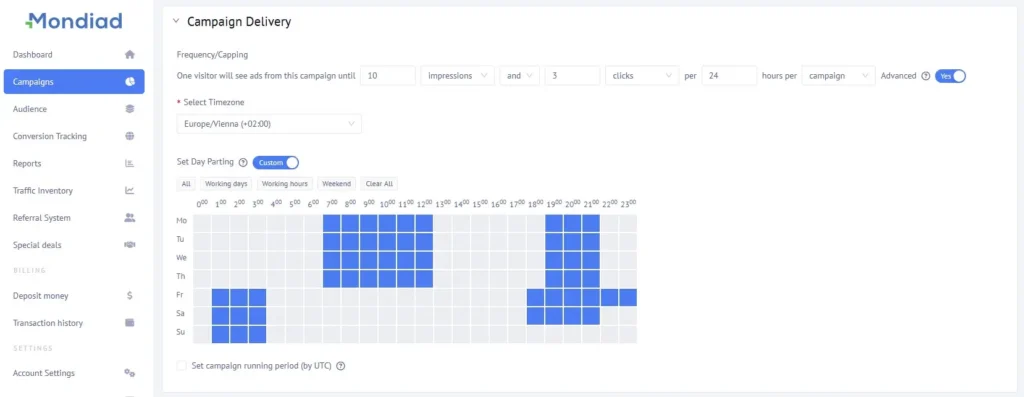
There is no universal “best” frequency cap. The right setting depends on offer type, audience size, conversion window, and campaign goals.
Mondiad recommendations:
- If conversions decline while impression volume remains stable, test stricter frequency caps.
- If volume becomes constrained too quickly, consider relaxing the cap.
- Monitor CPA and ROI when making frequency adjustments rather than optimizing for impressions alone.
6. Tracking pop traffic goes a long way
Tracking is essential for scaling pop campaigns profitably. What to track:
- ZoneIDs & SubIDs
- GEO
- Device + OS
- Landing page performance
- Conversion path
Why tracking matters: Without granular tracking, optimization becomes guesswork and scaling becomes loss-heavy.
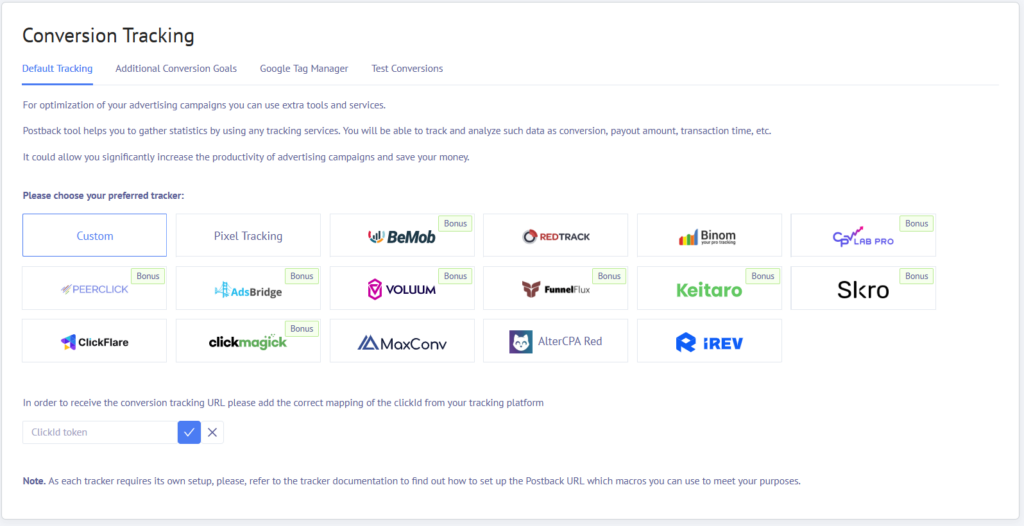
Mondiad traffic tracking options:
- 15+ direct ad tracker integrations
- Custom integration
- Conversion goals
- Google Tag Manager
- Mondiad Pixel tracking
- Mondiad Event Tracker
How Do You Scale Pop Traffic Campaigns?
It usually starts with curiosity and controlled chaos.
Phase 1: Testing – “Throwing the net wide”
In the beginning, the goal is data collection, not profit. Advertisers launch campaigns across broad GEOs, with low to medium bids that keep risk contained while still buying meaningful data.
Mondiad recommends:
- Start broad, not narrow. (Choose 1-3 GEOs)
- Keep targeting relatively open
- Use a reasonable bid (not the cheapest, you want volume)
- Rotate creatives and landers weekly
Phase 2: Validation – “Finding the patterns”
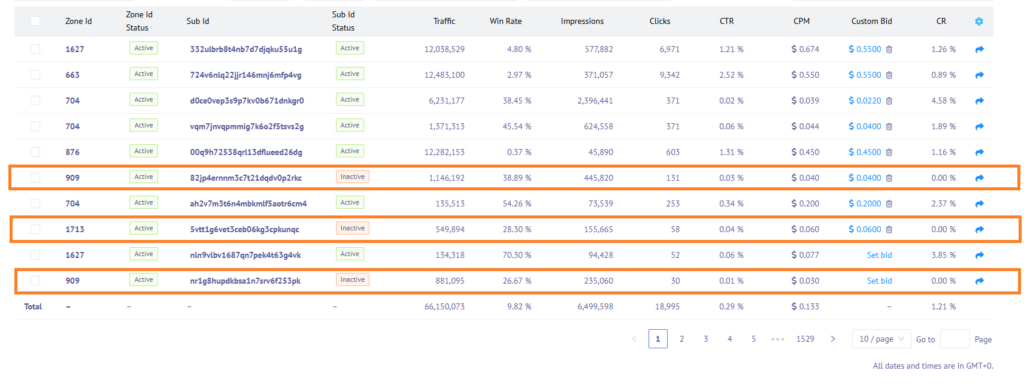
Once enough traffic flows through, the noise starts to settle, and patterns emerge. Certain zones begin to outperform others. Some placements quietly drain budget without returning value. The focus shifts from “what can we test” to “what is actually working.”
Mondiad recommends:
This is where most of the money is made (or lost).
- Zone optimisation: cut placements that don’t convert
- Frequency capping: avoid overspending on the same users
- Device/OS splits: sometimes Android vs iOS performs very differently
- Dayparting: identify times that convert best
Phase 3: Scaling – “Turning signal into machine”
With winners identified, the strategy changes completely.
Instead of exploring, the goal now is amplification. Advertisers increase bids carefully on proven segments, not across the board. They expand high-performing GEOs and duplicate winning combinations to extract more volume from what already works.
At this stage, the campaign is no longer experimental, it becomes a repeatable engine, where each adjustment is about maximizing return, not searching for it.
| Signal | Action |
|---|---|
| High CTR + Low CVR | Fix landing page |
| Low CTR | Replace creatives |
| High EPC | Scale aggressively |
| High spend, no conversion | Kill placement |
| Stable ROI | Increase bid gradually |
Scaling doesn’t really begin when you increase a budget. It begins when you stop guessing and start expanding with intent. In pop traffic, throwing more money at a campaign rarely fixes anything, it only amplifies what already exists, good or bad. Real scaling happens in layers.
Method 1: Horizontal scaling
Once a campaign shows signs of profitability, the first instinct is to explore more territory.
- New GEOs are added carefully, not randomly, to test whether success can repeat in different markets.
- Device and OS segments are expanded to see where the pattern holds strongest.
At the same time, placements grow, widening the reach of what already works without changing its core structure.
Method 2: Vertical scaling
After expansion comes refinement. Instead of looking outward, attention shifts inward to the segments already proven to convert.
- Bids are increased selectively on winning zones to unlock more volume. Budgets are raised only where profitability is already stable, and successful funnels are allowed to run longer to extract full value from their momentum.
This is where campaigns start to feel “alive”, feeding more into what is already performing instead of constantly searching for new wins.
Method 3: System scaling
At the highest level, scaling stops being manual.
- Winning structures are duplicated so performance isn’t dependent on a single setup.
- Rules take over optimization, automatically adjusting bids, blocking weak placements, and protecting ROI thresholds.
- Traffic filters are introduced to maintain quality without constant human intervention.
At this stage, campaigns are no longer individual efforts. They become systems, self-adjusting, repeatable, and built to grow without breaking under pressure.
When Should You Scale or Stop a Pop Campaign?
Scale when:
- Stable EPC across multiple zones
- Positive ROI for 3-5 days minimum
- Conversion consistency across GEOs
Stop when:
- CTR high, but zero conversions
- EPC drops below CPM threshold
- Traffic quality deteriorates rapidly
Which Metrics Matter Most in Pop Campaigns?
If you’re only tracking impressions and conversions, you’re flying blind. The real advantage comes from breaking down performance granularly and acting on it fast, especially in pop traffic, where data moves quickly, and bad traffic can drain your budget just as fast.
| Metric | What It Measures | Why It Matters in Pop Campaigns | Optimization Tip |
|---|---|---|---|
| Conversion Rate (CR) | percentage of users who complete the desired action | Indicates how well your funnel converts low-intent pop traffic | Test landing pages, pre-landers, and messaging |
| Cost per Acquisition (CPA) | Cost to generate one conversion | Determines profitability of your campaigns | Cut underperforming zones and optimize bids |
| Click-Through Rate (CTR) | percentage of users who engage with your page | Reflects initial user interest and page effectiveness | Improve load speed and first impression |
| Impression Volume | Total number of ad displays | Shows campaign scale and reach | Focus on converting sources, not just high volume |
| ROI / ROAS | Profit or revenue relative to spend | Final indicator of campaign success | Scale winning segments, pause unprofitable ones |
What Mistakes Kill ROI in Pop Campaigns?
Most campaigns fail due to structural errors:
1. Running too broad targeting
A common starting mistake is launching campaigns too wide, hoping the system will naturally filter winners.
Instead, what actually happens is the budget gets spread thin across GEOs, devices, and placements with completely different behaviors. Winning signals get buried under noise, and nothing reaches statistical clarity fast enough to optimize properly.
Broad targeting doesn’t accelerate learning, it delays it.
2. Using complex funnels
Pop traffic isn’t the place to get fancy with 5-step funnels, pre-landers, email captures, and all that. People coming from pop ads have super low attention spans; they didn’t choose to click your ad. If your flow is complicated, they’ll just bounce. Keep it simple, direct, and easy to convert.
3. Ignoring placement-level data
If you’re not checking which zones (placements) are bringing conversions and which are just burning money, you’re basically flying blind. Some zones will perform amazingly, others will drain your budget fast. The difference between profit and loss often comes down to cutting bad zones and scaling the good ones.
As logical as this sounds, especially to experienced affiliates and media buyers, this rookie mistake is still out there.
4. Scaling before validation
Before a campaign has stable EPC and repeatable conversion signals, increasing spend only amplifies instability. Scaling only works when the system is already stable. Without that, growth just accelerates failure.
5. Skipping landing pages (why they matter more than you think)
When you’re running pop traffic, your landing page isn’t just important; it’s basically everything. Unlike other traffic types, users didn’t actively click your ad because they were interested. The page just popped up. So you’ve got, like, a couple of seconds to grab attention before they close it.
That’s why your landing page needs to be super simple and straight to the point. No long intros, no complicated storytelling. The user should instantly understand what’s going on and what they’re supposed to do next.
Another thing, speed matters a lot. If your page loads slowly, it’s game over. Pop users are impatient, and even a small delay can kill your conversion rate.
You also want to match the angle to the traffic. Pop works really well with things like curiosity hooks, direct offers, or problem-solution angles. But if your landing page feels confusing or unrelated, people just bounce immediately.
And don’t rely on just one version. Seriously, test multiple landing pages. Sometimes, a tiny change, a headline, an image, or CTA can make a huge difference. One page might flop while another one with a slightly different vibe suddenly prints conversions.
Lastly, avoid overcomplicating things. Pop traffic usually performs best with short flows, either a clean landing page into an offer or even direct linking (depending on the offer and network rules). The more steps you add, the more people you lose along the way.
6. Wrong offer selection
Not every offer performs well with this format. Pop traffic is “cold,” so you want:
- Simple funnels (1-2 steps max)
- Fast-loading landing pages
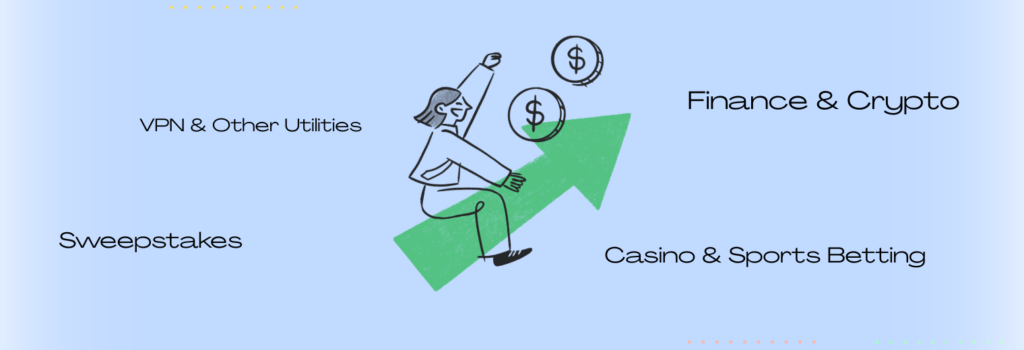
- Broad-appeal verticals like sweepstakes, utilities, apps, dating, betting, or subscriptions.
If your offer needs warm intent or education, pop is usually the wrong choice.
Across all of these mistakes, the same issue appears again and again: campaigns are treated as single, simple flows instead of complex systems. When the structure is weak, even good traffic looks bad. When the structure is strong, even average traffic can become profitable.
Why Run Popunder Traffic With Mondiad?
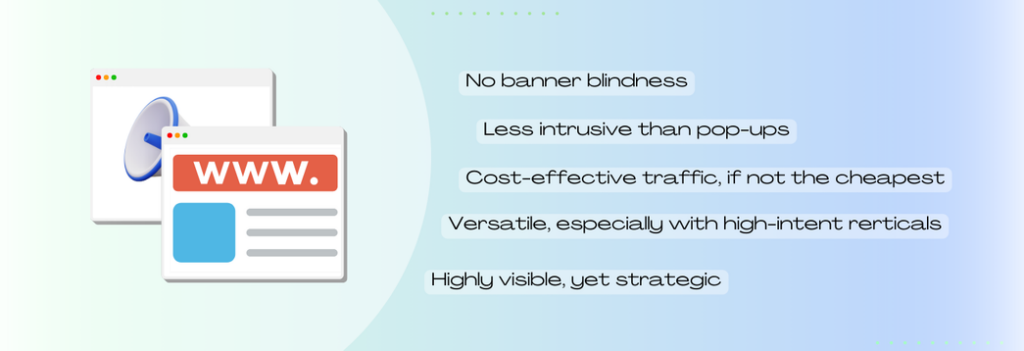
Running Mondiad popunder traffic can make sense for advertisers and affiliates because it sits in a high-volume, low-cost testing corner of performance marketing: cold traffic. So it works best with simple funnels and impulse-friendly offers.
Popunder traffic is one of the most scalable and cheapest ways to buy attention at massive volume. Networks like Mondiad specialize in delivering billions of impressions across global placements, including mainstream and adult inventory, usually on CPM/CPC/TargetCPA models .
That means you can push a lot of traffic quickly and test offers without waiting for slow audience building like SEO or organic social.
For affiliates, the biggest draw is speed of validation. If you’re running CPA offers (sweepstakes, VPNs, utilities, dating, downloads, etc.), popunders let you rapidly answer the question: “Does this convert anywhere?”
You can test creatives, landing pages, and GEOs in hours, not weeks. That’s especially useful for arbitrage-style campaigns where quick iteration matters more than perfect targeting.
From a media buying perspective, the appeal is also control. You typically get:
- very granular GEO/device targeting
- flexible bidding (CPM/CPC/CPA depending on setup)
- fast scaling once you find a winning combination
And one of the cool parts, we are one click away, ready to help.
FAQ
What is pop traffic?
Pop traffic is a type of online advertising where users see ads in pop-up or popunder windows triggered when they visit a website. It’s typically bought on a CPM basis and is widely used in affiliate marketing because it delivers high-volume, low-cost traffic for testing and scaling campaigns.
What is pop traffic used for?
Pop traffic is used for affiliate marketing, lead generation, app installs, and CPA campaigns due to its low entry cost and high scalability.
How much does pop traffic cost?
Pop traffic is usually sold on a CPM model, and pricing can vary widely depending on GEO, device, and traffic quality. Usually, it often ranges from very low-cost tiers in Tier 3 GEOs (fractions of a dollar CPM) to much higher CPMs in Tier 1 countries where competition is stronger.
Is pop traffic profitable today?
Yes, but only when campaigns are structured with proper tracking, optimization rules, and funnel segmentation.
Which GEOs convert best with pop traffic?
Tier 2 and Tier 3 GEOs often deliver the best balance of cost and volume, while Tier 1 GEOs provide stable but competitive performance.
Is pop traffic a good ad format for beginners?
Pop traffic can be beginner-friendly, but only if you’re comfortable working with data.
It has a low entry cost, which makes it easy to start testing offers without a large budget. However, it also requires tracking, segmentation, and optimization, because broad campaigns tend to waste spend quickly.
Need a Pop? Try Mondiad!
When treated as a system, pop traffic becomes one of the most predictable acquisition channels in performance marketing.
Get your Mondiad campaign up and running with just $50 and less than 10 minutes. It’s that easy.
