



The push notification landscape is evolving once again. In its recent update, Google introduced mandatory changes that directly impact how push notifications function, especially on Android devices.
If you’re an advertiser or publisher relying on this format, it’s essential to understand these changes and adjust your strategy accordingly.
Here’s what you should know.
TL;DR
- Google rolled out mandatory changes to push notifications on Android, requiring a visible, accessible “unsubscribe” button (with an undo option) on every push message, plus stricter Google Safe Browsing enforcement around deceptive creatives, landing pages, and opt-in flows. The goal is better user experience and less notification spam.
- For publishers, this means opt-in quality now matters more than subscriber volume, and compliance is critical to avoid getting flagged.
- For advertisers, subscriber bases may shrink slightly but engagement quality should rise, leading to better ROI, though creative and landing page scrutiny will increase.
- The article frames this as a net positive that will reward compliant, quality-focused players, and recommends publishers experiment with in-page push (which isn’t subscription-dependent, works well on iOS, and resists ad blockers) as a complement to classic web push.
What’s old?
- When websites monetize using push notifications via ad networks, they’re essentially turning notifications into a revenue channel.
Websites monetized via push notifications use ad networks to send ads directly to subscribed users’ devices, earning revenue each time a user clicks or engages with the notification.
- Viewers accept push notifications by clicking “Allow” on a browser prompt that appears when they visit a website asking for permission to send notifications.
Previously, users had to dig through their browser settings to stop notifications from a specific site, a process that wasn’t particularly user-friendly.
What’s New in Push Notifications After the Google Update
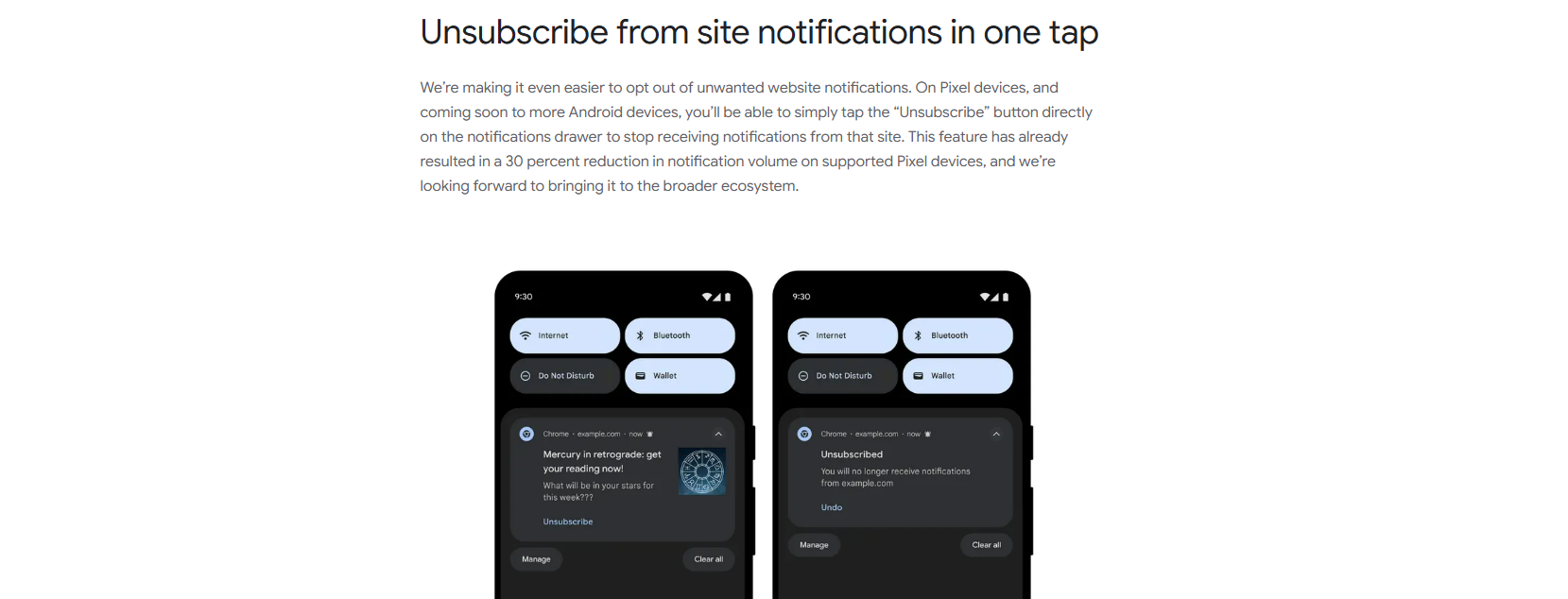
Google’s update includes two major shifts:
1. Mandatory Unsubscribe Button on Android Push Messages
- Every push notification delivered to Android users must now include a visible and accessible “unsubscribe” option. This increases transparency and gives users more control over the messages they receive.
- There’s also an undo option in case of accidental unsubscriptions. This small change aims to significantly enhance user experience.
2. Enhanced Google Safe Browsing (GSB) Policy Enforcement
Google is tightening its enforcement of the GSB policy, particularly around deceptive or abusive practices tied to push traffic. This includes stricter evaluation of landing pages, creatives, and opt-in flows.
Why Did Google Change Push Notification Policies?
With the rise in excessive notifications, Google has taken the mantle to improve the user experience, a top priority for Google.
This update, seemingly straightforward at first glance, holds significant implications for users, brands, affiliates, and publishers who monetize push traffic.
For Publishers:
Opt-in quality matters more than ever. With unsubscribe options now front and center, you’ll need to focus on retaining engaged users, not just collecting subscribers.
Compliance is critical. Sites that violate Google’s guidelines risk being flagged or blocked, which can jeopardise monetization.
For Advertisers:
Better targeting = better ROI. While subscriber bases might shrink slightly, the quality of engagement is expected to rise. Ads will reach more genuinely interested users, reducing bounce rates and improving conversions.
Creative and landing page scrutiny will increase. Make sure your ads and funnels comply with Google’s policies to avoid disruptions.
What This Means for Advertisers and Publishers
Rather than harming the industry, this update could signal a positive shift:
- Higher-quality traffic from push channels
- Improved user trust and retention
- More sustainable monetization strategies
Networks that prioritize compliance and quality will emerge stronger.
Advertisers who adapt quickly will tap into more reliable, high-converting audiences.
What’s Next for the Push Notification Market
Now that the push notification market is maturing, it’s time to refine your strategies, focus on user-first practices, and ensure your push campaigns align with new compliance standards.
If you’re a publisher or advertiser using push traffic through our network, we’re already on top of these changes, ensuring our traffic sources meet all new requirements and continue delivering strong performance.
In-Page Push > Web Push
Additionally, for publishers, we recommend experimenting with the in-page push format as well.
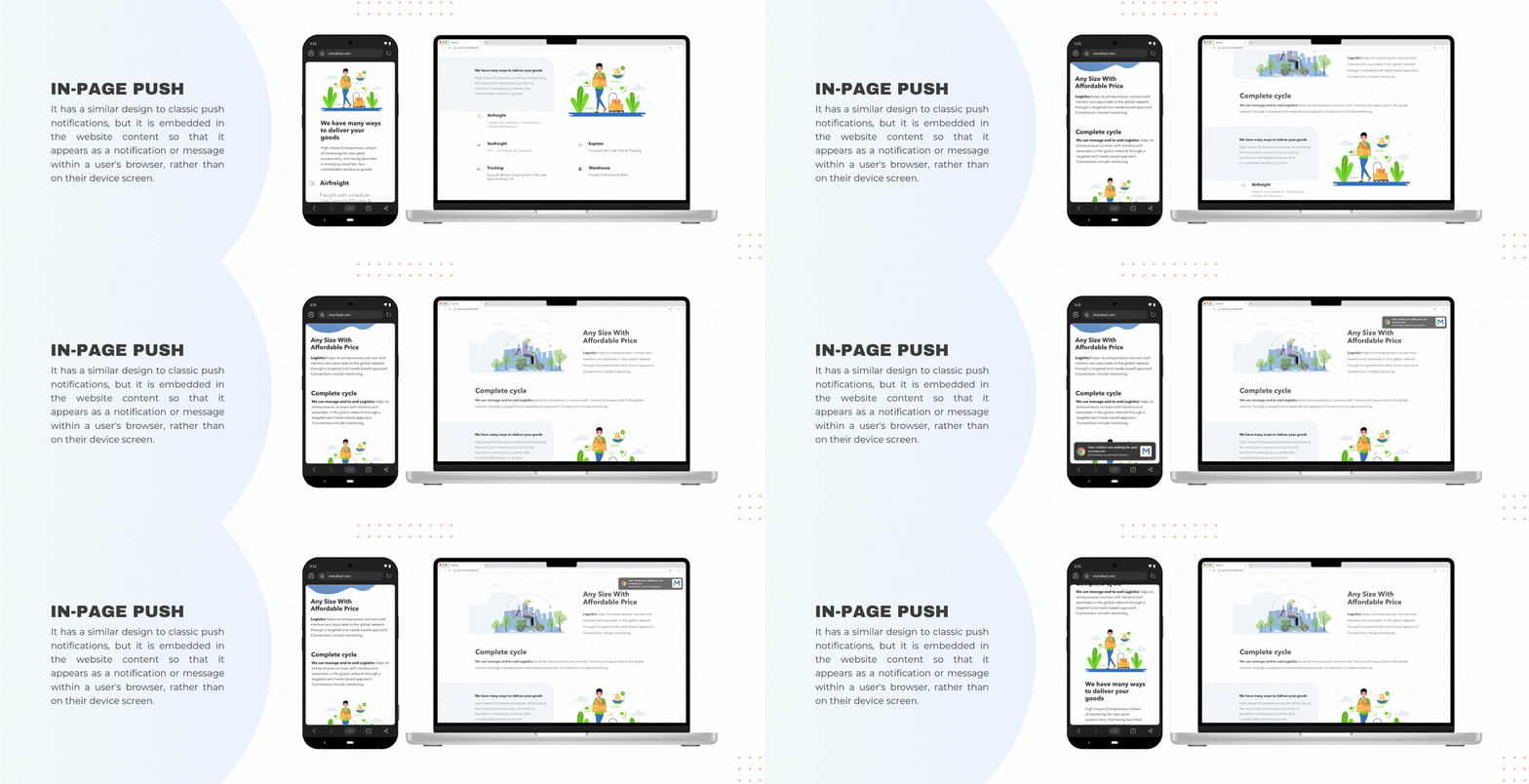
The main difference is that in-page ads are on-site notifications.
✅ Your ad revenue doesn’t depend on subscriptions.
✅ This format puts users first, offering engaging visuals and native widget behavior.
✅ Monetize iOS Traffic: Tap into high-value iOS users, known for delivering premium returns.
✅ Clean, User-Friendly Format: Modern, non-intrusive ad design that respects the user experience, no more bulky, annoying ads.
✅ Higher ad-block resistance, ensuring maximum visibility and revenue retention.
FAQ
What did Google’s update actually change?
Two things: every push notification to Android users must now include a visible “unsubscribe” button (with an undo option), and Google is enforcing its Safe Browsing policy more strictly on deceptive or abusive push practices.
Why did Google make this change?
To improve user experience amid rising complaints about excessive, hard-to-stop notifications, previously users had to dig through browser settings to unsubscribe from a site’s notifications.
How does this affect publishers monetizing with push ads?
Opt-in quality becomes more important than raw subscriber count, since users can now unsubscribe more easily. Publishers who violate Google’s guidelines risk being flagged or blocked, which can hurt monetization.
How does this affect advertisers running push campaigns?
Subscriber bases may shrink slightly, but the users who stay subscribed are more genuinely engaged, which should improve conversions and reduce bounce rates. Advertisers also need to make sure creatives and landing pages meet Google’s compliance standards.
Is this update bad for the push ad industry?
The article frames it as a positive shift overall, leading to higher-quality traffic, better user trust, and more sustainable monetization, with compliance-focused networks and advertisers coming out ahead.
What’s in-page push, and why is it recommended here?
In-page push shows notification-style ads embedded directly in a website’s content rather than as device-level notifications. It doesn’t depend on subscriptions, works well for monetizing iOS traffic, and offers a cleaner, more ad-block-resistant format than classic push.
The Push Ad Market Takeaway
It’s a small change, but one that reflects a broader shift toward more user-friendly and transparent web interactions. Players who are flexible to adapt on the market dynamics are the real winners.
After the update, many advertisers are re-evaluating where they buy traffic, so it’s worth comparing push notification ad networks on subscriber quality, unsubscribe handling, and ROI before shifting your budget.
Want help adjusting your campaigns or push monetization setup? Reach out to our team; we’re here to guide you.
