


The FIFA World Cup 2026 is shaping up to become the biggest sporting event in internet history.
With the tournament expanding to 48 teams and spanning the United States, Canada, and Mexico, global digital activity around football is expected to surge across every major traffic channel, from sports streaming and betting to news consumption, second-screen engagement, fantasy sports, and mobile social interaction.
The 2022 FIFA Cup Final between Argentina national football team and France national football team drew around 1.5 billion viewers worldwide. – Source
For advertisers, affiliates, publishers, and media buyers, the World Cup is more than a sports event. It is a global traffic economy.
Audience attention shifts in real time. CPMs fluctuate hourly. Engagement patterns change by GEO. Mobile traffic spikes during live matches. Push notifications outperform traditional display during critical moments. Betting and entertainment verticals experience explosive conversion windows. The brands and affiliates that prepare early are the ones that dominate the tournament cycle.
In this guide, we break down:
- Everything important about FIFA World Cup 2026
- Expected traffic and advertising trends
- Best GEOs for affiliate campaigns
- CPM and traffic volatility forecasts
- Mobile engagement behavior
- Sports betting traffic opportunities
- Ad format performance expectations
- Monetization strategies for publishers
- Performance marketing insights for live sporting events
Whether you run betting campaigns, sports offers, streaming traffic, utilities, finance, gaming, or entertainment funnels, this guide will help you understand how to capitalize on one of the largest traffic opportunities of the decade.
TL;DR
- FIFA World Cup 2026 will create one of the biggest global traffic surges ever, giving affiliates and media buyers massive opportunities across betting, streaming, gaming, finance, and entertainment verticals through mobile-first, real-time audience engagement.
- CPMs, CTRs, and conversions will fluctuate heavily during live matches, especially in knockout stages and rivalry games, making GEO targeting, match-based scheduling, push/in-page push ads, and mobile optimization essential for profitable campaigns.
- The most successful advertisers will prepare early, localize creatives by country, diversify traffic sources, monitor volatility continuously, and avoid unauthorized FIFA branding while leveraging football-themed emotional marketing and live-event urgency.
What Is the FIFA World Cup 2026?
The FIFA World Cup 2026 will be the 23rd edition of the tournament and the first to feature 48 national teams instead of the traditional 32.
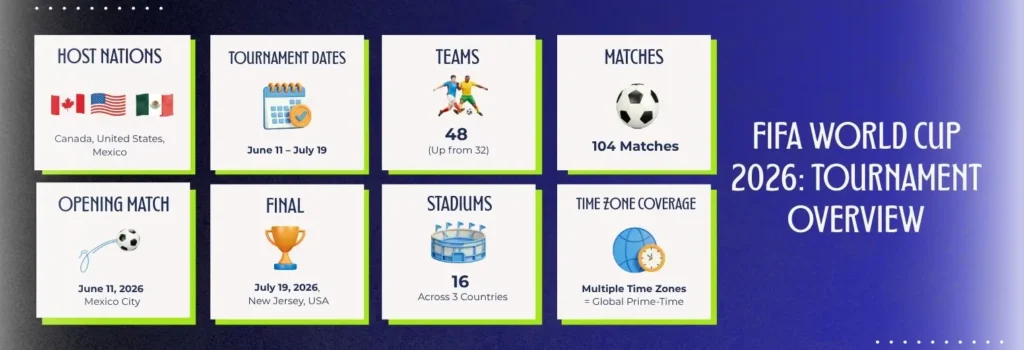
The competition will be hosted across the United States, Canada, Mexico. This will also mark the first World Cup hosted by three countries simultaneously.
Key Tournament Facts
| Category | Details |
|---|---|
| Tournament | FIFA World Cup 2026 |
| Teams | 48 |
| Host Nations | USA, Canada, Mexico |
| Expected Audience | Billions globally |
| Match Count | 100+ matches |
| Primary Devices | Mobile-first viewing expected |
| Key Traffic Verticals | Betting, streaming, news, gaming, finance, entertainment |
The expanded format means:
- more matches
- longer engagement windows
- more regional audience overlap
- larger streaming audiences
- increased search demand
- longer monetization periods for advertisers and publishers
For performance marketers, this is highly significant. The World Cup will no longer be a short-term traffic spike. It becomes a month-long traffic ecosystem.
Why FIFA World Cup 2026 Matters for Advertisers
Global sporting events create unique internet behavior patterns that differ dramatically from standard traffic cycles.
Sports Events Increase Emotional Purchasing
World Cup traffic typically boosts:
- Sports betting
- Streaming subscriptions
- VPN offers(app installs)
- Mobile gaming
- Food delivery
- Fan merchandise
- Crypto & fintech engagement
- Electronics purchases
During the World Cup, users: spend more time online, consume real-time content, react emotionally to events in real time
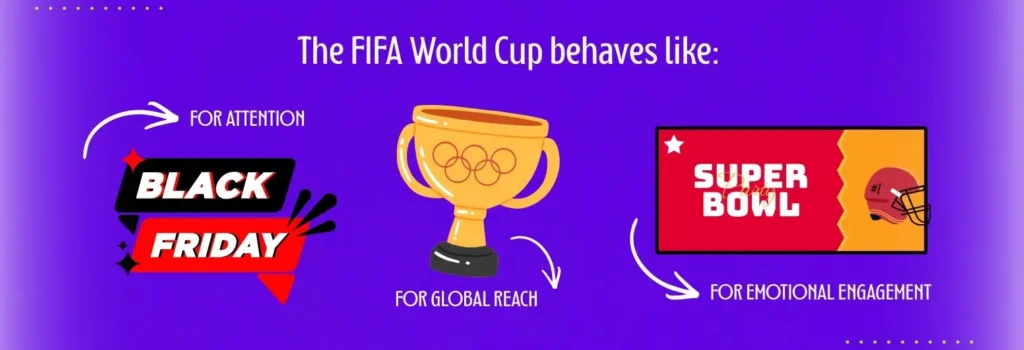
The Attention Economy During Major Football Events
Football tournaments create synchronized global attention. Unlike evergreen traffic, World Cup traffic behaves in waves.
Audience engagement surges: before kickoff, during live moments, during halftime, immediately after major plays, after controversial referee decisions, after viral moments.
These spikes create temporary windows where:
- CTRs increase
- engagement rises
- conversion intent grows
- push notifications become extremely effective
- trending traffic becomes cheaper or more expensive depending on GEO saturation
Understanding these patterns is essential for media buying profitability.
What’s Different About the 48-Team Format?
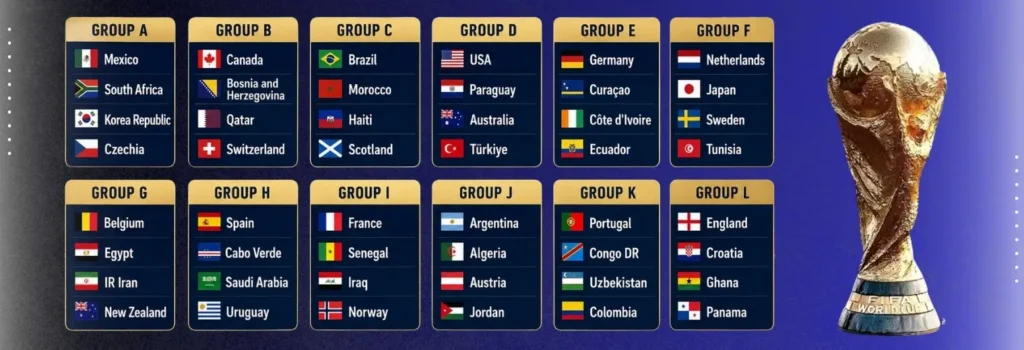
The expansion from 32 to 48 teams changes the advertising landscape significantly. More Teams = More GEO Traffic Opportunities.
The expanded format introduces: additional emerging football markets, more regional fan bases, broader audience diversity, and an increased localized search demand.
This matters because smaller football nations often generate highly emotional audiences, lower CPM competition, strong mobile engagement, excellent push notification performance.
Longer Tournament Lifecycle
The increased match count creates longer campaign optimization windows, stronger audience segmentation potential, and extended affiliate funnel lifecycles.
Instead of a short tournament burst, advertisers can build multi-stage campaigns, GEO-specific funnels, tournament-phase strategies, and remarketing audiences.
Host Cities, Stadiums & Audience Distribution
The World Cup will spread across multiple cities in North America. This creates unique time-zone traffic behavior.
Expected Traffic Distribution Patterns
| Region | Expected Engagement Characteristics |
|---|---|
| North America | Heavy second-screen usage, streaming demand |
| LATAM | Extremely high football engagement, mobile-first traffic |
| Europe | Peak search demand during evening match hours |
| MENA | Strong nighttime engagement and betting interest |
| Asia | Mobile streaming and social amplification |
The multi-country hosting format also means cross-regional traffic overlap, longer daily engagement windows, and more advertising inventory availability.
Most Anticipated Matches & Traffic Forecasts
Certain matches historically generate massive spikes in internet traffic.
a) The opening match historically drives search spikes, betting registrations, streaming app downloads, and sports media traffic.
b) Rivalry Matches, which typically produce premium CPM increases, higher conversion intent, elevated social activity, and stronger push CTRs.
Examples include: Argentina vs Brazil, England vs France, USA vs Mexico, or Germany vs Spain.
c) Knockout Stages. As tournament pressure rises, audience engagement intensifies. Quarterfinals, semifinals, and finals often create the strongest betting activity and largest ad inventory demand.
Expected Global Traffic Spikes During the Tournament
The FIFA World Cup dramatically reshapes traffic behavior. 💡
Traffic Spike Timeline
| Tournament Phase | Traffic Expectation |
|---|---|
| Pre-Tournament | Search and news growth |
| Opening Week | Massive engagement surge |
| Group Stage | Consistent high-volume traffic |
| Knockout Stage | Intense peak activity |
| Final | Global traffic explosion |
Key Traffic Drivers:
a) Search Demand: Users constantly search for: predictions, lineups, scores, betting odds, streaming access, highlights, injuries.
b) Social Amplification: Viral moments increase click-through rates, trending traffic, push notification engagement, as well as native ad interaction.
c) Live Betting Behavior: Live betting activity spikes during goals, after penalties, during halftime, and naturaly, near match conclusions. This creates short but powerful monetization windows.
How the World Cup Impacts Advertising CPMs
One of the biggest mistakes advertisers make during global sporting events is ignoring CPM volatility. Traffic costs rarely stay stable.
Why CPMs Increase During Major Sports Events
CPMs increase during major sports events because advertiser demand rises significantly. More advertisers compete for the same audience at the same time, which drives prices higher.
Betting brands also scale their campaigns aggressively during these events to capture high-intent users. In addition, streaming-related traffic surges as more people watch games online, creating valuable inventory for advertisers.
Entertainment brands often increase their budgets as well to capitalize on the heightened engagement. Overall, audience attention becomes highly concentrated around these events, making ad placements more competitive and increasing CPMs.
CPM Inflation Patterns
| Match Importance | CPM Trend |
|---|---|
| Minor Group Match | Moderate increase |
| Rivalry Match | High increase |
| Knockout Match | Significant increase |
| Final | Extreme competition |
GEO-Based CPM Volatility
Some countries experience stronger inflation than others.
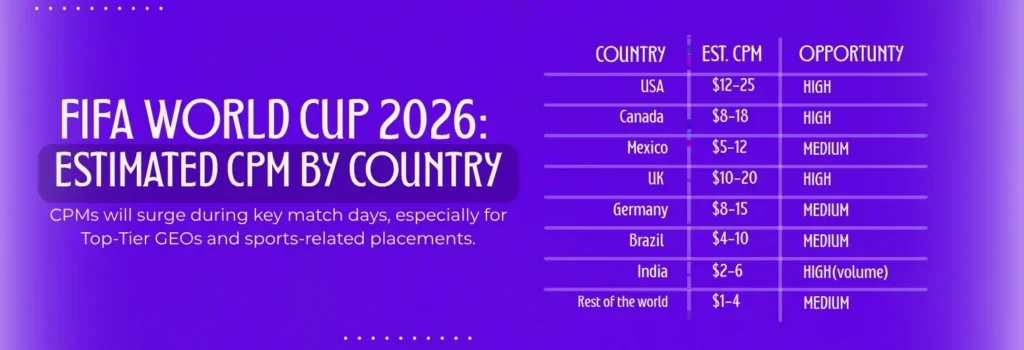
High Competition GEOs: United Kingdom, Brazil, Spain, Germany, United States.
Emerging Opportunity GEOs: Colombia, Peru, Indonesia, Morocco, Nigeria, Vietnam. Emerging markets often provide lower competition, lower CPMs, high mobile engagement, and strong CTR potential.
Best GEOs for FIFA World Cup 2026
Not all football audiences behave the same. Different regions produce different conversion patterns.
Tier 1 Sports-Betting GEOs
| GEO | Key Strength |
|---|---|
| UK | Mature betting market |
| Brazil | Massive football engagement |
| Spain | High match consumption |
| Italy | Strong sports culture |
| Germany | Stable advertiser demand |
High-Growth Emerging GEOs
| GEO | Opportunity |
|---|---|
| Nigeria | Mobile-first sports audience |
| Indonesia | Large football fan base |
| Morocco | Rising engagement |
| Colombia | Betting traffic growth |
| Vietnam | Lower CPM environment |
Best Verticals During the World Cup
Sports betting, Fantasy sports, Streaming utilities, VPN offers, Gaming, Finance, Mobile apps, Entertainment, News subscriptions.
Mobile vs Desktop Fan Behavior During Live Matches
The World Cup is expected to be overwhelmingly mobile-driven.
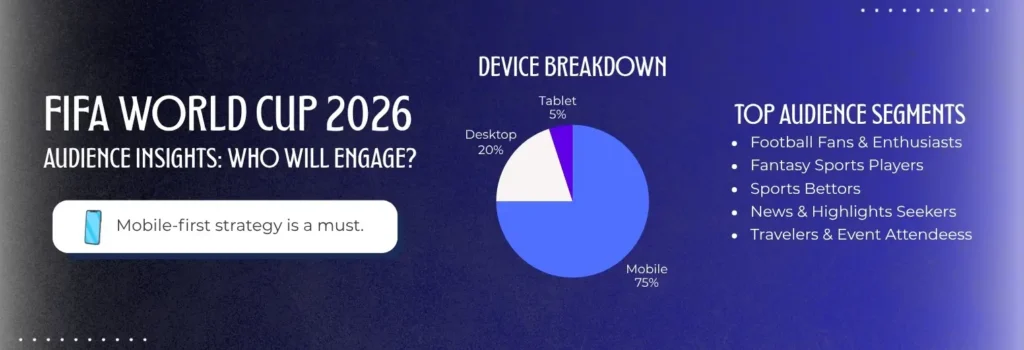
Why Mobile Dominates Sports Traffic
Users follow matches while commuting, working, traveling, socializing, watching TV simultaneously. This creates second-screen behavior.
Users watch matches on one screen while interacting with social media, betting apps, sports statistics, fantasy platforms, live commentary, on another.
| Device | Expected Usage |
|---|---|
| Mobile | Dominant |
| Desktop | Secondary |
| Tablet | Limited |
| Smart TV | Streaming-heavy |
Mobile-first campaigns should prioritize fast-loading creatives, short copy, live-event urgency, push notifications, and lightweight landing pages.
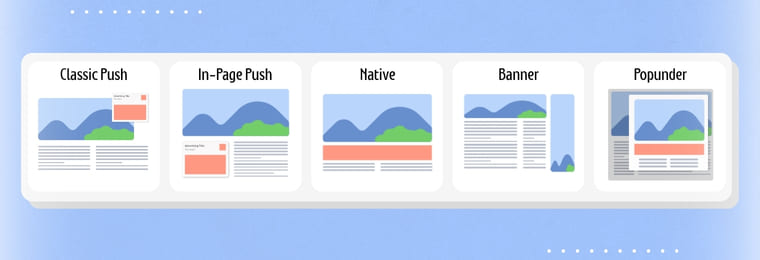
Which Ad Formats Perform Best During Live Sports?
Different ad formats react differently during major sports events.
Telegram Mini App Ads 💡
Telegram Mini App ads can perform very well for FIFA/football-event campaigns, especially for affiliate marketers running high-engagement verticals.
The reason is simple: football audiences are highly mobile, reactive, community-driven, and active in messaging ecosystems during live matches. Telegram fits that behavior extremely well.
Best Use Cases: Telegram users are often highly engaged, community-oriented, crypto-friendly, sports-betting-friendly, and of course, mobile-first. That overlaps heavily with profitable affiliate audiences.
In many GEOs, Telegram becomes a “second screen” during matches. People watch the game while simultaneously using Telegram groups/channels.
Push Ads
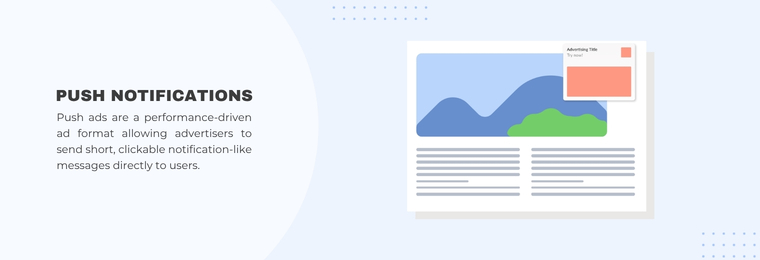
Push notifications often perform extremely well because they:
- match real-time audience behavior
- deliver immediate alerts
- capitalize on emotional reactions
- generate urgency-driven clicks
Best Use Cases: live betting, score updates, streaming offers, flash promotions, app installs.
In-Page Push Ads
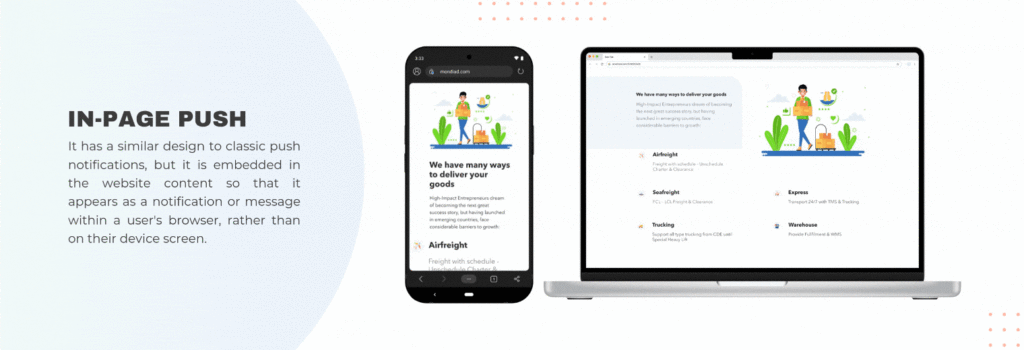
Unlike classic push notifications, in-page push ads:
- works on all devices and browsers
- reaches iOS users
- appears directly inside websites/apps
- feels more native and less intrusive
During football tournaments, users constantly browse scores, news, memes, streaming pages, sports blogs, betting discussions. That creates huge exposure opportunities.
Native Ads
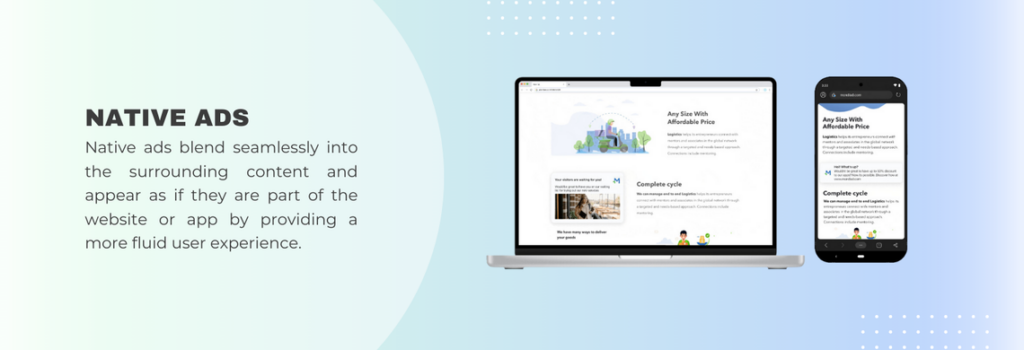
Native advertising works well for sports news content, predictions, match analysis, betting previews, editorial-style funnels.
Native traffic performs especially well during pre-match research phases, prediction cycles, and lineup announcements.
Pop Traffic
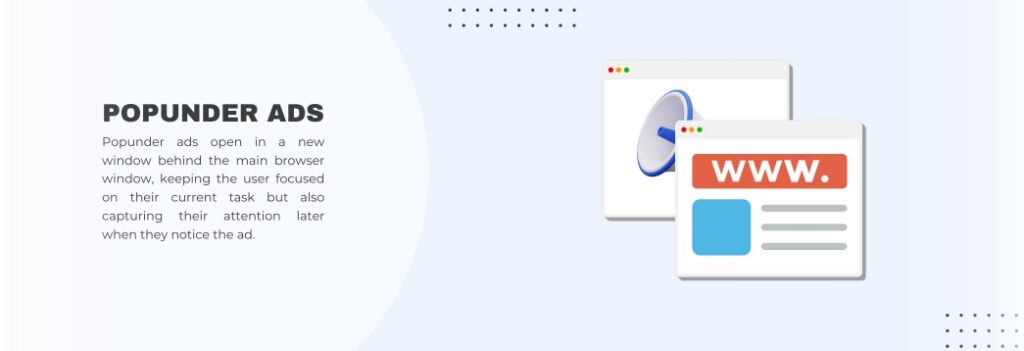
Pop traffic can scale aggressively during live streaming demand spikes, entertainment traffic surges, and viral match moments.
Best Use Cases: utility offers, streaming-related funnels, app downloads, subscription models.
Banner Ads
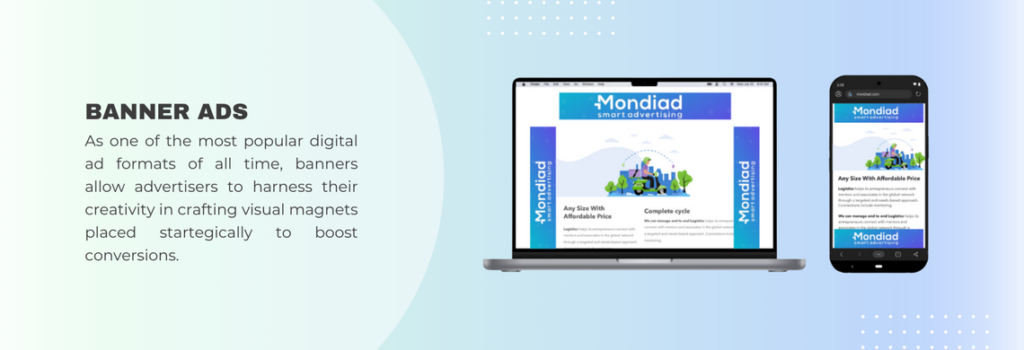
Banner campaigns work best when combined with recognizable sports creatives, live countdown elements, and match-specific urgency.
Best Advertising Practices for the FIFA World Cup 2026
Affiliates can benefit enormously from tournament traffic if campaigns are prepared early.
1. Build GEO-Specific Campaigns
Localized campaigns consistently outperform generic global creatives during major sporting events. Football audiences respond strongly to national identity, regional culture, and emotional storytelling connected to their teams.
Effective localization strategies include:
- National team references
- Local language headlines and CTAs
- Country-specific emotional triggers
- Regional football culture references
- Rivalry-based messaging and match hype
Tailoring creatives for each GEO helps improve engagement, CTR, and overall campaign relevance.
2. Schedule Campaigns Around Matches
Traffic behavior changes significantly depending on kickoff time, match importance, tournament stage, regional audience overlap, and local viewing habits and work schedules.
High-intensity matches often generate stronger engagement and conversion potential.
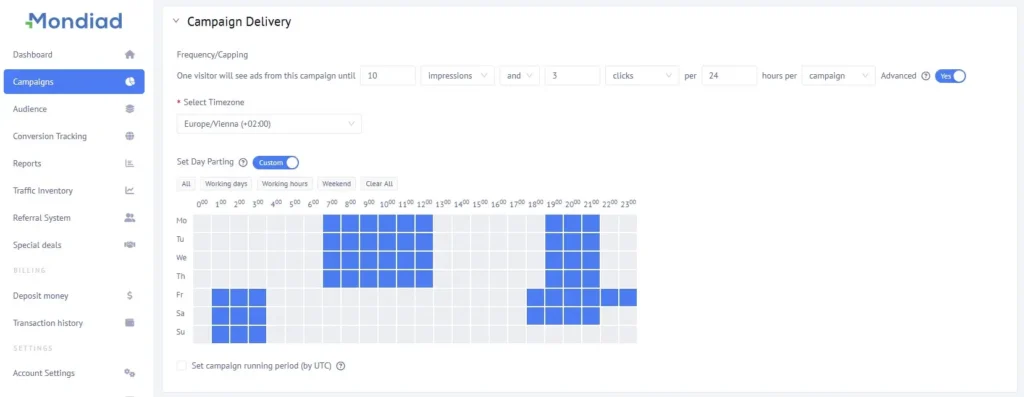
💡 Leverage Time Zones. Traffic quality varies dramatically depending on regional kickoff timing, workday overlap, and viewing behavior. Campaign timing should always align with local audience activity.
FIFA World Cup Opening Match – Day Parting Example
The opening match historically produces some of the highest CTRs and engagement spikes of the entire tournament because global casual audiences return simultaneously for the tournament launch.
| Day Parting | Strategy |
|---|---|
| 6 PM-8 PM | Warm traffic |
| 8 PM-10 PM | Aggressive scaling |
| 10 PM kickoff | Maximum bids |
| Halftime | Retarget |
| Post-match | Emotional CPA campaigns |
Match-based scheduling allows advertisers to maximize performance during peak audience activity while reducing wasted spend during low-engagement periods. Proper scheduling can significantly improve click-through rate (CTR), conversion rate, ROI, and audience retention.
3. Prioritize Mobile User Experience
World Cup traffic is heavily mobile-driven, especially during live matches. Users expect instant access, fast loading times, and frictionless browsing experiences. To maintain performance during traffic surges:
- Optimize landing page speed
- Use lightweight page elements
- Simplify conversion funnels
- Reduce unnecessary redirects
- Ensure fast navigation and responsive design
Slow or cluttered mobile experiences can quickly destroy campaign profitability during live-event traffic peaks.
4. Prepare for Traffic Volatility
Major football tournaments create unstable and highly competitive traffic conditions. CPM fluctuations, audience shifts, and creative fatigue can happen within hours.
Advertisers should remain flexible by:
- Monitoring CPM changes frequently
- Rotating creatives regularly
- Testing multiple GEOs simultaneously
- Diversifying traffic sources
- Scaling campaigns gradually during peak phases
Fast optimization and constant monitoring are essential for maintaining profitability throughout the tournament.
5. Scale Early
The most profitable campaigns are usually prepared before tournament hype reaches its peak. Waiting until competition intensifies often results in higher costs and reduced traffic quality.
6. Don’t Be Mediocre(Using Generic Creatives)
Football audiences engage more with emotional, culturally relevant messaging than with broad global campaigns.
National pride, rivalry energy, and live-event urgency drive stronger performance.
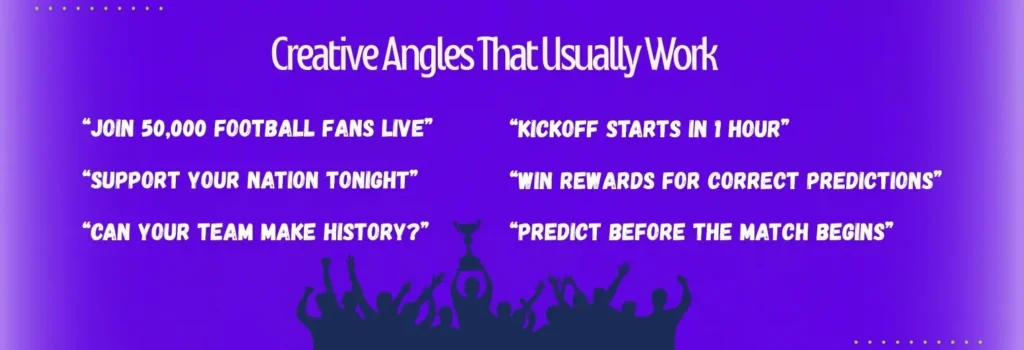
Creative Angles That Usually Work:
Emotional/National Pride
“Support your nation tonight”
“Can your team make history?”
Urgency
“Kickoff starts in 1 hour”
“Predict before the match begins”
Gamification
“Win rewards for correct predictions”
Community
“Join 50,000 football fans live”
The FIFA World Cup 2026 offers enormous monetization potential for advertisers and affiliates willing to prepare early and adapt quickly. GEO-focused personalization, smart scheduling, mobile-first optimization, and agile campaign management will be the key factors separating profitable campaigns from wasted ad spend.
7. Be Careful With Copyright and Intellectual Property
FIFA strictly protects all World Cup-related intellectual property, including logos, names, slogans, typefaces, team branding, and player images. Unless a company is an official FIFA partner, sponsor, or regional sponsor, it cannot legally use any FIFA branding in advertising campaigns.
What advertisers and affiliates cannot use:
- FIFA logos, emblems, mascots, or official visuals
- Terms like “FIFA World Cup,” “World Cup 2022,” “Qatar 2022,” and translated versions
- FIFA’s official font or visual style
- Football team names and logos
- Images or footage of football players without direct permission
- Counterfeit or unauthorized World Cup merchandise in promotions
Violating these rules can lead to:
- Cease-and-desist letters
- Forced ad removal
- Lawsuits and financial penalties
- In severe cases, legal action or arrests related to counterfeit sales
However, marketers can still create legal and effective football-themed campaigns by using:
- Country flags and national colors
- Generic football visuals (balls, goals, fans, sportswear)
- Football memes and trending moments
- Models representing fans or players (not real athletes)
- Neutral sports-related creative concepts
The key rule is to avoid creating any impression that a campaign is officially connected to FIFA if it is not.
Historical World Cup Advertising Trends
Previous tournaments reveal several recurring patterns.
Trend 1: Search Demand Explodes During Knockout Stages
Audience interest grows as emotional stakes rise. This typically increases search traffic, social engagement, betting registrations, streaming activity.
Trend 2: Push CTRs Rise During Real-Time Events
Push traffic often benefits from urgency, breaking moments, emotional reactions, score-related triggers.
Trend 3: Betting Advertisers Dominate Auction Pressure
Sportsbooks frequently increase bids aggressively during finals, rivalry matches, overtime scenarios, penalty shootouts. This can reshape CPM dynamics across entire GEOs.
Trend 4: Mobile Traffic Continues to Grow
Every major sporting event reinforces the shift toward mobile viewing, mobile engagement, app-driven interaction, second-screen behavior.
How Mondiad Helps Advertisers During Major Sports Events
For large-scale events like the FIFA World Cup 2026, advertisers need scalable traffic, optimization flexibility, multiple targeting options, performance-focused campaign tools, and, nonetheless, diverse ad format availability.
Mondiad provides advertisers and publishers with access to global traffic opportunities across multiple ad formats and GEOs.
💡 Mondiad helps media buyers launch global campaigns, test multiple GEOs, scale performance campaigns.
💡 Publishers can also monetize increased traffic demand during the tournament through diversified advertising opportunities.
FIFA World Cup 2026: Key Takeaways
The FIFA World Cup 2026 will become one of the most significant digital traffic events ever recorded. For advertisers, affiliates, publishers, and media buyers, the tournament represents enormous audience attention, explosive traffic spikes, and premium engagement windows.
But success during the World Cup does not happen accidentally. The most profitable campaigns will belong to teams that:
- prepare early
- understand traffic volatility
- optimize for mobile behavior
- localize campaigns by GEO
- adapt to live-event audience behavior
- diversify traffic channels
- monitor performance continuously
As global football attention intensifies, advertisers who understand the relationship between sports engagement and digital traffic economics will be in the strongest position to scale.
The FIFA World Cup 2026 is not just a sporting event. It is a worldwide performance marketing opportunity.
FAQs About FIFA World Cup 2026 Advertising & Traffic
Why is the FIFA World Cup important for advertisers?
The World Cup generates massive global online engagement across sports, streaming, betting, gaming, finance, and entertainment verticals. This creates strong traffic and monetization opportunities.
Which ad formats work best during football tournaments?
Push ads, native ads, pop traffic, and mobile-first campaigns often perform well due to real-time audience behavior and live-event engagement.
Do CPMs increase during the FIFA World Cup?
Yes. Competition between advertisers, especially sportsbooks and entertainment brands, often increases CPMs significantly during major matches.
Which GEOs are best for sports-related affiliate campaigns?
Top-performing GEOs often include the UK, Brazil, Spain, Italy, Germany, and several emerging mobile-first markets such as Nigeria, Indonesia, and Colombia.
When should advertisers prepare FIFA World Cup campaigns?
Ideally several weeks or months before the tournament begins in order to test creatives, optimize funnels, and secure stable traffic sources before competition intensifies.
Why is mobile optimization important during live sports?
Most users consume sports-related content on mobile devices while multitasking or using second screens during matches.
Monetize the FIFA World Cup Hype with Mondiad!
Don’t Wait Until Kickoff to Test Your Strategy! Create your Mondiad account today and launch World Cup-ready ad campaigns with flexible budgets, real-time optimization, and traffic built to scale during peak sports events.
Looking to monetize the World Cup traffic surge? Join Mondiad as a publisher and turn your audience into revenue with high-performing ad formats, global demand, and easy integration designed to help publishers maximize earnings during peak sports traffic periods.
