


Affiliate marketing offers several payment models, but few are as long-term focused and performance-aligned as Revenue Share (RevShare). If CPA is about quick wins, RevShare is about building partnerships that scale with actual customer value.
In this guide, you’ll learn what RevShare is, how it works, where it’s used, and whether it’s the right model for your affiliate strategy.
TLDR
- RevShare is an affiliate payment model where you earn a percentage of the revenue generated by the users you refer, instead of a one-time payout.
- It works best in long-term monetization industries like SaaS, iGaming, fintech, and subscription-based apps.
- Compared to CPA, RevShare offers lower upfront income but higher long-term earning potential, making it ideal for affiliates focused on user quality, retention, and lifetime value.
What is a Payment Model in Affiliate Marketing?
A payment model in affiliate marketing defines how and when affiliates get paid for driving traffic or conversions. Each model balances risk, reward, and predictability differently for advertisers and affiliates.

The most common models include:
| Payment Model | How It Works | Common Use Cases |
|---|---|---|
| CPA (Cost Per Acquisition) | Fixed payout after a conversion | Lead generation, apps, e-commerce |
| CPL (Cost Per Lead) | Paid per submitted lead | Insurance, finance, surveys |
| CPC (Cost Per Click) | Paid per click | Brand awareness, display campaigns |
| CPI (Cost Per Install) | Paid per app install | Mobile app campaigns |
| RevShare (Revenue Share) | Percentage of user-generated revenue | SaaS, iGaming, subscriptions |
| Hybrid (CPA + RevShare) | Upfront payout + recurring commission | High-LTV verticals |
Revenue Share (RevShare) is a commission model where affiliates earn a fixed percentage of the revenue generated by users they refer.

Example of How RevShare Works
- A SaaS company charges users $50/month.
- Under a 20% RevShare agreement, you earn $10/month for every active subscriber you refer. [$50×0.20=$10]
- If a subscriber stays for 12 months, you earn a total of $120 from that single referral.
How RevShare Is Calculated
Most RevShare agreements use either gross revenue or net revenue.
a) Gross Revenue Model
The affiliate earns a percentage of total customer revenue.
Example: User spends $100 ->RevShare agreement = 20% -> Affiliate earns $20
b) Net Revenue Model
The affiliate earns a percentage after deductions such as: refunds, chargebacks, bonuses, payment processing fees, taxes.
This model is common in iGaming and fintech.
Revenue share isn’t a one-size-fits-all model, and its appeal depends heavily on your risk tolerance, cash flow, and long-term goals. For some affiliates, the promise of recurring, compounding income makes RevShare the clear favorite over faster but capped payout structures like CPA.
For others, the delayed gratification and dependence on customer retention make it a harder sell. Before committing to a RevShare deal, it’s worth weighing both sides carefully, so let’s break down what makes this model attractive, and where it can fall short.
Pros of RevShare
- Recurring and passive income potential
Instead of earning once per conversion, affiliates can continue earning as long as the referred customer remains active or keeps spending. This can create compounding monthly revenue over time. - Higher lifetime value (LTV)
A strong RevShare deal can outperform CPA payouts significantly if the customer has good retention and high spend. One high-quality user may generate commissions for months or years. - Better incentive alignment
Both the advertiser and affiliate benefit from long-term customer quality and retention, not just quick conversions. This often leads to better campaign optimization and user targeting.
- Scalable long-term business model
Once content, SEO pages, funnels, or communities are established, affiliates can continue generating commissions without constantly reinvesting in traffic.
- Lower upfront risk for advertisers
Advertisers pay from actual generated revenue rather than fixed acquisition costs, making RevShare attractive for startups and subscription businesses.
Cons of RevShare
- Slow payouts and delayed profitability
Unlike CPA, earnings build gradually. Affiliates running paid traffic may struggle with cash flow because revenue comes in over time rather than immediately. - Revenue depends on user retention
If users churn quickly, stop spending, request refunds, or become inactive, commissions drop sharply.
- Less predictable income
Revenue fluctuates based on seasonality, customer behavior, advertiser pricing, and retention metrics. This makes forecasting harder compared to fixed CPA payouts.
- Heavy dependence on the advertiser
Affiliates rely on the advertiser’s product quality, support, conversion funnel, and tracking accuracy. Poor management on the advertiser side directly affects affiliate earnings.
- More difficult tracking and reporting
RevShare requires long-term attribution, recurring billing tracking, fraud prevention, and transparent analytics. Disputes over revenue calculations can happen if tracking systems are weak.
- Requires patience and strong traffic quality
Community discussions often point out that many affiliates underestimate how long RevShare takes to become profitable. Quality traffic and consistency matter far more than volume alone.
To make the trade-offs easier to digest, here’s a side-by-side breakdown of the key advantages and disadvantages of the RevShare model. Use this as a quick reference when weighing it against other payout structures like CPA or hybrid deals.
| Aspect | RevShare Pros | RevShare Cons |
|---|---|---|
| Earnings Potential | High long-term earning potential from recurring commissions | Income may stay low if users stop spending quickly |
| Payment Structure | Generates passive income over time | Slower payouts compared to CPA |
| Scalability | Revenue can compound as more users stay active | Requires patience before seeing strong profits |
| Traffic Quality | Rewards affiliates who send high-quality users | Low-quality traffic performs poorly |
| Advertiser Relationship | Aligns affiliate and advertiser goals for retention and LTV | Heavy dependence on advertiser transparency and tracking |
| Cash Flow | Can become stable after building a strong user base | Difficult for affiliates relying on immediate ROI |
| Risk Level | Lower upfront risk for advertisers | Higher financial risk for affiliates using paid traffic |
| Predictability | Strong retention can create predictable recurring income | Revenue fluctuates due to churn and seasonality |
| Best Use Cases | SaaS, iGaming, subscriptions, finance, dating | Not ideal for short-term campaign testing |
| Tracking & Reporting | Encourages long-term optimization | More complex attribution and reporting systems required |
| Business Model | Great for long-term affiliate businesses and SEO | Harder for beginners without consistent traffic |
| Hybrid Possibilities | Can be combined with CPA for balanced earnings | Pure RevShare may delay profitability |
RevShare is most effective in industries where users continue generating revenue after the initial conversion.
💳 SaaS & Subscription Software:
Recurring billing makes SaaS one of the most stable RevShare verticals. Affiliates often earn: recurring monthly commissions, annual renewal percentages, or upsell revenue shares.
🎰 iGaming & betting platforms
It is heavily used in the iGaming and betting industry, where players deposit and play repeatedly, allowing affiliates to earn a percentage of their generated revenue over time.
However, this vertical also introduces: negative carryover, bonus deductions, compliance restrictions, and GEO licensing limitations. Affiliates should always review carryover policies, deduction structures, and attribution duration.
For gambling compliance guidance, see: UK Gambling Commission, European Gaming & Betting Association, or Fintech & Trading Platforms. iGaming commonly uses Net Gaming Revenue (NGR)-based RevShare agreements.
📺 Streaming services
In the streaming industry, revenue comes from monthly subscriptions, so affiliate earnings are often tied to subscriber retention and continued payments.
📊 Trading & fintech platforms
The fintech and trading industry also relies on RevShare, with affiliates earning from trading fees and commissions generated by active users. Retention quality matters significantly more than raw lead volume.
🛒 E-commerce subscription boxes
Subscription-based products like meal kits, supplements, or beauty boxes often use recurring commission structures tied to rebilling cycles.
📱 Mobile Apps & In-App Purchases:
Apps with recurring subscriptions or high in-app spending frequently use RevShare models. The economics depend heavily on: retention cohorts, user engagement, GEO purchasing power,
platform fees.
Across all of these industries, the reason RevShare works so well is the same. Users continue generating revenue after the initial conversion, so advertisers and affiliates both benefit from long-term engagement rather than one-time actions.
- Running successful RevShare campaigns requires focusing on long-term user value rather than just quick conversions. Since your earnings depend on ongoing user activity, traffic quality and retention matter the most. A smaller number of active and loyal users can generate more revenue than a large amount of low-quality traffic.
- Start by choosing offers with strong retention and reliable user engagement. Products or services that users continue using for months usually generate better long-term revenue.
- Before launching a campaign, always understand the payout structure. Check how revenue is calculated, whether there is negative carryover, and how often commissions are paid.
- Use Prelanders and Educational Content. Landing pages, reviews, tutorials, and comparison articles help warm up users before they convert. Educational content builds trust and often attracts more engaged users who are likely to stay active longer. To understand how paid traffic fits into this strategy, explore affiliate marketing programmatic and learn how programmatic advertising can help affiliates reach relevant audiences.
- Tracking and optimization are essential for RevShare campaigns. Monitor which traffic sources, creatives, and audiences bring users with the highest lifetime value, not just the highest conversion rate. Alongside tracking lifetime value, improving your advertising win rate can help you make more informed bidding decisions and optimize campaign performance.
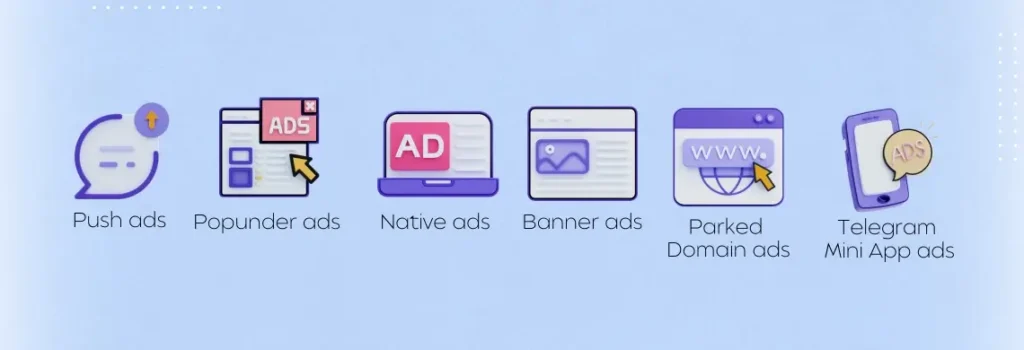
- Test Multiple Traffic Sources. Different traffic sources perform differently for RevShare campaigns. Push ads, native ads, social traffic, search traffic, and display ads can all work depending on the vertical and audience.
- Finally, test different verticals and offers. Some niches perform better with RevShare than others, so experimenting can help you identify the most profitable long-term opportunities.
For the hell of illustrating this difference, let’s imagine this next situation. We are an affiliate using an offer promoting a $40/month SaaS subscription BUT we are testing both models: CPA and RevShare.
| Feature | CPA Model | RevShare Model |
|---|---|---|
| Payment type | One-time fixed payout | Recurring percentage payout |
| Example payout | $40 once when user signs up | 20% = $8 per month |
| Earnings after 1 month | $40 total | $8 total |
| Earnings after 6 months | $40 total | $48 total |
| Earnings after 12 months | $40 total | $96 total |
| What affects earnings | Only the initial conversion | User retention + lifetime value |
| Risk level | Lower (guaranteed payout) | Higher (depends on user behavior) |
| Long–term potential | Limited | High (scales over time) |
With the same $40/month SaaS offer, CPA gives you a fixed $40 upfront, while RevShare gives you $8 recurring monthly, which can outperform CPA over time if the user stays active long enough.
In this example, RevShare eventually outperforms a hypothetical one-time $40 CPA payout, but only if the user retention period remains strong. That distinction matters because RevShare profitability depends heavily on retention rates, churn, refund rates, recurring billing success, attribution rules, and advertiser transparency.
When to Use CPA 💰
CPA is best for fast and predictable earnings. Affiliates get paid a fixed amount when a user completes a specific action, such as a signup or purchase.
It works well when:
- You want quick cash flow
- You run high-volume traffic campaigns
- You test new offers or traffic sources
- User retention is uncertain
Example: You earn $10 for every user who installs an app or makes a deposit.
RevShare is better for long-term earnings. Affiliates earn a percentage of the revenue generated by referred users over time.
It works well when:
- Users stay active for a long time
- The product has recurring revenue
- You focus on traffic quality over volume
- You want passive recurring income
Example: You promote a SaaS product and earn 20% of the monthly subscription fee for as long as the customer stays subscribed.
The hybrid model combines an upfront CPA payout + recurring RevShare commissions for affiliates, balancing immediate earnings with long-term upside.
Example: You earn a $20 upfront CPA payout + 10% monthly RevShare from the same user.
Hybrid payout models help:
- affiliates reduce short-term cash flow pressure
- advertisers maintain incentive alignment around retention
It is best for:
- Reducing risk while still earning long-term revenue
- Affiliates who want both cash flow and scalability
- Advertisers who want balanced incentive structures
The Takeaway
CPA delivers fast and predictable income, RevShare builds long-term scalable revenue, and Hybrid combines both to create a balanced, lower-risk growth strategy for affiliates and advertisers.
RevShare can produce strong long-term earnings, but it also introduces operational risks many affiliates underestimate.
a) Negative Carryover
Negative carryover means future commissions can be offset by prior user losses or deductions. This is especially common in iGaming.
Example:
- A referred player wins heavily.
- The advertiser records negative net revenue.
- Future commissions may first cover those losses.
Affiliates should always verify whether negative carryover exists, it resets monthly, or it applies per player or globally.
b) Attribution & Tracking Complexity
RevShare requires accurate long-term attribution.
Affiliates should verify cookie duration, S2S postback support, recurring attribution windows, and cross-device tracking reliability. With browser privacy restrictions increasing, many affiliate programs now rely more heavily on server-to-server (S2S) attribution models.
For privacy and tracking guidance: European Data Protection Board (EDPB)
c) Delayed Profitability
Paid traffic affiliates may operate at a loss initially while waiting for recurring commissions to accumulate.
A campaign with negative ROI in month 1, break-even in month 3, profitability in month 6, may still outperform CPA long term. But affiliates need sufficient cash flow, stable retention, reliable advertiser reporting, and to sustain scaling.
Before launching a RevShare campaign, affiliates should evaluate more than payout percentage alone.
| Variable | Why It Matters |
|---|---|
| User Retention | Longer retention increases LTV |
| Churn Rate | High churn destroys recurring revenue |
| GEO Quality | Tier 1 users often monetize differently |
| Traffic Source | Push, native, SEO, and social behave differently |
| Attribution Window | Determines recurring commission eligibility |
| Negative Carryover | Can reduce future earnings |
| EPC & LTV | Core profitability indicators |
| Advertiser Transparency | Weak reporting creates disputes |
Looking for reliable RevShare (revenue share) offers to promote? The easiest way to find vetted, high-converting deals is through the Mondiad Marketplace: a curated hub of exclusive partner offers built specifically for affiliate marketers and media buyers, from ad trackers and anti-fraud software to betting and iGaming offers.

Why use the Marketplace instead of searching manually?
- Pre-vetted partners: every listed brand (Peerclick, ClickMagick, Cpamatica, Zeydoo, and more) is a verified industry tool or offer, reducing the risk of scams or dead offers;
- Exclusive discounts: deals like 20-50% off tools you’d otherwise pay full price for;
- One-click access: no need to dig through forums or Telegram groups to find legitimate RevShare partners;
- Regularly updated: new offers and tools are added as partnerships grow.
Different traffic sources produce very different RevShare outcomes.
Push Traffic
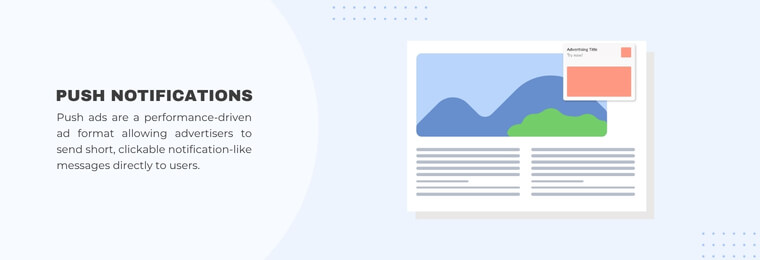
Push traffic can scale quickly, but retention quality depends heavily on prelander quality
audience filtering, and naturaly, vertical fit.
Push often works better for subscriptions, fintech, or utility app than for high-churn offers.
Native Advertising
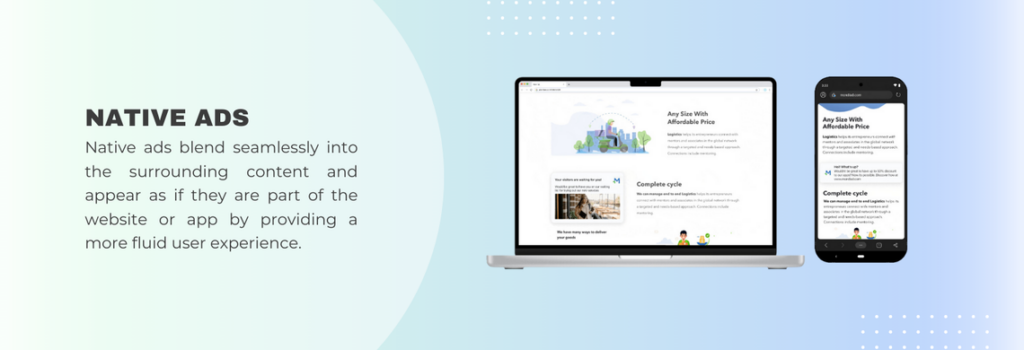
Native traffic generally supports stronger user intent and educational funnels. This can improve retention, recurring billing, long-term ROI especially for SaaS and finance offers.
SEO & Content Funnels
SEO-driven affiliates often perform best with RevShare because user intent is higher, conversion quality is stronger, and acquisition costs are lower over time.
This makes RevShare especially attractive for review sites, comparison pages, or educational affiliate content.
| Traffic Source | Best For | Key Characteristics |
|---|---|---|
| Push Traffic | Subscriptions, fintech, or utility apps; high-churn offers | Scales quickly, but retention depends on proper audience filtering and finding a natural vertical fit |
| Native Advertising | SaaS and finance offers | Improves retention and recurring billing; drives stronger user intent and better long-term ROI |
| SEO & Content Funnels | Review sites, comparison pages, educational affiliate content | Converts strongly due to high user intent; leads to longer customer lifetime value and better acquisition costs over time |
What does RevShare mean in affiliate marketing?
RevShare means earning a percentage of the revenue generated by users you refer, instead of a fixed payout.
Is RevShare better than CPA in affiliate marketing?
It depends. CPA is better for fast income, while RevShare is better for long-term earnings.
How is RevShare calculated?
It is usually a percentage of net revenue generated by the referred user.
Which affiliate industries use RevShare the most?
iGaming, SaaS, fintech, and subscription-based businesses.
Is RevShare risky for paid traffic affiliates?
It can be. Affiliates buying traffic may wait months before recovering acquisition costs if retention is weak. RevShare usually works best when affiliates understand user quality, lifetime value, and long-term optimization economics.
Scale Beyond One-Time Payouts With Mondiad!
With performance-driven RevShare and CPA offers, you can match the right monetization model to every traffic source and maximize long-term ROI.

Join the Mondiad ad network to access high-converting traffic, transparent tracking, and flexible payout models built for affiliates who think in lifetime value, not just clicks.
