Digital advertising offers brands countless ways to reach their audiences, but choosing the right ad format can make a significant difference in campaign performance. Two of the most common options are native ads and display ads, both powerful tools, but designed to achieve different goals.
While display ads focus on grabbing attention through visual formats like banners, images, and videos, native ads take a more subtle approach by blending into the surrounding content and matching the user experience of the platform where they appear.
Understanding the differences between native and display advertising can help marketers choose the right strategy, optimize their budgets, and create better experiences for their audiences.
In this guide, we’ll explore what native ads and display ads are, how they work, their key differences, and when to use each format for better campaign results.
TL;DR
- Native ads help advertisers improve engagement, reach targeted audiences, build trust, and reduce ad fatigue compared to traditional ad formats.
- Successful native campaigns focus on audience targeting, valuable content, storytelling, transparency, and continuous optimization.
- Native advertising works well across industries such as e-commerce, health & wellness, finance, and affiliate marketing.
- Advertisers can choose different pricing models, including CPM, CPC, and Target CPA, depending on their campaign goals.
The Rise of Native Advertising: Why Brands Are Moving Beyond Traditional Ads
The concept of native advertising has evolved over time, but it gained substantial momentum with the rise of digital media and the changing landscape of content consumption. Long story short, as digital advertising evolved through the years, so did customer habits.
Brands wishing to promote their products on the web were faced with more difficulty in catching the attention of their target audience, as users were already bombarded daily with ads.
Enter native ads! The hype is driven by their ability to deliver more engaging, relevant, and less intrusive ad experiences, which align well with the evolving preferences of digital content consumers.
What Is Native Advertising and How Does It Work?
Native advertising offers a unique blend of effectiveness and subtlety.
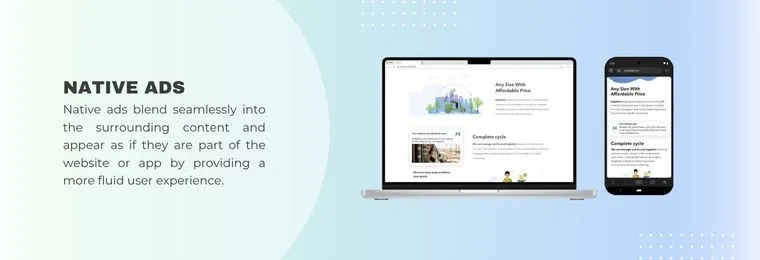
A native ad it’s designed similarly to the organing content in between which it is placed, making it look less like an ad and more like part of the editorial content.
As the name implies, the word “native” refers to this ability to match the design and function of the platform upon which it appears. This has always been the case with advertorials, the previous name for native advertising, even though they were required to display a label that said ‘Advertisement’.
Key takeaway:
Native advertising works because it focuses on contextual relevance. Instead of interrupting users with traditional ad formats, native ads provide content that fits naturally into the environment where users are already browsing.
Types of native advertising:
| In Feed/In Content ads: | Recommendation Ads | Branded/Native Content Ads |
|---|---|---|
| Ads that are integrated into content or social feeds and seek to blend in with original content. | Typically placed at the end of an article or on the side, featuring suggested content/ads for viewers. | This type of native ad functions as unique content on a publisher’s website. |
What Are the Main Elements of a Successful Native Ad?
A native ad is designed to integrate seamlessly with the content it appears alongside, making it feel like a natural part of the user experience. To understand how native ads achieve this, it’s important to break down their components:

Headline
The headline is crucial in drawing the user’s attention. It should be compelling and relevant, mimicking the style of organic content to blend in. The headline often offers value, piquing curiosity while subtly pointing toward the ad’s purpose.
Thumbnail or Image
A native ad will usually include an image or video thumbnail that matches the tone of the platform. The visual aspect is designed to be appealing and contextual, offering a preview of what the user will engage with while aligning with the surrounding content.
Description or Body Text
The body text provides more context or information about the topic. It’s concise yet informative, written in a tone consistent with the platform. This text gives users a reason to click through without feeling overly promotional.
Call to Action (CTA)
The CTA is where the ad leads the user to take the desired action, whether it’s visiting a website, downloading an app, or making a purchase. In native ads, the CTA is subtle, often integrated within the content to encourage organic engagement rather than pushing for immediate conversions.
Sponsored Label or Disclosure
Transparency is key in native advertising. Most platforms require ads to be clearly labeled as “Sponsored” or “Ad” to ensure users are aware it’s a paid placement. However, the label is typically subtle, allowing the ad to still blend into the environment.
How Much Do Native Ads Cost? Pricing Models Explained
Naturally, the costs for buying native inventory will vary based on your goals, business model, budget, targeting and the like, but fortunately, you have a plethora of choices when it comes to finding the right balance in your ad budget.

With us, you can choose between the CPM and CPC model, as well as opt-in for smart bidding with TargetCPA. But let’s talk a bit about each option.
- CPM charges you per 1,000 views of the ad, being best suited for driving visibility.
- CPC is more performance-based since it’s charging you only when a viewer clicks on the ad.
- With TargetCPA, your bids are automatically set to achieve conversions around a desired threshold, optimizing your budget while reaching out to audiences most likely to convert.
Ultimately, the best model for your native ad campaigns will depend on your specific goals, the nature of your audience, and your overall marketing strategy.
Which Industries Perform Best With Native Advertising?
Native ads are particularly effective for certain industries and verticals due to their subtle, non-intrusive nature and ability to engage audiences naturally.
Native ads allow e-commerce brands to showcase products within relevant content, making it easier for consumers to discover items naturally. They are perfect for e-commerce brands to engage users without coming across as overly promotional, which we all know is a big red flag for many viewers.
The health/wellness sector thrives with native advertising because users actively seek advice on improving their well-being. Such brands often have powerful stories to tell so native ads can provide valuable tips, insights, or product recommendations that align with users’ interests in maintaining or improving their health.
By positioning products within educational articles or guides, health brands can build credibility and trust by resonating with users on an emotional level, leading to higher engagement.
Financial services can often be complicated and intimidating for consumers but native ads are perfect for marketers to simplify complex financial concepts through engaging and informative content. Moreover, financial decisions require a high level of trust that native ads can provide by sharing valuable insights to help build credibility, positioning the brand as a knowledgeable resource in the finance sector.
Why Use Native Advertising? Key Benefits for Advertisers
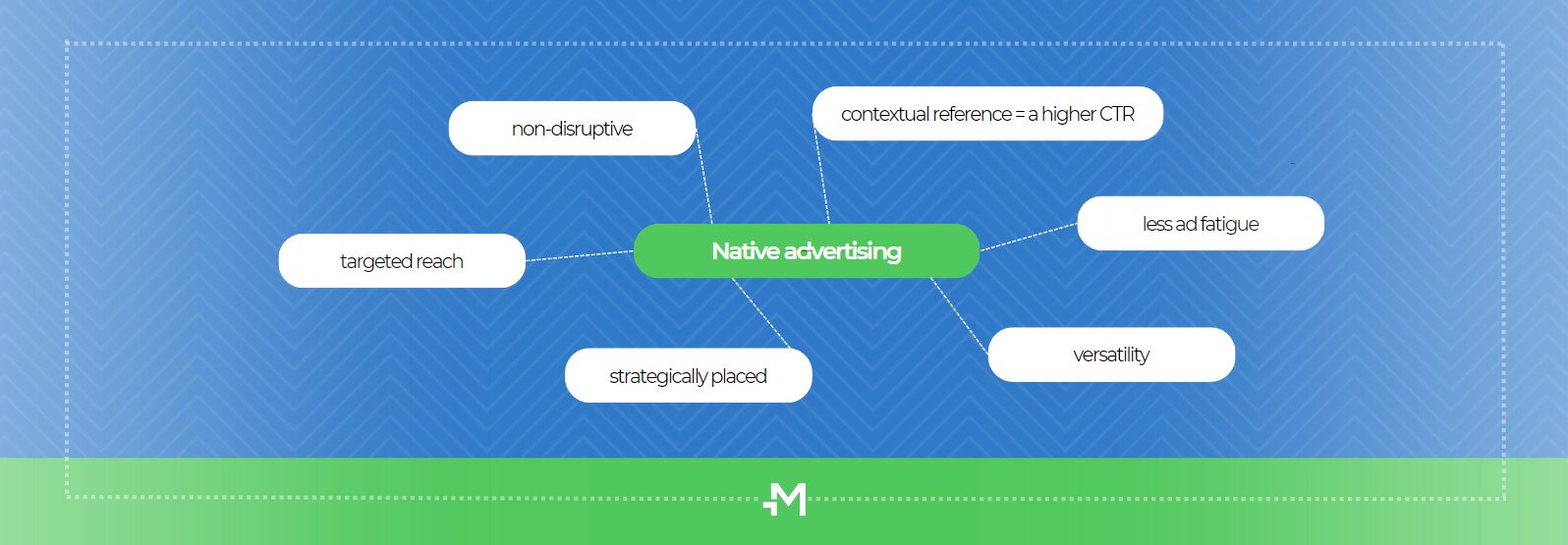
They’re non-intrusive:
The non-intrusive nature of native ads provides a better overall user experience. Instead of interrupting users with flashy banners or pop-ups, native ads offer valuable content that users are more likely to appreciate and interact with.
Blend seamlessly:
One of the most notable advantages of native advertising is its ability to blend seamlessly with the surrounding content.
They build trust:
They build trust as they are strategically placed based on the audience`s online habits and search history.
Can reach targeted audiences:
Natives reach targeted audiences. This format is more likely to be seen by the right people, increasing the chances of conversion.
Are super versatile:
They are versatile, being compatible with a wide variety of niches.
High engagement rates:
Because native ads are designed to integrate with the user experience, they typically see higher engagement rates compared to traditional ads. Users are more likely to click on content that appears organic and relevant to their interests.
Avoid ad fatigue:
Native ads mitigate ad fatigue by being less repetitive and more integrated with the content, keeping the user experience fresh and engaging.
As consumers continue to demand more relevant and less intrusive advertising, native advertising is poised to become an essential component of any effective marketing strategy.
Native Ads vs Display Ads: What’s the Difference?
Both native ads and display ads are digital advertising formats designed to reach online audiences, but they differ in how they appear, how users interact with them, and what goals they are best suited for.
Native ads are created to blend into the surrounding content, while display ads are designed to stand out and capture immediate attention through visual elements such as banners, images, or videos.
| Feature | Native Ads | Display Ads |
|---|---|---|
| Appearance | Matches surrounding content | Separate banner format |
| User experience | Less disruptive | More noticeable |
| Engagement | Usually higher | Often lower |
| Goal | Content discovery | Immediate attention |
Example:
Native ad: A “10 Best Running Shoes for Beginners” article recommendation appearing below a fitness blog, sponsored by a sports brand.
Display ad: A banner showing a sports shoe discount at the top of a website.
Key takeaway:
Native advertising focuses on integration and relevance, while display advertising focuses on visibility and attention. Both formats can be effective, but native ads are often better suited for brands looking to create a more natural and engaging user experience.
Native Advertising Best Practices for Better Campaign Results
When executed thoughtfully and strategically, native advertising can significantly enhance your brand’s visibility and engagement.
Target audiences granularly:
Before creating native ads, conduct thorough research to understand your target audience’s interests, behaviors, and preferences.
Focus on providing value:
Ensure your content provides value to the audience. It should be informative, entertaining, or useful, rather than purely promotional.
Leverage storytelling:
Use storytelling techniques to create compelling narratives that resonate with your audience on an emotional level. Include relatable characters or scenarios that your audience can identify with.
Focus on building trust:
Native advertising is a great tool to build long-term relationships with your audience by consistently providing valuable content.
Be transparent:
To avoid being deceptive and damaging your brand reputation, texts such as “promoted by” or “sponsored” may be featured within the creative, to indicate the paid promotion.
By understanding your audience, creating high-quality and relevant content, and leveraging data for continuous improvement, you can create effective native advertising campaigns that resonate with your target market and drive meaningful results.
Native Advertising FAQ
What is native advertising?
Native advertising is a type of paid advertising that blends into the surrounding content of a website or platform. Instead of looking like a traditional banner ad, it matches the design, style, and user experience of the environment where it appears.
Why are native ads effective?
Native ads are effective because they feel less disruptive and more relevant to users. By providing valuable content and matching user interests, they can generate higher engagement, improve trust, and reduce ad fatigue compared to traditional ad formats.
Which industries perform well with native advertising?
Native ads work well across many verticals, especially:
E-commerce: Product discovery and recommendations
Health & wellness: Educational content and product solutions
Finance: Simplifying complex topics and building trust
Affiliate marketing: Promoting offers through informative content
How much do native ads cost?
Native advertising costs depend on factors such as targeting, competition, audience, and campaign goals. In ad network Mondiad, pricing models include:
CPM (Cost Per Mille): Paying for every 1,000 impressions, suitable for visibility campaigns.
CPC (Cost Per Click): Paying only when users click the ad, focused on engagement.
Target CPA: Automated bidding focused on achieving conversions at a desired acquisition cost.
Run Native Ads With Mondiad!
Native advertising works best when advertisers combine the right audience targeting, compelling creatives, and a reliable advertising platform. With Mondiad, advertisers can launch native campaigns using flexible bidding options and reach audiences across multiple verticals.