Many advertisers naturally turn to social media platforms, both paid and organic, as their primary source of visitors. While social media can be effective for brand visibility and engagement, it often falls short when it comes to delivering high-converting, scalable traffic.

That’s where ad networks come in. By tapping into diverse traffic sources across the web, ad networks provide advertisers with greater control, better targeting, and more cost-effective campaigns.
In this post, we’ll explore why ad network traffic outperforms social media traffic and why it should be a key part of your advertising strategy.
TL;DR
- Social traffic wins on engagement and creative storytelling, but it’s expensive, policy-restricted, and dependent on platform algorithms you don’t control.
- Affiliate traffic is performance-based and scalable, but quality varies and you’re relying on a third party’s methods and compliance.
- Ad network traffic (like Mondiad) is a distinct third channel, not a blend of the other two. It aggregates inventory across the open web, so you get broader reach, more format flexibility, and fewer vertical restrictions than social, with more direct control than affiliate.
- There’s no single “best” channel. Most performance advertisers end up running two or three of these at once, each doing a different job in the funnel.
What Is Social Traffic?
Social traffic refers to users who arrive at your website or landing page from social media platforms like Facebook, Instagram, TikTok, Twitter, or LinkedIn.
This traffic can be organic (from unpaid posts) or paid (through sponsored ads).

Pros:
- High engagement: Social users are often active and responsive.
- Strong targeting options: Platforms like Meta offer robust targeting tools based on interests, demographics, and behavior.
- Visual storytelling: Creative ad formats like reels, carousels, and stories can boost conversions.
Cons:
- High competition: Social platforms are saturated with ads, making it costly.
- Strict ad policies: Certain verticals (e.g., adult, crypto, or sweepstakes) are often restricted.
- Platform dependency: Algorithms change frequently, affecting reach and cost.
What Is Affiliate Traffic?
Affiliate traffic refers to users driven by affiliates(organic and paid), middlemen who promote offers in exchange for a commission.

This traffic is usually more performance-oriented and can come from various sources like email, blogs, forums, paid ads or influencer placements.
Pros:
- Performance-based: You pay only when users convert, making it budget-friendly.
- Diverse reach: Affiliates tap into niche audiences with tailored messaging.
- Scalable: A strong affiliate program can bring in large volumes of traffic.
Cons:
- Quality varies: Not all affiliates bring valuable or compliant traffic.
- Limited control: You rely on third-party methods of promotion.
- Tracking dependency: You need solid tracking solutions to manage affiliates effectively.
Where Do Ad Networks Fit In?
An ad network like Mondiad aggregates traffic directly from publishers across the web, push notifications, native placements, banners, popunders, in-page formats, and sells it to advertisers with its own targeting, bidding, and optimization layer sitting on top.
You’re not renting reach on someone else’s social feed, and you’re not depending on a third-party affiliate’s methods. You’re buying directly into publisher inventory, with the network handling aggregation, quality control, and attribution.
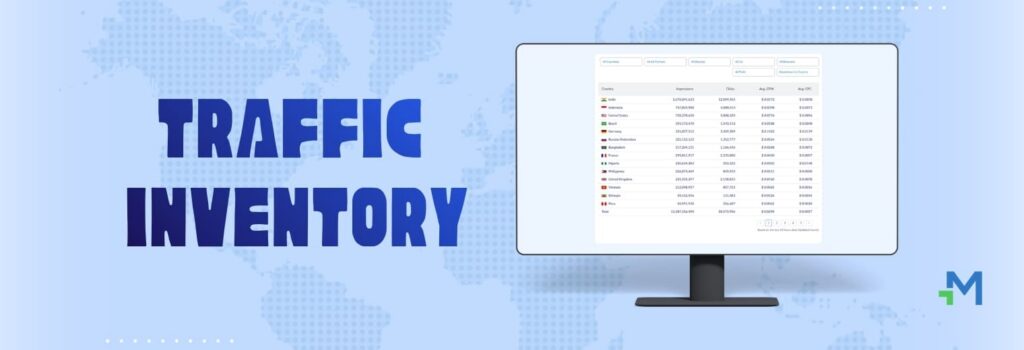
As of 2026, Mondiad’s network spans over 19 billion impressions and 49 million clicks monthly, across all verticals and worldwide coverage, inventory available to agencies, advertisers, affiliates, and webmasters alike.
What that looks like in practice:
- Broader, format-diverse inventory. Ad networks aggregate traffic from millions of sites and apps, so reach isn’t capped by one platform’s user base or one feed’s algorithm.
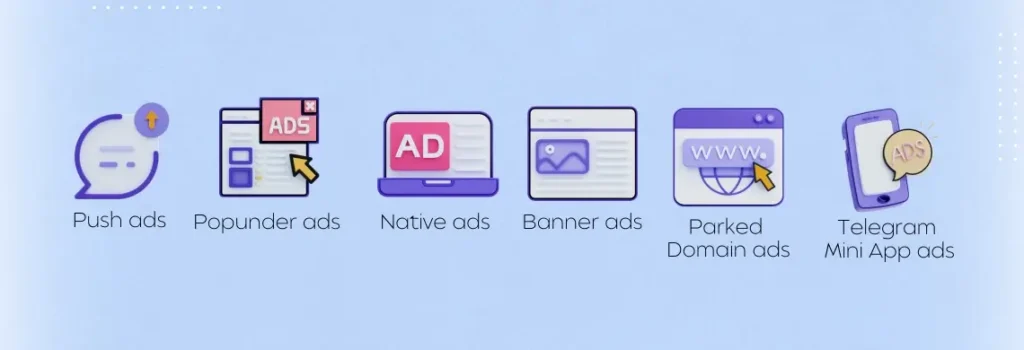
- Fewer vertical restrictions. Verticals that social platforms routinely restrict or ban, adult, crypto, sweepstakes, dating, nutra, generally have a home on ad networks, provided they meet the network’s own compliance standards.
For example, here are Mondiad-based recommended GEOs for a restricted verticals:
iGaming: France, Italy, Spain, United Kingdom, Canada, Australia. Brazil, India, Mexico, Kazakhstan, Uzbekistan, Bulgaria, Russia;
Sweepstakes: France, Italy, Spain, United Kingdom, Canada, Australia.
- Direct control over bidding and formats. Running CPM, CPC, or TargetCPA, across push, native, banner, popunder, and many other ad formats, is a targeting and budget decision you make directly, not something governed by a single platform’s ad policy.
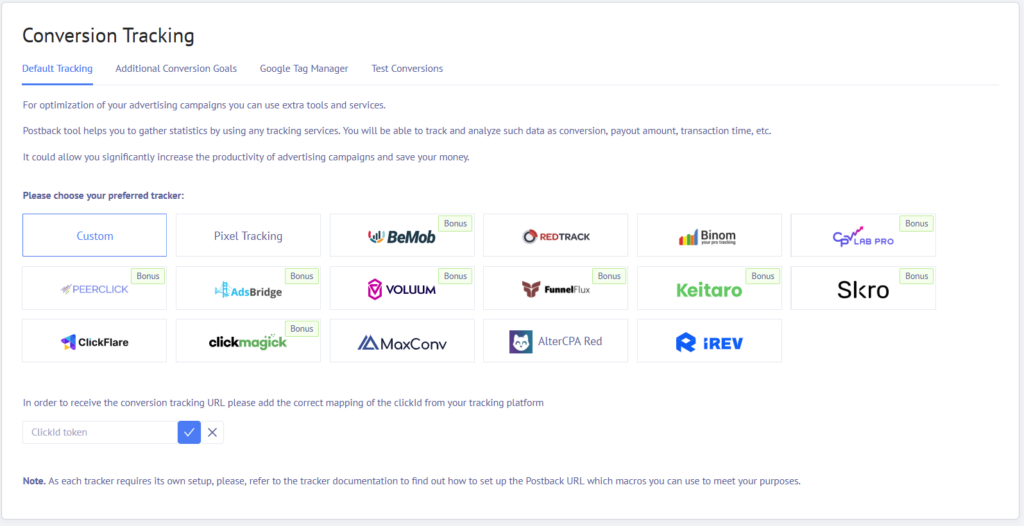
- Attribution you can actually use. Server-to-server postbacks and dedicated tracking integrations let you see which specific traffic sources and placements are converting, rather than relying on a single platform’s walled-garden analytics.
- Less saturated inventory. Because ad networks span thousands of publishers rather than one feed, individual placements see less creative fatigue than the most competitive social ad slots, though cost and performance still vary a lot by vertical, GEO, and format, so this isn’t a blanket guarantee.
Social vs. Affiliate vs. Ad Network, side by side
| Category | Social Traffic | Affiliate Traffic | Ad Network Traffic |
|---|---|---|---|
| Cost model | CPM/CPC, bid against high competition | Mostly CPA/commission | CPM, CPC, or Target CPA |
| Targeting control | Strong, but platform-defined | Limited, set by the affiliate | Direct, you set targeting and bids |
| Restricted verticals | Adult, crypto, gambling, sweepstakes often banned | Depends on affiliate/network terms | Generally broader vertical support |
| Scalability | Capped by platform saturation and budget | High, but uneven quality at scale | High, spread across many publishers |
| Attribution | Platform-native analytics only | Depends on affiliate tracking setup | Postback/S2S tracking available |
| Control over creative & placement | Governed by platform ad policy | Governed by the affiliate | Set directly by the advertiser |
FAQ
What is the main difference between social media traffic and ad network traffic?
Social media traffic comes from platforms like Facebook, Instagram, or TikTok and is optimized for engagement, while ad network traffic comes from a wide range of websites and apps focused on scalable user acquisition and conversions.
How does Mondiad improve campaign performance compared to social platforms?
Mondiad provides performance-focused traffic, advanced optimization tools, multiple ad formats, and access to large-scale inventories designed to maximize conversions and ROI.
Why do advertisers move away from social media traffic?
Because of rising costs, strict ad policies, limited vertical acceptance, and algorithm changes that can reduce reach and increase campaign instability.
What advantages do ad networks have over social platforms?
Ad networks offer broader inventory, more flexible targeting, lower competition, support for more verticals, and better scalability across multiple ad formats.
Choosing Your Channel
Social, affiliate, and ad network traffic aren’t competing for the same job, they’re built for different ones. Social is strong for brand-building and creative-led engagement. Affiliate is strong for performance-based scale without upfront spend. Ad networks are strong for reach and format flexibility outside the restrictions and saturation of social feeds, with direct control over targeting and attribution.
Most advertisers running at scale end up combining more than one. The question isn’t “which channel wins”, it’s which mix fits your vertical, your budget model, and how much control you want over targeting and reporting.
Choosing Mondiad
While social traffic and affiliate traffic both have their advantages, Mondiad stands out by offering a hybrid approach tailored for advertisers and affiliates who want scalable, targeted, and compliant traffic, without the hurdles of social media restrictions or affiliate unpredictability.