


Are you ready to improve the monetization and viewability of the Mondiad ads you host on your website? With ad monetization, every visitor is a revenue opportunity! And the better the ad placements & the proper timing, the better your website’s profitability.
So here’s a thing… we’ve got a fresh new ad format ready to make you money! 🤑
What Are Dynamic Ads?
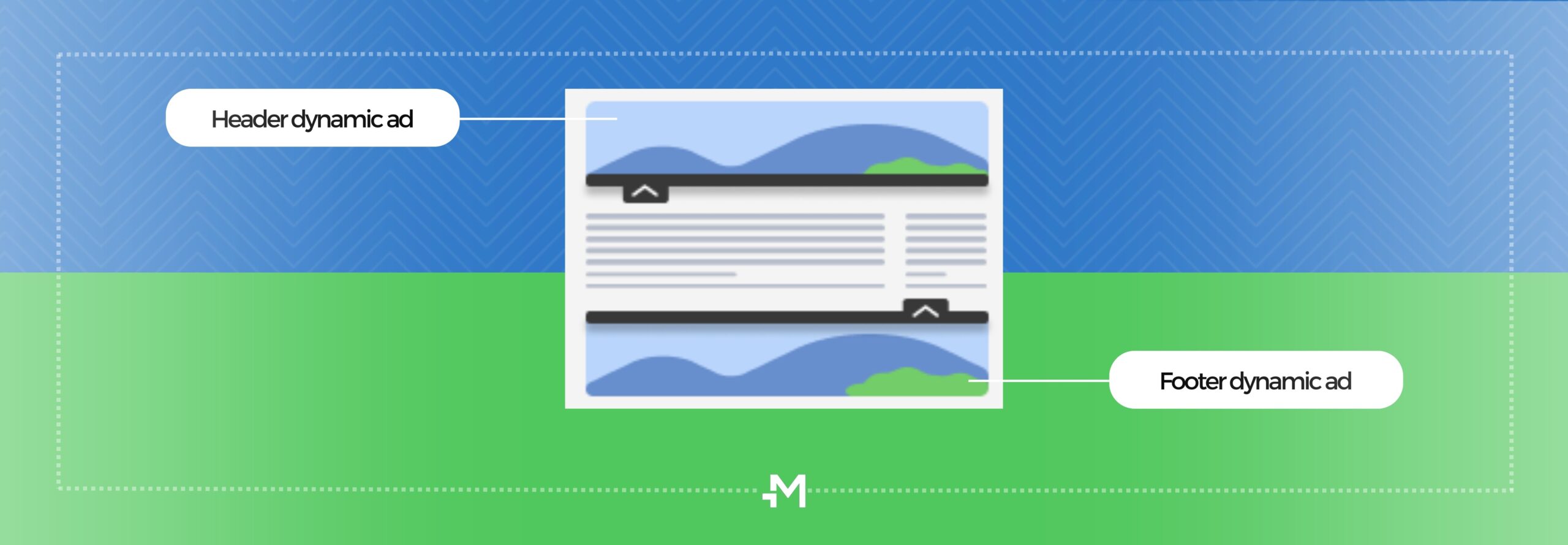
Dynamic ads are an ad format that slides into view within the header or footer of a webpage as the user scrolls down through it. Once triggered, the ad remains stationary in the header/footer until the viewer chooses to close it.
How Did We Get To Dynamic Ads?
Dynamic ads didn’t just appear randomly, they’re a response to how user behavior and monetization needs evolved over time.
Dynamic ads(they may also be known as sticky ads, slide-in ads, or floating ads) started gaining traction in the early 2010s, alongside:
- The shift from desktop-heavy browsing to mobile-first experiences
- The decline of traditional static banner ads (low CTR, banner blindness)
- Advances in JavaScript and front-end frameworks that allowed smoother scroll-based interactions
Publishers noticed users scroll past top content quickly, so they introduced such a format to keep ads visible longer without heavily disrupting the experience.
How You Earn With Dynamic Ads Monetization
Several key variables influence earnings:
- GEO Location: Tier 1 countries (US, UK, CA, AU) typically generate the highest CPMs.
- Traffic Quality: Higher-quality traffic = significantly higher payouts.
- Device Type: Mobile traffic often converts better due to higher engagement rates.
- Website Niche: Strong-performing verticals include: Finance, News, Software downloads, Entertainment, Gaming.
- Seasonality: Ad demand increases during Q4, holidays, and major global events.
Dynamic Ads Monetization Perks
If you want to take a valuable opportunity to enhance your website monetization efforts, improve user experience, and provide advertisers with increased visibility and engagement, our dynamic ads are for you. Here’s why:
Increased visibility.
Dynamic ads will guarantee you high ad viewability without jeopardizing user experience. And you know this is tricky to combat. But since the ad remains visible as the user scrolls through the webpage, the ad lingers for a longer period of time which means higher viewability.
Higher click-through rates (CTRs).
Higher visibility equals higher engagement rates. This one should be self-explanatory.
Are less intrusive than other ad formats.
Dynamic ads do not disrupt the user experience or impede navigation on the website, thus they are less intrusive to website visitors. Users can simply scroll past the ad if they’re not interested or simply hit the “x” button to close them.
Great for mobile devices where screen space is limited.
Dynamic ads are responsive, making them adaptable to various devices and screen sizes. Taking up minimal space but still remaining in full view of the user as they continue consuming content offers a seamless experience for viewers coming from all devices.
No banner blindness.
The strategic ad placement (header/footer) is perfect in combating banner blindness which occurs in the main content area of the webpage.
Dynamic Ads vs Other Ad Formats
We can naturally say that each ad format comes with its own strengths, trade-offs, and ideal use cases.
| Ad format | Pros | Cons |
|---|---|---|
| dynamic ads | balanced UX, high viewability | intrusive if overused |
| popunder ads | high volume | ad blockers |
| push ads | strong CTR | audience fatigue |
| native ads | blends with content, brand-safe | lower visibilty |
| banner ads | scalable | banner blindness |
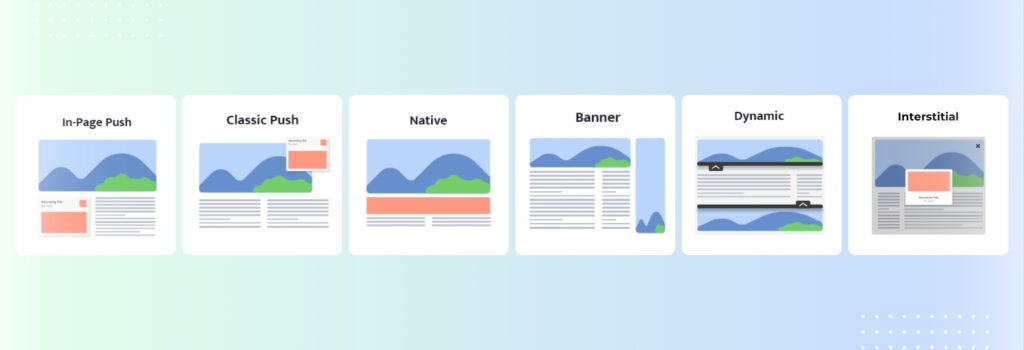
But understanding how dynamic ads compare to other popular formats like popunders, push, native, and traditional banners helps publishers choose the right mix for maximizing ad revenue while maintaining a balanced user experience.
Dynamic ads sit in a “sweet spot”:
- Less aggressive than popunders
- More visible than banners
- More scalable than native
Mondiad Dynamic Ads Monetization FAQ
Can dynamic ads be combined with other formats?
Absolutely. They’re often used alongside formats like native, push, or popunder ads to create a diversified monetization strategy.
Do dynamic ads impact user experience?
We’d say no. They offer a non-intrusive balance: visible but not disruptive. However, poor placement or frequency can negatively affect UX.
Why are dynamic ads effective for monetization?
They’re a must-try. They deliver high viewability, which increases the chances of impressions being counted and valued higher by advertisers, often resulting in better CPMs.
Are dynamic ads better than traditional banner ads?
Yes, and no. As mentioned above, each format has its perks. But dynamic ads do outperform standard banners in visibility and engagement, helping overcome banner blindness.
Do dynamic ads work well on mobile?
Yes, very well actually. Their dynamic nature fits naturally into scrolling behaviour, making them highly effective on smaller screens.
How to Start Monetizing Dynamic Ads
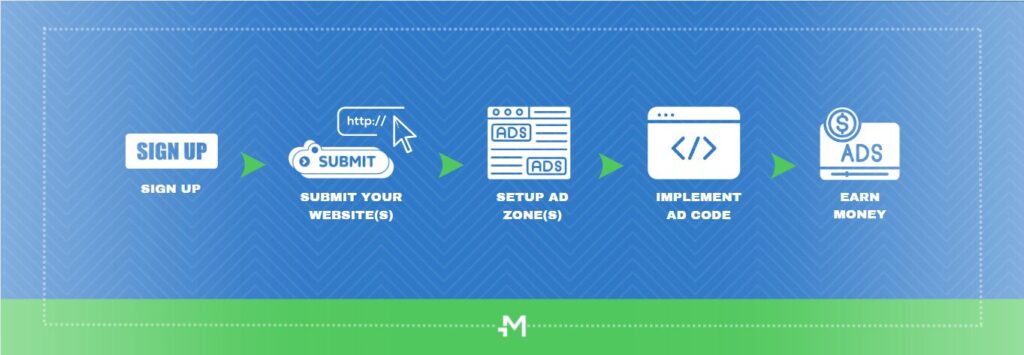
Getting started with ad network Mondiad is super quick and simple:
- Register as a publisher with Mondiad
- Add your website to your account dashboard
- Create ad zones or placements
- Insert the provided script into your website code
- Start receiving dynamic ads automatically
- Monitor performance in real time
Monetize With Mondiad!
On a final note, as a publisher, we recommend you to refrain from overloading your webpage with too many ads. A single dynamic ad in the viewpoint should work better to catch the user’s attention. But you do you. 🙃
💰 You get 100% revenue share in the first 20 days. 💰
