If you run a website and want to turn your traffic into revenue, pop-up and popunder ads are still one of the fastest formats to get approved for and start earning from, no minimum traffic thresholds on most networks, same-day integration, and payouts that don’t require months of history to unlock.
But “pop-up network” covers a wide range of payout terms, fill rates, and support quality, and the difference between a good fit and a bad one is often 2-3x in actual RPM.
This guide ranks the best pop-up ad networks for publishers in 2026, starting with the one built specifically around fast approval, low payout minimums, and popunder-first monetization.
TL;DR
Pop-up and popunder ads offer publishers a simple way to monetize traffic, often without minimum traffic requirements.
When choosing a network, fill rate, eCPM, payout terms, approval speed, and ad quality matter most.
Mondiad ranks #1 in this comparison, with fast approval, a $10 minimum payout, 24–48h payments, and multiple ad formats.
Popunders are generally less disruptive than pop-ups and can provide more stable eCPMs over time.
What Are Pop Ads (for Publishers)?
From a publisher’s side, a pop-up (or popunder) ad is a piece of code you paste into your site that opens a new browser window whenever a visitor interacts with the page, a click, a page load, sometimes a scroll trigger.
The advertiser pays for that impression, and you get a cut, typically on a CPM (cost per thousand impressions) basis. Unlike display banners, pop formats don’t need dedicated ad space on your layout, which is a big part of why they’re popular with publishers who don’t want to redesign a page just to monetize it.
Most networks that sell pop formats to advertisers are also the ones publishers sign up with directly to serve that inventory, so “best pop-up ad network” is really the same list from two sides of the same marketplace: advertisers buying the traffic, and publishers supplying it.
How Publishers Earn From Pop-up and Popunder Ads
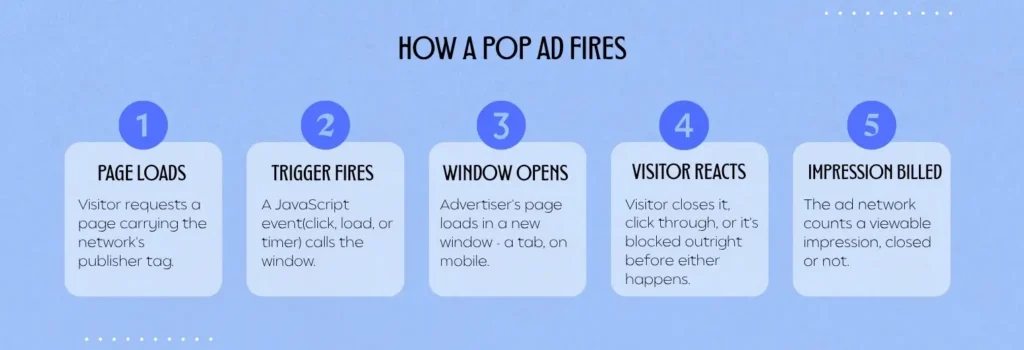
The mechanics are the same across most networks:
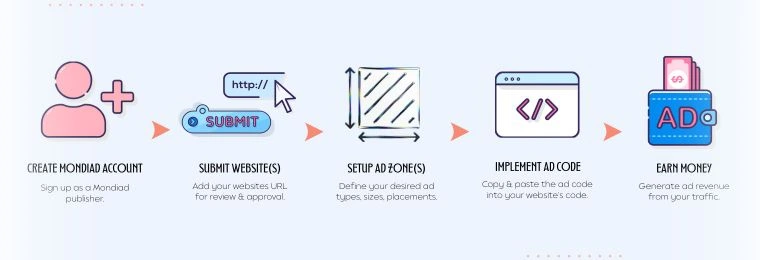
- Register your site: submit your domain, wait for approval (this ranges from under an hour to a few days depending on the network)
- Create an ad zone: configure format, frequency cap, and any targeting rules
- Paste the script tag: into your site’s header or footer, no plugin required on most CMSs
- Traffic gets matched to advertiser demand: in real time, via the network’s ad exchange
- You get paid: on a CPM basis, according to the network’s payout schedule and minimum threshold
The two numbers that actually determine your income are fill rate (what percentage of your traffic gets a paying impression) and eCPM (effective revenue per thousand impressions after fill rate is factored in), a network advertising a high headline CPM with a low fill rate can pay out less than one with a modest CPM and near-100% fill.
What to Look for in a Pop Ad Network as a Publisher
- Minimum payout threshold: ranges from $5-$100 across networks; lower minimums mean faster access to your first payment
- Fill rate: how much of your traffic actually gets monetized rather than wasted on unfilled requests
- Payout speed and methods: daily vs. weekly vs. net-30, and whether they support PayPal, Paxum, Payoneer, crypto, or bank wire
- Approval speed: same-day approval matters if you’re testing a new site or need revenue fast
- Ad quality / anti-malware filtering: low-quality or malicious ads hurt user trust and can get your site flagged by browsers
- Format flexibility: networks that support popunder plus native, push, or banner let you diversify without adding a second network
- Support: a real account manager matters once you’re past a few hundred dollars a month in revenue
Best Pop Ad Networks for Publishers in 2026
Mondiad
Why it’s #1: Mondiad is built by the team behind PopCash, one of the original popunder networks, and it shows in how the publisher side is set up: a $10 minimum payout, daily withdrawal requests (or automatic recurring payouts), and campaign approval that runs under an hour during working hours, most of the friction that slows down other networks is stripped out. Fill rate sits close to 100% thanks to a broad global advertiser base, so very little of your traffic goes unmonetized.
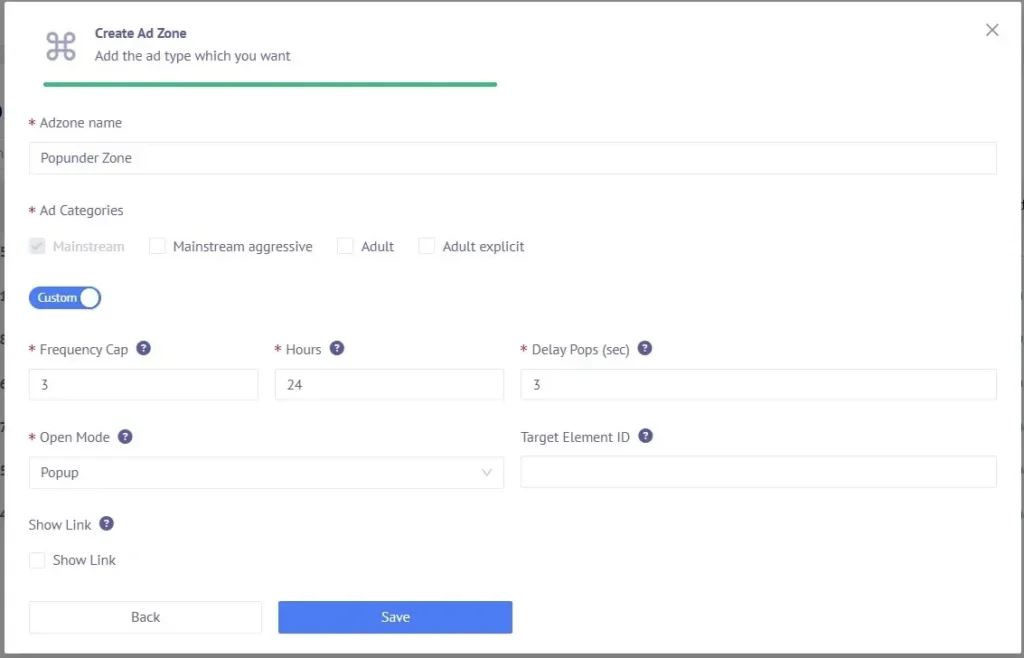
Beyond popunder, Mondiad also runs push, native, banner, and interstitial formats, so you can diversify inventory without adding a second network, plus a 5% referral program (up to $1,000) for publishers who bring in others.
- Minimum payout: $10
- Payout methods: PayPal, Paxum, Payoneer, Capitalist, bank wire, crypto (BTC, ETH, USDT, USDC)
- Payout speed: 24-48 hours; daily or automatic scheduling available
- Formats: Popunder, push, native, banner, interstitial
- Approval time: Under 1 hour (working hours)
PopCash
PopCash is one of the original popunder networks, founded in 2012, and the network Mondiad’s team built its popunder foundation on. It keeps a single-format focus purely on popunder inventory, with a self-serve dashboard, real-time reporting, and no minimum traffic requirement to get approved. Payouts start at a $10 minimum, processed daily on request within 24–48 hours, with support for PayPal, Paxum, Skrill, WebMoney, Payoneer (min. $50), and crypto.
- Minimum payout: $10
- Payout methods: PayPal, Paxum, Skrill, WebMoney, Payoneer, crypto
- Payout speed: Daily on request, 24-48 hrs
- Formats: Popunder only
- Approval time: Fast, no minimum traffic
Monetag
Publishers who run multiple site types tend to benefit most, since Monetag’s format-switching logic means a single tag can serve popunder on one page template and in-page push on another without separate integrations. The dashboard leans self-serve with minimal manual review, which suits publishers who want to launch and iterate quickly rather than wait on an account manager for every zone change.
This same AI routing layer is also useful for publishers who don’t have the traffic volume to run proper A/B tests themselves – instead of manually splitting traffic between popunder and push to see which converts, the network handles that optimization per visitor in the background. It tends to work well on sites with mixed traffic quality (a blend of organic and lower-intent visitors), since the system can lean on whichever format is performing rather than forcing every visitor through the same unit. The trade-off is less manual control over exactly which format fires where, which matters if a publisher has a strong opinion about ad placement on a specific page template.
PropellerAds
The platform has been running since 2011, which shows up in its GEO coverage – it’s a reasonable fit for publishers with traffic outside the usual Tier 1 markets, where thinner networks sometimes leave inventory unfilled. It also runs an anti-adblock feature for publishers who see meaningful blocker usage in their audience, which can recover impressions that would otherwise go unmonetized.
The self-serve dashboard gives publishers reasonably granular control over ad zones, including frequency capping and format-level reporting, so it suits sites that want to actively manage yield rather than set-and-forget. Its longevity also means a large, established advertiser pool across verticals like gaming, sweepstakes, and utility software, which tends to keep fill rates stable even during seasonal dips in overall ad demand. Publishers running niche or regional content sites are often a better fit here than large mainstream publishers who may find bigger networks with tighter Tier 1 focus more lucrative per impression.
Adsterra
Beyond the account-manager model, Adsterra runs its own in-house ad quality team, which matters for publishers wary of malware or misleading creatives slipping through automated review. It also supports a broad publisher base across verticals, from mainstream content sites to adult and entertainment traffic, without needing a separate application for each.
That verticals flexibility is a meaningful differentiator for publishers running content in categories that get rejected or deprioritized by more conservative networks – Adsterra’s willingness to work with adult, gambling-adjacent, and entertainment traffic (where locally permitted) often means fewer unfilled impressions for those niches specifically. The Partner Care Program isn’t just support in the ticketing sense either; account managers there tend to proactively flag underperforming zones and suggest format or targeting changes, which can matter for publishers who don’t have the bandwidth to monitor their own reporting dashboard closely.
HilltopAds
Its anti-fraud and creative-review layer is built specifically around popunder, rather than adapted from a multi-format stack, so publishers get filtering tuned to that one ad type instead of generic malware scanning. It’s a solid pick for publishers who’ve had quality issues elsewhere and want a network that treats popunder as its core product rather than one format among many.
Because the network doesn’t split engineering attention across a dozen formats, updates to targeting and fraud detection tend to land specifically where popunder publishers need them, rather than being spread thin across push, native, and banner simultaneously. This narrower focus does mean publishers looking to diversify into other formats down the line will eventually need a second network, but for sites that are purely testing or scaling popunder as their primary monetization channel, the specialization tends to translate into steadier eCPMs and fewer flagged creatives reaching the page.
PopAds
Because it’s bid-based, publishers keep more visibility into what advertisers are actually paying for their inventory, rather than relying on a blended eCPM figure from the network. That transparency, combined with instant approval, makes it a common first network for publishers testing whether their traffic monetizes well with pop formats at all before committing elsewhere.
The bidding system also lets publishers set their own floor price per zone, so a site with strong Tier 1 traffic can filter out low-bid demand rather than accepting whatever fills first – useful once a publisher has enough data to know what their inventory is actually worth. The lack of a minimum traffic requirement and instant approval make it low-risk to test, but the single-format limitation means it works best as a starting point or a secondary network run alongside something with a broader format mix, rather than a long-term primary monetization stack for a growing site.
Galaksion
The format range makes it a reasonable single-network option for publishers who want to test which unit performs best on a given site without juggling multiple accounts. Its vetting process for advertisers and creatives runs before campaigns go live rather than relying purely on post-launch flagging, which tends to mean fewer low-quality ads reaching publisher inventory in the first place.
Over a decade in the market has also given it a fairly diverse advertiser base spanning mobile content, utility apps, and entertainment verticals, so publishers with mixed-device traffic (desktop and mobile alike) tend to see reasonable fill across both. The six-format spread under one account is particularly useful for publishers running content networks or multiple sites with different traffic profiles, since zone-level reporting lets them see which format performs best per property without needing separate integrations for each.
Pop-up Ad Networks for Publishers Compared
| Network | Formats | Min. Payout | Payout Speed | Approval Time |
|---|---|---|---|---|
| Mondiad | Popunder, push, native, banner, interstitial | $10 | 24-48 hrs, daily available | Less than 12 hours(work day) |
| PopCash | popunder | $10 | Daily on request, 24-48 hrs | Less than 12 hours(work day) |
| Monetag | Popunder, push, in-page push, vignette, SmartLink | $5 | Weekly | Fast, no min. traffic |
| PropellerAds | Popunder, push, native, interstitial | $25 | Weekly/bi-weekly | 1-2 days |
| Adsterra | Popunder, social bar, native, video | $5-$100 (by method) | Regular, by method | Under 10 min. moderation |
| HilltopAds | Popunder, in-page push | $20-$100 | Weekly | 1-2 days |
| PopAds | Popunder | $5 | On request | Fast, no min. traffic |
| Galaksion | Popunder, native, push, interstitial | $50 | Weekly | 1-2 days |
Payout terms change frequently, confirm current figures on each network’s site before committing your traffic.
Why Popunders Earn Publishers More Than Pop-ups
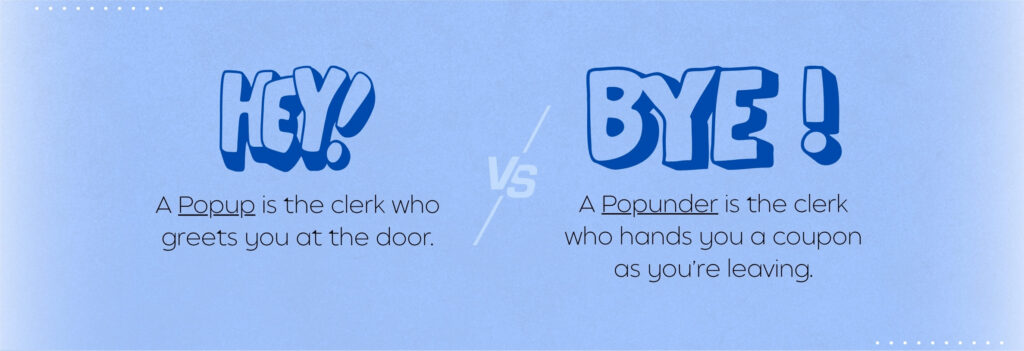
This distinction matters as much for publishers as it does for advertisers, arguably more, since it directly affects both your revenue and your site’s user experience.
A pop-up opens in front of the page your visitor is reading, interrupting them mid-task.
That guarantees the ad gets seen, but it also means a meaningful share of visitors close it immediately, sometimes before it even finishes loading, which drags down advertiser click quality, and advertisers who see poor performance from pop-up inventory bid it down over time.
Pop-ups are also the format browsers target most aggressively with built-in blockers, which caps how much of your traffic can even be monetized this way.
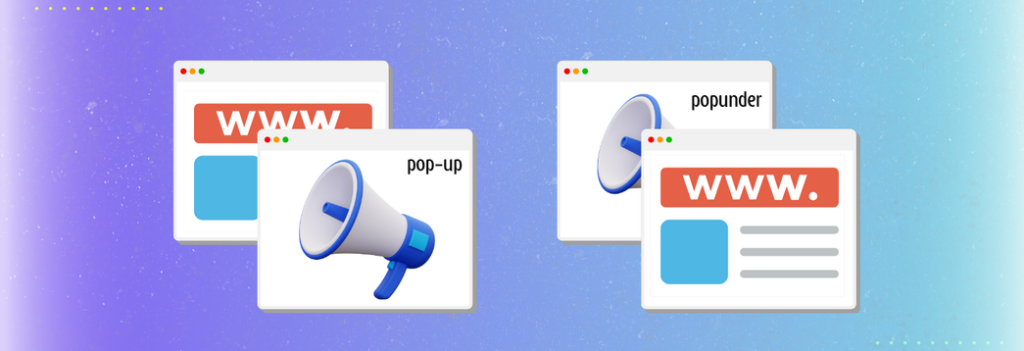
A popunder opens behind the active window, so your visitor doesn’t see it until they’re done with your page and close or minimize the tab themselves.
The interruption happens on their terms, not yours, which means steadier click quality for advertisers, and advertisers who see better performance bid higher for that inventory over time.
Browsers are also generally less aggressive about blocking popunders than pop-ups, so more of your traffic converts into a paying impression in the first place.
That combination, better advertiser performance plus less blocker interference, is a direct explanation for why popunder eCPMs tend to hold up better than pop-up eCPMs over time, and it’s the reason Mondiad’s pop inventory is popunder-only rather than split across both formats.
Site Types That Monetize Best With Pop Traffic
Pop formats tend to perform best on sites with high page views per session and content that doesn’t require a highly “premium” ad-free feel:
- Streaming and download sites: high page-view volume, format tolerance is high
- Entertainment and meme/content aggregators: fast browsing sessions suit pop triggers well
- Blogs and niche content sites: easy to add without a layout redesign
- File-sharing and utility tools:task-completion moments are natural popunder triggers
- News and forums: steady repeat traffic, good for frequency-capped monetization
- Gaming and betting-adjacent content: where local regulations permit, this vertical tends to pay some of the highest eCPMs
FAQ: Pop-up Ad Networks for Publishers
What’s the easiest pop-up ad network to get approved for?
Adsterra and PopAds are both known for fast, low-friction approval, Adsterra’s moderation typically runs under 10 minutes, and PopAds has no minimum traffic requirement. Mondiad’s approval process is also fast, usually under an hour during working hours.
How much can I actually earn from pop-up or popunder ads?
It depends heavily on traffic volume, GEO mix, and niche: Tier 1 traffic (US, UK, Canada, Germany) pays significantly more per thousand impressions than Tier 3 traffic.
Do I need a certain amount of traffic to join a pop-up ad network?
No, most networks on this list, including Mondiad, PopAds, and Monetag, have no minimum traffic requirement, which makes pop formats one of the more accessible ways to start monetizing a new site.
Is popunder better than pop-up for publisher revenue?
Generally yes. Popunders see less browser-blocker interference and steadier advertiser click quality, which tends to translate into more stable eCPMs over time compared to pop-up inventory.
Can I run pop-up/popunder ads alongside other ad formats?
Yes, and it’s common practice. Networks like Mondiad, Monetag, PropellerAds, and Galaksion all support running popunder alongside push, native, or banner inventory from the same account, which is usually the fastest way to increase total site RPM without adding another network.
How fast do pop-up ad networks pay out?
This varies widely, Monetag and PopAds offer some of the lowest minimums ($5), while Mondiad supports daily withdrawal requests once you hit its $10 minimum, with payments processed in 24-48 hours.
Monetize Pop Traffic with Mondiad!