


When a team is small, manual processes are rarely a problem. One chat, quick calls, voice notes, the owner personally involved — on a short runway, this often works faster than any formal system. Problems start when the team grows, tasks multiply, but internal workflows remain the same.
From the outside, everything usually looks fine: there’s spend, hiring is ongoing, the team is moving forward. But internally, misalignment starts to build — around roles, expectations, and accountability.
Increasingly, the industry isn’t just talking about growth itself — it’s talking about what happens to teams after growth. These conversations have long left internal chats and are now a major topic at large offline events.
The First Crack: Misaligned Expectations
The most down-to-earth problems often turn out to be the most costly. Someone joins the team, gets assigned tasks, is looped into processes — but no one clearly defines what’s expected, how success is measured, or where their responsibilities begin and end.
Anton Khomenok, Founder & CEO of X6 Agency, confirms this. He notes that if a new hire isn’t given a precise task and proper context from the start, they may believe they’re moving in the right direction — while their employer expects something entirely different.
In a small team, these gaps can usually be patched on the fly. Someone is nearby, someone can explain, someone drops the missing info into chat. But when a team scales, this no longer works. Misaligned expectations aren’t minor; they hit onboarding, speed of integration, and decision quality.
When these errors multiply, owners and heads often bring the discussion into private conversations. It’s easier to identify problem areas, learn from others’ experience, and quickly recognize what needs a rebuild.
Growth Rarely Breaks Just One Area
Teams often fall into the trap of thinking they just need to “fix one problem”: hire more, enforce discipline, tighten control. Rarely is that the case.
If task assignment is broken, onboarding falters. If too much happens in private messages, the broader context gets lost. Undefined responsibilities lead to unnecessary approvals. If a leader centralizes too many decisions, the team waits for signals even where they could act independently.
“As a team grows, problems don’t stay in one place — multiple areas break simultaneously. That’s the challenge. Small hiccups linger until they accumulate into consistent overload,” explains Anton Khomenok.
This is where large offline events like MAC become valuable. With 200+ brands and 5,000+ attendees in one space, process discussions get concrete: in a single day, you can hear multiple approaches to hiring, role definition, onboarding, and internal structure — then quickly compare them to your own team.
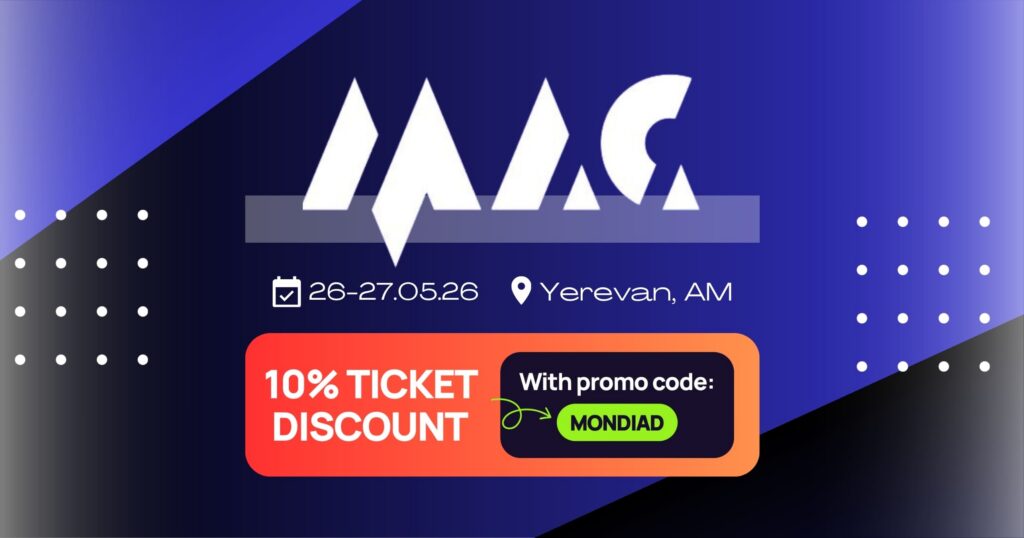
10% discount with code MONDIAD for GOLD and VIP tickets!
Where Personal Control Becomes a Bottleneck
For performance marketing teams, this is a painful topic. Many strong teams grow solely because of the owner or head’s personal involvement. Early on, this is an advantage: decisions are faster, context is preserved, and extra layers of approval aren’t needed.
Problems arise when this approach is scaled. Too much funnels through one person, every task needs final approval, and the team gradually learns to escalate rather than act. What starts as hands-on leadership turns into micromanagement and bureaucracy.
Anton makes an important caveat: if a team is already delivering results and scaling, introducing unnecessary “innovations” in management can actually hurt. Growth itself doesn’t require constant managerial motion — it requires clarity on where control is helpful and where it just adds friction.
That’s why discussions about roles, responsibilities, and overloaded leaders increasingly happen offline rather than in chat. At MAC, these talks are anchored in real cases: where too many decisions rested on one person, where speed dropped, and which functions finally had to be split into distinct roles. On a large stage, these conversations become concrete quickly, because many attendees have navigated similar growth challenges.
Why Team Failures Are Mostly Discussed Offline
Success stories, case studies, new products — these are great for posts, interviews, and stage talks. Mistakes in hiring, failed onboarding, overloaded managers, micromanagement — not so much.
Anton notes that in private conversations, people speak more openly about errors and weak points because publicly airing them is uncomfortable. Companies are also paying closer attention to cost and employee efficiency. Team structure discussions aren’t just management chatter — they’re directly tied to pace, money, and sustainability.
MAC’s value here isn’t in attendance alone. The real benefit comes from two days of conversations rarely captured in public content. For a growing team, this is far more useful than another showcase of a polished case study.
How to Make MAC Work for Team Growth
Showing up doesn’t solve problems automatically. A useful conversation doesn’t start just because you have a badge.
The most effective approach is asking direct questions. For team growth, that means leaving generalities behind. Instead, get specific:
- How do you onboard new hires?
- Where did manual control first slow down processes?
- Which tasks did you finally stop centralizing?
- Which roles had to be split?
- Which processes were just overhead?
These conversations are far more actionable than generic market talk. Offline events are especially valuable because you can test someone else’s experience against your own questions — while all the right people are in the same place.
What You Take Away
Teams attend MAC not just for networking. For many, it’s a fast way to benchmark internal operations against others’ practices — not in theory, but in concrete, practical discussions: where hiring broke down, when manual management slowed growth, which roles were split, and which processes added unnecessary weight.
A large offline event provides a clear benefit: in just two days, you gather conversations that rarely make it into posts or interviews, leaving you with a sharper understanding of what in your own team needs a rebuild.
